
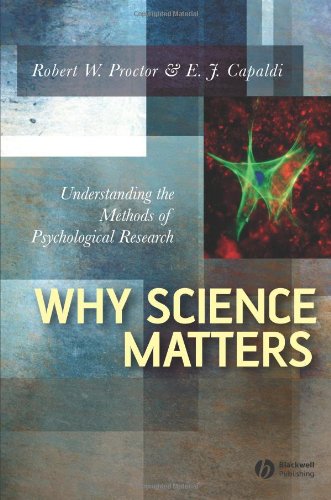
Why Science Matters Understanding the Methods of Psychological Research 1st Edition by Robert Proctor, Capaldi ISBN 1405133570 978-1405133579


Original price was: $50.00.$35.00Current price is: $35.00.
Why Science Matters Understanding the Methods of Psychological Research 1st Edition by Robert W. Proctor, E. J. Capaldi – Ebook PDF Instant Download/Delivery: 1405133570, 978-1405133579
Full download Why Science Matters Understanding the Methods of Psychological Research 1st Edition after payment
Product details:
ISBN 10: 1405133570
ISBN 13: 978-1405133579
Author: Robert W. Proctor, E. J. Capaldi
Why Science Matters: Understanding the Methods of Psychological Research rises above standard research methods texts by presenting an up-to-date view of contemporary psychological science as it is currently understood and practiced.
Explores not only the procedural aspects of psychological research, but also delves into the issue of how to accomplish effective science.
Explicates how hypotheses and theories are to be evaluated.
Suggests that the proper approach to devising and evaluating theories is by abduction, not by induction or deduction alone.
Incorporates new investigatory procedures, current methodologists, conflicts and issues, implications of the philosophy of science, and a lively prose style.
Provides a picture of science that will engage students and expand their abilities as both scientists and psychologists.
Table of contents:
Part 1: Major Methodological Changes in Science from Antiquity to the Present
Chapter 1: Understanding Science: The Armchair versus Practice
Introduction
Justification of methodological practices
Precursors to contemporary science: an historical overview
Research paradigms, programs, and traditions
Naturalism: a brief introduction
Remainder of book
Chapter summary
Chapter 2: Major Issues to Emerge in 20th Century Approaches to Science
Introduction
Logical positivism
Operationism
Popper’s falsificationism
Kuhn’s psychologism and historicism
Chapter summary
Chapter 3: Methodology in the Postpositivist Era
Introduction
Naturalism in science
Lakatos’s sophisticated falsificationism
Laudan’s research traditions and normative naturalism
Giere’s cognitive approach
The rise of relativism
Chapter summary
Part 2: Naturalism and Modern Science
Chapter 4: Theory Testing
Introduction
Scientific theory
Types of theory
Hypothesis testing
Induction and deduction
Abduction and theory construction
Chapter summary
Chapter 5: Inference to the Best Explanation
Introduction
Evaluating theories: a critical evaluation of criteria
Resolution of ambiguity over time
Natural selection
Brain function and cognitive neuroscience
Consilience
Chapter summary
Chapter 6: The New Means of Understanding Science
Introduction
Empirical methods for better understanding science, scientific practice, and scientists
Chapter summary
Part 3: Applying Naturalism to Contemporary Methodological Issues in Psychology
Chapter 7: Postmodernism and the Rejection of the Conventional Conception of Science
Introduction
Underdetermination and incommensurability
Postmodernism
Our critique
Chapter summary
Chapter 8: Qualitative Research Methods
Introduction
Rationale for qualitative methods
Varieties of qualitative methods
Chapter summary
Chapter 9: Critical Evaluation of Qualitative Inquiry’s Approach to Qualitative Methods
Introduction
Justification of qualitative methods
Misunderstanding of positivism
Specific positions of qualitative researchers
Chapter summary
Chapter 10: Internal and External Validity
Introduction
Applications of scientific psychology
Scientific psychology opposes pseudoscience
Chapter and book summary
References
Glossary of Terms
Glossary of Names
Author Index
Subject Index
People also search for:
why should we use the scientific method
explain why scientists use the scientific method
explain why scientific methods are important
the methods of science standards of measurement
why are scientific methods important
Tags:
Robert Proctor,Capaldi,Science Matters,the Methods,Psychological Research