
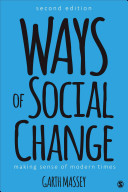
Ways of Social Change 2nd Edition by Garth Massey ISBN 978-1506306629 1506306624

Original price was: $50.00.$35.00Current price is: $35.00.
Ways of Social Change 2nd Edition by Garth M. Massey – Ebook PDF Instant Download/Delivery: 978-1506306629, 1506306624
Full download Ways of Social Change 2nd Edition after payment
Product details:
ISBN 10: 1506306624
ISBN 13: 978-1506306629
Author: Garth M. Massey
The world is at our fingertips, but understanding what is going on has never been more daunting. Garth Massey’s Ways of Social Change is a primer for making sense of both rapidly moving events and the cultural and structural forces on which social life is built, while teaching critical thinking skills needed to understand social change. With an approach that is fresh, timely, challenging, and engaging, Ways of Social Change shows students how social change is both a lived experience and the result of our actions in the world. It invites the reader into the realm of social science, where clarification, understanding, and inquiry provide for both informed opinions and a path to effective involvement. The core of the book focuses on five forces that powerfully influence the direction, scope and speed of social change: science and technology, social movements, war and revolution, large corporations, and the state. A concluding chapter encourages students to examine their own perspectives and offers ways to engage in social change, now and in their lifetime.
Table of contents:
Chapter 1. The Personal Experience of Social Change
A Twentieth-Century Life: Iris Summers From Farm to Factory
NAMES AND SOCIAL CHANGE
The Spread of Science and Technology
Decades of Social Movements
A Woman in a Changing Society
The Personal Challenge of Social Change
INEQUALITY IN THE UNITED STATES
Not Every Person’s Story: Capturing Social Change in Personal Experience
Personal Change and Social Change
The Rise of Civilization and the Two Master Trends in Modern Times
Gradual Social Change in Pre-Modern Times
New Forms of Production and the Development of Capitalism
Emergence of the National State
Iris Summers’ Time and Place in Global Context
A More Crowded World
DO POPULATION DYNAMICS DRIVE SOCIAL CHANGE?
The More Things Change…
Drivers of Social Change
Topics for Discussion and Activities for Further Study
Chapter 2. Recognizing Social Change
Ways of Recognizing Social Change
Inquiry Into Social Change
Asking Good Questions
Information to Be Gathered
TRACING AND UNTANGLING CAUSALITY
Gathering Information
RANDOM AND NONRANDOM SAMPLING
RECOGNIZING SOCIAL CHANGE IN THREE STUDY DESIGNS
Analyzing Information
Drawing Conclusions from the Data
SCIENCE AS A SPECIAL FORM OF INQUIRY
Social Policy to Make Social Change
Generations and Social Change
The Concept of Generations
From the Lost Generation to Millennials
Cohort, Age, and Period Effects of Social Change
Comparing Birth Cohorts Through Time
Cohort Effects
Age Effects
Period Effects
Topics for Discussion and Activities for Further Study
Chapter 3. Understanding and Explaining Social Change
First Steps in Understanding Change
Individuals, Groups, Social Structure, and Agency
IMAGES OF TIME
The Narrative as Refutable Explanation
Narratives of Modern Society’s Transformation
Society as an Evolving System
Evolutionary Change in Spencer, Veblen, and Sorokin and Today
Growth, Specialization, Complexity, and Advantage
Culture and Social Systems
Human History as Systems of Evolutionary Change
Society as the Site of Conflict, Power, and the Resolution of Contradictions
Social Divides and Asymmetrical Power
The Conflict Perspectives of Karl Marx, C. Wright Mills, and Georg Simmel
Ideology and Power
Contradictions as Activators of Social Change
Making Sense of Modern Times
Topics for Discussion and Activities for Further Study
Chapter 4. Technology, Science, and Innovation: The Social Consequences of New Knowledge and New Ways to Do Things
The Technology of Literacy
Literacy as Power
Literacy and Social Change
Changing Technology and Centuries of Change From Stirrups to Cities
The Age of Rapid Technological Change
Technology as an Agent of Social Change
Technology as Device, Technique, and Social Organization Technological Change and Social Change
SCIENCE, CORPORATIONS, AND THE STATE
The Science-Technology Nexus
PURE AND APPLIED SCIENTIFIC RESEARCH
Linking Curiosity and Necessity
Innovation and Social Change
Diffusion of Innovations: Seed Technologies and Industrial Farming Worldwide
Technology and the Question of Western Expansion
MAX WEBER AND THE MORAL IMPERATIVE OF WORK
Technology and Social Change in the Periphery
Imperialism and the Quest for Colonies
Technologies of Colonization
Resistance to Technology or Resistance to Change?
UTOPIA, DYSTOPIA, AND THE LESSONS OF DR. FRANKENSTEIN
Japan’s Return to the Sword
Conservative Peasants
THE TECHNOLOGICAL FIX AS RESISTANCE TO CHANGE
Technology Transfer: The Global Spread of Technology
The Debate Over Technology Transfer
International Development and Appropriate Technology
APPROPRIATE TECHNOLOGY: MICROCREDIT
Sustainable Technology
Topics for Discussion and Activities for Further Study
Chapter 5. Social Movements: Social Change
Through Contention
Politics by Other Means
How Social Movements Matter
What Is a Social Movement?
Social Movements as Challenges to Authority
Voicing and Pursuing Shared Grievances
The Shared Benefits of Movement Success
COMMON GOODS AND FREE RIDERS
Social Movement Participants
Resource Mobilization
Social Movement Framing
DIAGNOSTIC, PROGNOSTIC, AND MOTIVATION FRAMES
Social Movement Tactics
THE OFTEN VIOLENT MOVEMENT TO WIN COLLECTIVE BARGAINING
Political Opportunity for Social Movements
ELITE COMPETITION AS POLITICAL OPPORTUNITY FOR ENVIRONMENTALISTS
Digital Technology and Social Movements
Linking Social Movements to Social Change
Knowing When Social Movements Matter
Social Movement Frames and Public Opinion
ABORTION AND THE BATTLE FOR PUBLIC OPINION
Political Process and Policy Change
Cultural Impacts of Social Movements
Personal Change as a Consequence of Social
Movement Participation
Social Movements and Resistance to Social Change
Social Movements Opposing the Direction of Social Change
Resistance to Social Movements as Agents of Change
Topics for Discussion and Activities for Further Study
Chapter 6. War, Revolution, and Social Change: Political Violence and Structured Coercion
War as Coercive Politics
Power, Coercion, Violence, and Compliance
War and the State
War and Social Cohesion
CONSTRUCTING MENTALITIES OF WAR
Not All Wars Are the Same
Total and Limited Wars
The Cold War, Nuclear Weapons, and Proxy Wars
Civil Wars and Wars for Independence
SYMMETRICAL AND ASYMMETRIC CONFLICTS
Resource Wars
The New Wars and Terrorism
War as an Instrument of Social Change
War’s Destruction
WAR AND MIGRATION AS THE PURIFICATION OF SPACE
Participation in War
WORKERS’ WARTIME GAINS
A Permanent War Economy
Preparing for War: Research and Development
Building a Better Organization: State and Corporate Planning
Revolution and Social Transformation
Varieties of Revolutionary Paths
Weakened States and Defecting Militaries
Revolutionary Outcomes: Political and Social Change
War, Revolution, and Resistance to Social Change
Counterrevolutions and War in Opposition to Social Change
Resistance to War: Peace as a Trajectory for Social Change Topics for Discussion and Activities for Further Study
Chapter 7. Corporations in the Modern Era: The Commercial Transformation of Material Life and Culture
Large Corporations in Modern Times
The Corporate Form
Corporations as Legally Fictitious Individuals
OTHER TYPES OF CORPORATIONS
What Could Be More Natural?
Corporations as Evolving Systems
Corporations as Sites of Power and Conflict
EXTERNALITIES AND THE ACTUAL PRICE YOU PAY
The Corporation’s History of Transformation Early State-Chartered Corporations From Public Service to Engines of Wealth
MONOPOLY CAPITALISM
Entrepreneurs, Managers, Bankers: Who Controls the Corporation?
How Large Corporations Direct Social Change Technology and the Corporate Dynamic Control and Investment of Capital
RAILROADS AS THE EARLY ENGINE OF CAPITAL ACCUMULATION
Transformation of the Labor Process The Corporate Creation of Culture
CONSUMER DREAMS
Political Power in Democratic Capitalism
Large Corporations and Resistance to Social Change
Corporations Working Against Change
ORGANIZATIONAL ENTROPY: CORPORATE
CULTURE VS. INNOVATION
Resistance to Corporate-Driven Change
THE ENVIRONMENTAL CRISIS AND CORPORATIONS WITH A CONSCIENCE
Topics for Discussion and Activities for Further Study
Chapter 8. The State and Social Change: The Uses of Public Resources for the Common Good
Strong States and Social Change
Public Health: Reducing Disease and Accidental
Death as a Public Good
Public Health in the Progressive Era and Beyond
War and Public Health
Smoking and Public Health
Automobiles and Public Health
National Progress Through the Control of Nature
Reclaiming the Wilderness
Power and Water Politics, from Roosevelt to Roosevelt
MONUMENTS OF POWER
The Judicial Road to Civil Rights Jim Crow and the State
THE TERROR OF LYNCHING
Challenging Jim Crow
RACISM AND THE SHIFTING POLITICAL LANDSCAPE
The End of Separate but Equal
Resistance to Brown and the End of Jim Crow
VOTING RIGHTS AND VIOLENCE
State-Driven Social Change in Modern China Mao’s Revolutionary China, 1949-1976
TWO VERSIONS OF DEMOCRACY
Great Leaps and Stumbles
Post-Mao China: The Deng Xiaoping Era
Resistance to State-Directed Social Change
Using the State to Resist Change
Opposing the State as an Instrument of Change
Topics for Discussion and Activities for Further Study
Chapter 9. Making Social Change: Actively Engaging a Desire for
Social Change
Three Contrasting Visions
The Future-Predictable and Otherwise
Using Your Human Agency
Vocations of Social Change
Nongovernmental Organizations and
Gap Year Experiences
Agency and Ethical Responsibility
Activism as a Part of Life
Social Change Happens
Topics for Discussion and Activities for Further Study
People also search for:
ways of social change pdf
ways of social change 2nd edition
ways of social change book
how many types of social change
social change examples
Tags: Garth Massey, Social Change