
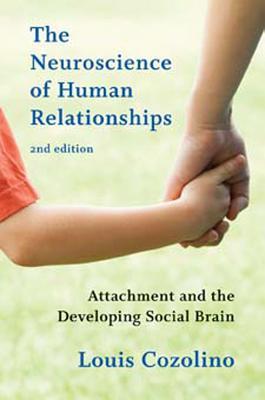
The Neuroscience of Human Relationships Attachment and the Developing Social Brain Second Edition Norton Series on Interpersonal Neurobiology 2nd Edition by Louis Cozolino ISBN 978-0393707823 0393707822


Original price was: $50.00.$35.00Current price is: $35.00.
The Neuroscience of Human Relationships Attachment and the Developing Social Brain Second Edition Norton Series on Interpersonal Neurobiology 2nd Edition by Louis Cozolino – Ebook PDF Instant Download/Delivery: 978-0393707823, 0393707822
Full download The Neuroscience of Human Relationships Attachment and the Developing Social Brain Second Edition Norton Series on Interpersonal Neurobiology 2nd Edition after payment
Product details:
ISBN 10:0393707822
ISBN 13: 978-0393707823
Author: Louis Cozolino
A revised edition of the best-selling text on how relationships build our brains.
As human beings, we cherish our individuality yet we know that we live in constant relationship to others, and that other people play a significant part in regulating our emotional and social behavior. Although this interdependence is a reality of our existence, we are just beginning to understand that we have evolved as social creatures with interwoven brains and biologies. The human brain itself is a social organ and to truly understand being human, we must understand not only how we as whole people exist with others, but how our brains, themselves, exist in relationship to other brains.
The first edition of this book tackled these important questions of interpersonal neurobiology―that the brain is a social organ built through experience―using poignant case examples from the author’s years of clinical experience. Brain drawings and elegant explanations of social neuroscience wove together emerging findings from the research literature to bring neuroscience to the stories of our lives.
Since the publication of the first edition in 2006, the field of social neuroscience has grown at a mind-numbing pace. Technical advances now provide more windows into our inner neural universe and terms like attachment, empathy, compassion, and mindfulness have begun to appear in the scientific literature. Overall, there has been a deepening appreciation for the essential interdependence of brain and mind. More and more parents, teachers, and therapists are asking how brains develop, grow, connect, learn, and heal. The new edition of this book organizes this cutting-edge, abundant research and presents its compelling insights, reflecting a host of significant developments in social neuroscience.
Our understanding of mirror neurons and their significance to human relationships has continued to expand and deepen and is discussed here. Additionally, this edition reflects the gradual shift in focus from individual brain structures to functional neural systems―an important and necessary step forward. A great deal of neural overlap has been discovered in brain activation when we are thinking about others and ourselves. This raises many questions including how we come to know others and whether the notion of an “individual self” is anything more than an evolutionary strategy to support our interconnection.
In short, we are just beginning to see the larger implications of all neurological processes―how the architecture of the brain can help us to better understand individuals and our relationships. This book gives readers a deeper appreciation of how and why relationships have the power to reshape our brains throughout our life. 27 illustrations
Table of contents:
-
The Social Brain: Structures and Functions
-
Experience-Dependent Plasticity
-
Reflexes and Instincts: Jump-Starting Attachment
-
Ways of Attaching
-
Getting to Know You
-
Monkey See, Monkey Do
-
Resonance, Attunement, and Empathy
-
Sociostasis: How Relationships Regulate Our Brains
-
The Impact of Early Stress
-
Interpersonal Trauma
-
Social Phobia: When Others Trigger Fear
-
Borderline Personality Disorder
-
Psychopathy: The Antisocial Brain
-
Autism: The Asocial Brain
-
Self and Others
-
From Neurons to Narratives
-
Healing Relationships
-
From Social Brain to Group Mind
People also search for:
the neuroscience of human relationships
the neurobiology of attachment
the neurobiology of attachment-focused therapy
the neuroscience of human relationships attachment and the developing
attachment neuroscience
Tags: Louis Cozolino, The Neuroscience, Human Relationships, the Developing