
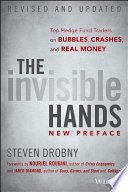
The Invisible Hands New Preface 2nd Edition by Steven Drobny, Nouriel Roubini, Jared Diamond ISBN 9781118865620 1118865626
Original price was: $50.00.$35.00Current price is: $35.00.
The Invisible Hands New Preface 2nd Edition by Steven Drobny, Nouriel Roubini, Jared Diamond – Ebook PDF Instant Download/Delivery: 9781118865620 ,1118865626
Full download The Invisible Hands New Preface 2nd Edition after payment
Product details:
ISBN 10: 1118865626
ISBN 13: 9781118865620
Author: Steven Drobny, Nouriel Roubini, Jared Diamond
The Invisible Hands New Preface 2nd Edition Table of contents:
Part One REAL MONEY AND THE CRASH OF ‘08
Chapter 1 Rethinking Real Money
I. Why Real Money?
Size
Impact on Society
2008 Losses
Taxpayer
II. The Evolution of Real Money
In the Beginning, There Were Bonds
Along Came Inflation
The 60–40 Model and the Great Moderation
The Dot-Com Crash
We Are All Endowments Now
The Crash of ‘08
Less Endowed
Pensions Are Different
III. RETHINKING REAL MONEY—MACRO PRINCIPLES
Chapter 2 The Family Office Manager
From mid-2008 to mid-2009, you took a year off and went to cash. Isgoing to cash the key differentia
How do you value cash?
Looking back at Japan in 1990 or at the United States in 1929, the valueof cash looked pretty good 2
What is the appropriate cash level for an endowment or pension?
We all know that correlations go to one in a disaster, yet it still catchespeople out. What can inve
In doing this analysis, are you guilty of investing in the rear viewmirror?
Being cognizant of what everyone else is doing seems to be a big partof your analysis.
So real money managers should use a valuation approach to raise orlower equity and equity-like expos
What other flaws in the real money world were exposed in 2008?
Should real money funds manage to a risk target rather than areturn target?
Does asset allocation work in a world where extreme events happen moreoften than predicted?
If size is the enemy of flexibility, what should large real money fundslike CalPERS, with $200 billi
How should a real money fund manage its portfolios with respectto inflation?
Is there anything else you learned from 2008?
Part Two The Invisible Hands
Chapter 3 The House
How did you get into this business?
How does the feedback of being right or wrong affect you?
At what point in your career did you know you had skill?
If you were asked to run one of the Swedish AP pension funds as part ofyour social welfare duty, how
So the weaknesses in the real money world are structural. How wouldyou go about maximizing the stren
Isn’t levering up a portfolio with illiquid assets what caused so muchtrouble for investors in 200
What are your thoughts on diversification, which didn’t provide muchsafety in 2008?
What else do most institutional investors get wrong?
Should institutional investors use outside advisors to help plug theirknowledge gap?
If you were allocating money to hedge funds, what characteristics wouldyou look for?
Is alpha extraction a zero-sum game?
What else did you learn in 2008?
Often these risk-free arbitrage opportunities arise during the worstmoments of a crisis when liquidi
How would you protect yourself from high-impact, unforeseen events ina real money vehicle?
Can you give me an example of how a real money fund could safelylever up?
How would you manage risk in this hypothetical portfolio througha year like 2008?
Can you give me an example of the value of liquidity and flexibility?
How do you make sure that you are around to keep playing in yourhedge fund?
Do you spend more time thinking about how it could all go wrong orhow you are going to make money?
To prepare for a macro scenario or an environment that is not good foryou, do you conduct stress tes
When modeling potential future scenarios, do you play around withhistorical and future correlations
Did you alter your time horizon or any other aspects of your strategyor process during 2008?
It sounds as if you structure your portfolio with a lot of small trades.
Why does the market or banks allow you to be the casino—shouldn’tthe banks be the casinos?
When you are looking for trade ideas for your fund, do you focus moreon the macro big picture or the
How did you recognize we were in a credit bubble?
Can you give me an example of ridiculous credit pricing?
The problem with buying those types of hedges is if the option becomesworth a lot, it is unlikely th
And I presume you recognized the credit bubble in 2004–2005?
But the NASDAQ was already mispriced in 1997. It was definitelymispriced in 1998, then more so in 19
Now that the credit bubble has burst and banks and financials haveimploded, what is next?
So you have multiple scenarios that you are tracking: (A) the world isokay; (B) the Great Depression
As market conditions have improved since March 2009, the risks youdescribe seem less likely. Neverth
The consensus view at the moment is that unprecedented fiscal stimulusand quantitative easing automa
How can you hedge against protectionism?
Do fiat currencies inevitably lead to instability?
What are your thoughts on the status of the dollar as the world’sreserve currency?
Is this current bailout going to create the mother of all moral hazards?Are the actions of the Berna
If we do have inflation, or even hyperinflation as some predict, what isthe best way for real money
If you were to follow your passion and go deep sea fishing for the next10 years, and you had to put
So you have an inflation hedge and an Armageddon hedge?
Chapter 4 The Philosopher
How did you get into the markets?
At age 17 you knew that people were talking nonsense?
What was your first job in the markets?
When did you know you were a good trader?
You must have been one of the few macro traders to make money in1994.
What did you learn from working on a trading floor?
What do you miss from the trading floor now that you run your ownhedge fund in an office with less p
How do you define information, and what sources of information doyou use?
Can you give me an example of how this process works in practice?
Do you view your job as predicting sentiment?
There have been large swings in sentiment during the past few years.How do you stay ahead of these s
How do you achieve that positive asymmetry in outcomes?
How many hypotheses or positions do you typically run?
Why do you think that happened in 2008?
How do you measure liquidity and how do you prepare forpotential illiquidity?
When people saw LIBOR spike in the summer of 2007, what shouldthey have done to mitigate their illiq
Why do investors engage in illiquid strategies when they could stick withliquid ones?
How would you change the incentive structures?
You said you run 10 to 15 themes and if you are wrong, you stop out.How do you set stops, and how do
When you put on a trade, do you worry about being wrong firstand foremost?
When you play golf, do you visualize every shot?
How do you generate trade ideas?
What is your time horizon for your trades?
What percentage of your trades make money?
What was your worst miss ever?
Where is the next bubble?
Tell me about your worst trade, not your worst miss. What lessons didyou learn?
What part of the cycle are we in now?
What is it that makes macro more interesting in diverging andvolatile markets?
If you went to play golf for the next 10 years and had to put all yourmoney in one trade, what would
I take it you do not believe that diversification is the only free lunchin finance?
If asked, could you run a large unlevered pool of capital, such as apension or large endowment with
Let’s say you run a charitable foundation for an individual who aspiresto change the world. The in
What is the right formula for a fund like CalPERS, then? Should theyhave different groups capturing
What are some other myths?
What major changes would you implement for pension fund investing?
If you worked for a pension fund that allocates to hedge funds, whatwould you look for in hedge fund
What else did you learn in 2008?
Did 2008 invalidate the endowment model?
How does increased policy activity affect your portfolio?
Broadening the discussion to government policy makers, things such asTARP getting voted down and the
Would you like to be a policy maker some day?
Do you think Bernanke has gotten things right?
You are probably the first person with whom I have spoken in the lastyear that has not mentioned Asi
Chapter 5 The Bond Trader
What did you learn in 2008?
Why did so many investors lose money in 2008?
2008 was a year of illiquidity, volatility, and falling asset prices, whereas 2009 has mostly been a
How did you foresee the land mines of 2008 and react in time?
When you see land mines ahead, is reducing the size of your portfolio your primary risk management t
You mentioned being invested in illiquids as one of the things that caused losses in 2008. Does a la
How did you manage that issue in 2008?
Did you ever run into a point at the end of 2008 where redemptions were getting worrisome?
Has it become more difficult to manage the liquidity in your portfolio as banks have disappeared fro
Are you concerned about potential land mines right now?
Where do you get your trading ideas?
How do you filter all this information from business people, policy makers, banks, market participan
How do you find the driver of the next economic cycle?
In your fixed income trading, do you focus more on central banks or markets?
Do you view central banks as a source of alpha given that they are noneconomic actors?
What is your view on the talent of central bankers?
Who are the most influential players in the markets today? Government? Politicians? Central banks? H
How do you stay ahead of the market? Is it insecurity? Paranoia? Working twice as hard as everyone e
Do you spend more time thinking about how you will be right or how you might be wrong?
When considering a new trade, how do you decide whether or not to put it on? How do you determine si
Is market positioning an important factor?
Would it worry you if one of your core positions shows up as the top positions at all the banks?
How do you measure the liquidity of the instruments you trade?
Do you use options?
How do you decide to take profits?
Do you scale into and out of positions? Or is it full on, full off?
How do you manage risk at the firm level? Do you roll up all the traders’ positions and then overl
Do you diversify across traders, styles, time horizons, instruments, or asset classes?
In hiring traders, is being a moneymaker the most important attribute?
In addition to track record, how do you determine how much capital to allocate to your traders?
For younger traders—say, those hired after 2003—did you keep a tighter leash on them before 2008
Are there any personality characteristics that predetermine whether a trader is going to be successf
Do you like to hear counterfeedback to your views?
If everyone tells you that you are wrong, does it embolden you or does it make you think twice?
Have you ever interviewed someone and thought: “This person is going to be a star”?
Is there a common characteristic for the traders that you have seen flop?
What is the worst trade of your career?
What about early in your career, was there ever a trade that taught you a lesson that made you say,
Is the ability to change your mind and go the other way a positive attribute that makes you unique?
Do you try to have strong views about markets or do you try to be open-minded?
Were you trading in 1987?
Were you long bonds?
What about 1998 when both LTCM (Long-Term Capital Management) and Russia blew up?
How did you know they were common positions?
Was trading through 1998 helpful for navigating 2008?
What about the dot-com final rally and bust?
What was your best trade of your career?
Do you ever think about the big trades you missed?
Is all of your money in your fund?
What is the difference between running a hedge fund and running a prop desk?
Was it difficult to make the adjustment?
How do you manage your time among markets, business issues, and family?
How much has the market changed since you started trading?
Do you try to instill this flexibility into your traders, or do you let them be themselves?
When you see that one of your traders has “got it,” do you lever up his trades?
If I put you on a desert island with a billion dollars to manage, what do you need to make money?
What other inputs do you use? Do you read The Economist? The Financial Times? Wall Street research?
At what point in your career did you know you were a good trader?
What keeps you energized, focused on markets? You have done well; presumably you don’t need anythi
If someone wants to be you in 25 years, what is your advice to them?
What about your next career? Would you like to be a central banker or prime minister?
If Harvard asked you to teach and run the endowment, could you do it?
You meet with many real money managers who are potential investors in your fund. What do they miss w
Can investors make a decision based solely on a manager’s track record?
What should investors be looking for on the risk management side?
What is the time horizon of the overall fund?
So are the following questions irrelevant to you: is the dollar’s reserve currency status on the d
Are we headed towards inflation or deflation?
Are the markets a zero sum game?
Are they efficient?
If you took 10 years off and were forced to put all your money in one trade, what would it be?
Dollars? Pounds? Euros? Swiss francs?
Let us assume it is to maximize your wealth.
Are you worried about the potential for the European Union to break apart?
Where is the next bubble?
Chapter 6 The Professor
How did you get into the markets?
How soon after starting were you managing capital?
What was your first setback as a trader?
At what point did you realize you were good at managing money and not just in the right place at the
Can you discuss your process?
When analyzing cataclysms, do you only look at historical events or do you try to imagine new potent
How do you build out your portfolio?
What is your Titanic scenario threshold?
To sum up your risk management process, it has shifted from individual idiosyncratic trade focus to
How do you generate returns?
How do you measure the attractiveness of a trade?
Clearly you do not believe in efficient markets.
What is your time horizon?
Do you concentrate a few big positions or do you diversify across many small bets?
Do you express your trades through options?
What was the best trade of your career?
If you took 10 years off to get your Ph.D. and had to put all your personal capital in one trade rig
Do you travel to places like Africa to generate such ideas?
In visiting a country, is part of your process talking to taxi drivers and hotel concierges?
How do you get a handle on what is happening in China?
Let us assume that you agree with the thesis that China will blow up. Since an investment boom means
How much does positioning and crowding factor into your process?
How important is liquidity, and how do you measure it?
Liquidity conditions changed drastically in 2008. How did you manage through this period?
What were the positive things you learned?
During crises, incredible opportunities present themselves because there is no capital to take advan
The financial system almost went under but now global governments have backstopped them and flooded
Where is the next bubble?
When you mention the end of fiat money, what do you mean?
So is the U.S. dollar’s role as the world’s reserve currency in question?
What are your views on the current inflation versus deflation debate?
If you were running an unlevered portfolio like a university endowment, what is the best way to hedg
Is your experience as a global macro fund manager transportable to the real money world? For example
If CalPERS, a $200 billion unlevered pension fund, hired you as CIO and required an 8 percent real a
What do most investors miss when approaching portfolio management?
If a friend who wins $1 billion in the lottery approaches you and says: “Tell me what to do. I jus
If everything is currency unhedged and your friend is based in the U.S.,then a large dollar rally is
What are your thoughts on the hedge fund space?
How does policy error provide alpha or at least opportunities for alpha?
What personality traits or characteristics are required for success in real macro?
What advice do you have for a college kid who wants to be in your seat in 20 years?
Chapter 7 The Commodity Trader
How did you get into the markets?
Did you know you wanted to be in commodities?
What did you study in school?
That was quite a quick transition from leaving university to retail brokerage to running a global bo
Did the customer flow help your prop trading?
How were you able to take strong views and run such large positions in global energy markets at such
What drives your view on commodities?
Does the heightened volatility force you to be more tactical in your trading?
When did the commodity super cycle start?
How important is China to the super cycle thesis?
Do you spend much time thinking about the second-order effects of such strong auto sales? For exampl
Do you travel to China to try to get a sense of what is going on there?
Are the commodity markets manipulated by the Chinese government as the conspiracy theorists say?
Do financial flows drive commodity prices?
What’s your view on inflation going forward?
Does it makes sense for real money investors to get exposure to commodities via an index?
But is an active commodity manager a good hedge to inflation?
In the same vein, does it make sense for real money investors to gainexposure to commodities via com
As an active commodity fund manager, how do you approach commodity markets?
So you only have to be right 30 to 40 percent of the time to make money as long as you structure goo
What’s the difference between being a prop trader and being a hedgefund manager?
Do you prefer trading for a prop shop or running your own fund?
Are there any lessons from your career where you learned the importance of risk management?
What mistakes or risk management failings have you seen in other traders or fund managers?
Does using options help mitigate these issues?
What is liquidity like in the commodity options markets?
Is it easier to be long commodities than short?
How many markets do you cover?
What factors are specific to the commodity markets that do not come into play in other markets such
Can you explain how physical commodities players have an advantage in the front contracts?
Why are commodity curves more susceptible to violent swings than, say, yield curves?
Given your super cycle view, what would be your best trade for the next 10 years?
What about on the short side?
What was the worst trade of your career?
What was your worst commodity trade?
What is your view of the hedge fund money management business over the next 5 to 10 years?
Is what you do as a hedge fund manager transportable to the real money world?
What would you do if British Telecom’s pension fund hired you to run it? How would you do it?
Let’s take another example. Assume a friend of yours sells his company for $10 billion and now has
How important is liquidity for a real money manager?
Chapter 8 The Commodity Investor
How did you get into the business?
What do you mean by triangulated conviction?
Do you have the same philosophy now?
How did you come to focus on commodities and commodity equities?
Can your process be modeled?
Do you try to capture a few events like this per year to make your annual returns?
Do you find that one tends to dominate—either the macro or the micro?
Besides running low risk at times of uncertainty, how else do you manage risk in your portfolio?
How do you deal with the closet dollar exposure?
How do you measure liquidity, a notoriously slippery concept to nail down?
Are there risks specific to commodity markets that do not exist in equities?
Does it follow, then, that commodities are inherently riskier than equities?
As a result of spot shortages and outages, is it easier to be long commodities than short?
What do you consider more important, coming up with trade ideas or mitigating downside risk?
What lessons did you learn in 2008?
Where do you get your trade ideas—travel, research, network, company visits?
What kind of information do you acquire during a crop field visit or oil field tour?
Can you give me an example of a big macro theme that came from a specific micro conversation?
These field trips or dinners with management seem somewhat fortuitous—could they just be giving yo
How important is China in the commodity world?
Do you see this trend continuing?
Does the emergence of China and commodity hoarding lead to higher inflation globally?
Will China and the emerging markets decouple from the developed world?
Where could it all go wrong for China?
With a long-term investment horizon, if you had to put all your liquid net worth in one trade for 10
And what about the deferred oil trade?
What about increased supply from alternative energy sources?
What was the worst trade of your career?
Do you always scale into positions?
If you were a real money manager who wanted to get exposure to commodities, how would you get it? Wo
If you were conducting a search for an active manager in the commodity space, what would you look fo
If you were running a new sovereign wealth fund, where several hundred billion dollars in cash was d
How about a state pension fund where you have an 8 percent annual return target as a result of retir
Being heavily weighted in commodities would really make you stand out from your pension fund peers.
Would you buy oil fields and mines for your pensioner constituents?
Wow, that would be a shock! In keeping with the pension discussion, what would be your base currency
If your pension fund’s base currency is gold and gold falls out of favor reverting to its supply a
So you envision being a very active and tactical pension fund manager?
Would the structure of pensions, with trustee and board meetings, inhibit the ability to be tactical
How would you fix that?
Are your skills as a hedge fund manager transportable to the real money world?
What if all the real money managers take your advice and increase their commodity and real asset all
How worried are you about hyperinflation?
Chapter 9 The Commodity Hedger
How did you get into markets?
What was your first trading job, and how did you get there?
What did you do at Cargill?
So you were basically doing information arbitrage. Because there was no listed price, you would do p
When did you become a trader, and what did you trade?
Was it difficult leaving Cargill?
Without the information flow that comes from being inside Cargill, how do you generate trade ideas f
Can you explain how looking through the real asset lens gives you an advantage?
Can you give me an example of a trade coming to you?
With millions of people looking at financial markets and everyone inundated by data, how do you stil
So trade ideas just come to you as a result of your experience and awareness?
What event or news triggered you to look at this trade?
How do you construct your portfolio around these themes, and how do you manage risk?
How many trades and themes do you typically run?
Do the risk collars and tail hedging end up truncating your returnsor just dampening your volatility
Can you give me an example of when the risk collars saved you?
Do the risk collars allow you to safely lever up your portfolio?
Do you use leverage because you are playing for small movesin various markets?
Given that you are looking for big moves, how often are you right?
With such a high hurdle for trades to get into your portfolio, do you sometimes find that you have a
You mentioned you have a one-year time horizon for trades. How far ahead do you look in developing y
Did your time horizon shorten during the 2008 financial crisis?
What lessons did you learn in 2008?
How do you value liquidity?
Looking through your commodity lens, did you foresee the collapse in commodities in the second half
What was the worst trade of your career, and what lessons did you learn from it?
Investing according to future expectations, rather than in a rear-view mirror, is difficult for most
What do most investors miss when analyzing your fund or investment opportunities more generally?
If you were running a large endowment with a long-term time horizon and without redemptions, how wou
Why do you think Latin America will outperform Asia?
Could you run a real money fund?
Why are indices the wrong way to gain exposure to commodities, and what is the right way?
Do you believe in peak oil whereby crude goes to several hundred dollars, and all other commodities
Is the world headed towards inflation or deflation?
Will U.S. Treasuries become worthless?
Chapter 10 The Equity Trader
How did you get into the business?
Did you get blown out in your trading account?
Do you occasionally see the old you in your traders or traders you interview?
Do you preplan all your trading?
How did you learn discipline?
How much time did you spend there?
How did you find the transition from a risk framework imposed on you to developing your own rules fo
Do you use indices or options to trade around core positions?
You mentioned that understanding fundamentals allows you to run a bigger position, yet you also ment
How do you get an understanding of how other holders of a given stock are thinking?
Do you feel that you are competing with other traders and other funds?
Given how active you are, how do you stay sharp trading so much day in, day out, year in, year out?
Are you always looking for confirming evidence, or do you focus on how you might be wrong?
What worries you most in running a hedge fund?
What was the best big trade of your career?
You’ve never had any trading disasters?
What lessons did you learn during 2008?
How do you avoid the once-every-5-to-10-year blow-up?
Is trading your P&L part of your risk management process?
How do you decide to take profits on your winners?
Where do you get your trade ideas?
If you didn’t have your team and all your analysts, could you still do what you do?
It seems that an important part of what you do is identifying the prevailing market environment and
What is your current view of the world?
How much more important have policy makers become in your trading decisions?
At the end of 2008, you said that socialism was your biggest concern. Does that still worry you?
Is there any way to hedge higher taxes?
Where did hedge funds go wrong in 2008?
Is it better to go after momentum trades with options or to chase something after it cracks?
The difficulty in that example is that once something is halved, the risk/reward of the trade change
Is it more difficult to short stocks than to own them?
What are you looking for in the traders you hire?
When you meet investors evaluating you and your fund, what do they miss?
Future adaptability is inherently unpredictable. How do you recommend allocators go about it?
But let’s go back to the Paulson example. He has gone from a risk arbitrage manager to a credit fu
How much does the investor base affect a manager?
If you were managing a large, real money fund like a state pension fund, how would you go about it?
Should real money investors, such as state pension funds, take an absolute return approach?
If you were running CalPERS with assets of $200 billion, could you find enough good managers that wo
If you were asked to run a new sovereign wealth fund, how would you approach it?
What are real money investors missing with respect to diversification?
Let’s say you are a very large pension fund and your board of trustees agrees that you don’t wan
Many real money funds ran into trouble with illiquid private deals. Do you do privates in your fund?
CalPERS recently announced they plan to create, seed, and run hedge funds in-house. What do you thin
What is your outlook for the hedge fund business over the next 5 to10 years?
Chapter 11 The Predator
Why did so many institutional investors, including hedge funds, lose money in 2008?
How do you value liquidity?
When did you start becoming bearish?
Do you typically manage risk by going to cash when you are concerned about the environment?
Why did investors continue buying the dips despite the looming crisis?
We are all inundated by information today. How do you sift through the vast amount of publicly avail
Do you make more money from your stock picking or your macro overlay?
What made you go long stocks in March 2009?
Do you consider yourself an optimist?
Who will you be six months from now?
You say that you make half your money at the expense of other people. What do you mean by that?
If the crisis is behind us, will we pay for the tremendous government stimulus thrown at the problem
Where do you get your trading ideas?
How much of markets are a function of fundamentals versus psychology?
How do you get an understanding of market psychology?
So you read the papers and watch the tape all day, every day, in markets around the world?
During 2008, were you watching the tape constantly?
Did 2008 force everyone to become more tactical?
Has your style evolved through lessons from bad trades, bad years, or other experiences?
What is the worst trade of your career?
And your best trade ever?
What makes you unique? How have you been able to survive all these crashes and beat your competitors
Let us talk about the real money world. If you were asked to run CalPERs, a $200 billion pension fun
Does it embolden you when people tell you you’re wrong?
What did the big endowments get wrong in 2008?
What advice do you have for Jane Mendillo, who just took over Harvard Management?
What went wrong at Harvard?
To what do you attribute your ability to see inflection points? Luck? Mental flexibility? The fact t
What is your time horizon—how far ahead do you think?
If you had to put on one trade right now and go sailing for the next 10 years, what would it be?
What other lessons did you take from 2008?
Will you get nervous here if the stock market hits new highs?
Chapter 12 The Plasticine Macro Trader
When did you know you wanted to be in the markets?
How did you perform?
Were you bullish Japan?
Is the long-only real money world similarly deluded about equity and equity-like assets today?
Are all the long-only stars today just a function of the environment for the past 30 years?
How will the long-only community adapt?
What do you say to people who claim that 2008 was aone-in-a-hundred year storm, who defend their inv
If you see a coming storm but it’s potentially a few years away, how do you manage capital in the
Given the bounce in 2009, everyone is feeling good. Are people being too complacent?
Could it, in fact, be different this time? Real productivity gains, globalization, technology, trade
Stepping back a bit, having run money for pensions via a long-only mutual fund and now running a hed
Imagine you are running a pension fund for British teachers. How would you manage that portfolio?
Should the Oxford or Cambridge Endowment give you 100 percent of their assets to manage?
By investing in a more conservative, “safe way”, does that mean real money ends up owning things
So you say you are a contrarian through and through, genuinely horrified by anything of convention.
What else did you learn from your mentor?
Is Paul Tudor Jones’s success, or George Soros’s success for that matter, due to luck?
You once claimed that you made trading decisions based off of voices in your head, is that still the
Can you tell me more about how you generate your ideas through a global macro prism?
Does going on TV or writing something in your monthly investor letter make it harder to change your
You once told me you hated hearing about people’s “best ideas.” Can you explain?
Do you have a different interpretation of diversification? Diversification traditionally means havin
Should portfolio construction be completely rethought?
What place will hedge funds have in this new paradigm that you describe?
Nassim Taleb built a career off the premise that fat-tail events happen more frequently than people
Does the Bernanke Fed understand the big picture in the way that the Volcker Fed did in the 1970s?
What was your worst trade ever?
Tell me about a trade where you are waiting for the legitimacy of a trend.
In developing these trade theses, do you travel to places such as Japan?
How important is China in your thinking about the world right now?
What about the argument that China has all those foreign exchange reserves and is creating a domesti
So what happens to China in 10 or 20 years?
How important is liquidity to you?
What risk management lessons did you learn in 2008?
What is more important in your fund and money management in general—trade ideas and investment the
Do you relate to the irrationality of markets, or does their rationality give you something to hold
As part of your work on your evolving risk management, are you using more options?
At what point in the future would you consider yourself successful?
Part Three FINAL WORD
Chapter 13 The Pensioner
What lessons did you learn in 2008?
How are your pension peers invested after the crash of 2008?
What do you mean by “dollar notional thinking”?
How should real money managers go about constructing a portfolio?
Why did the 60–40 become the standard policy portfolio?
How should real money approach risk?
In order to maximize diversification, do you specify risk premiums by estimating a forward return on
How do you approach risk versus return in the context of your portfolio?
How do you measure the illiquidity premium?
Why was there such an overinvestment in illiquid assets?
How do you hedge the illiquidity risk?
Should real money funds just avoid illiquid assets?
Do you foresee the real money world embracing leverage going forward?
Besides targeting returns instead of risk, why else do real money funds fail to construct optimal po
The difficulty is that these concepts are too esoteric for the average taxpayer to understand, yet t
Is a long-term time horizon an advantage, or is it really just an excuse real money managers use for
Let us assume a friend of yours just sold his company and now has $10 billion in cash. He splits the
If you were hired to run CalPERS and the “Governator” protected you from constraints, how would
Assuming you are wildly successful at building an optimal portfolio at CalPERS, the portfolio inform
Conclusion
Acknowledgments
Bibliography
About the Author
Index
People also search for The Invisible Hands New Preface 2nd Edition:
the invisible hands
insider trading hedge fund
q hedge fund
is the invisible hand good or bad
is the invisible hand real
Tags: Steven Drobny, Nouriel Roubini, Jared Diamond, Invisible Hands, New Preface