
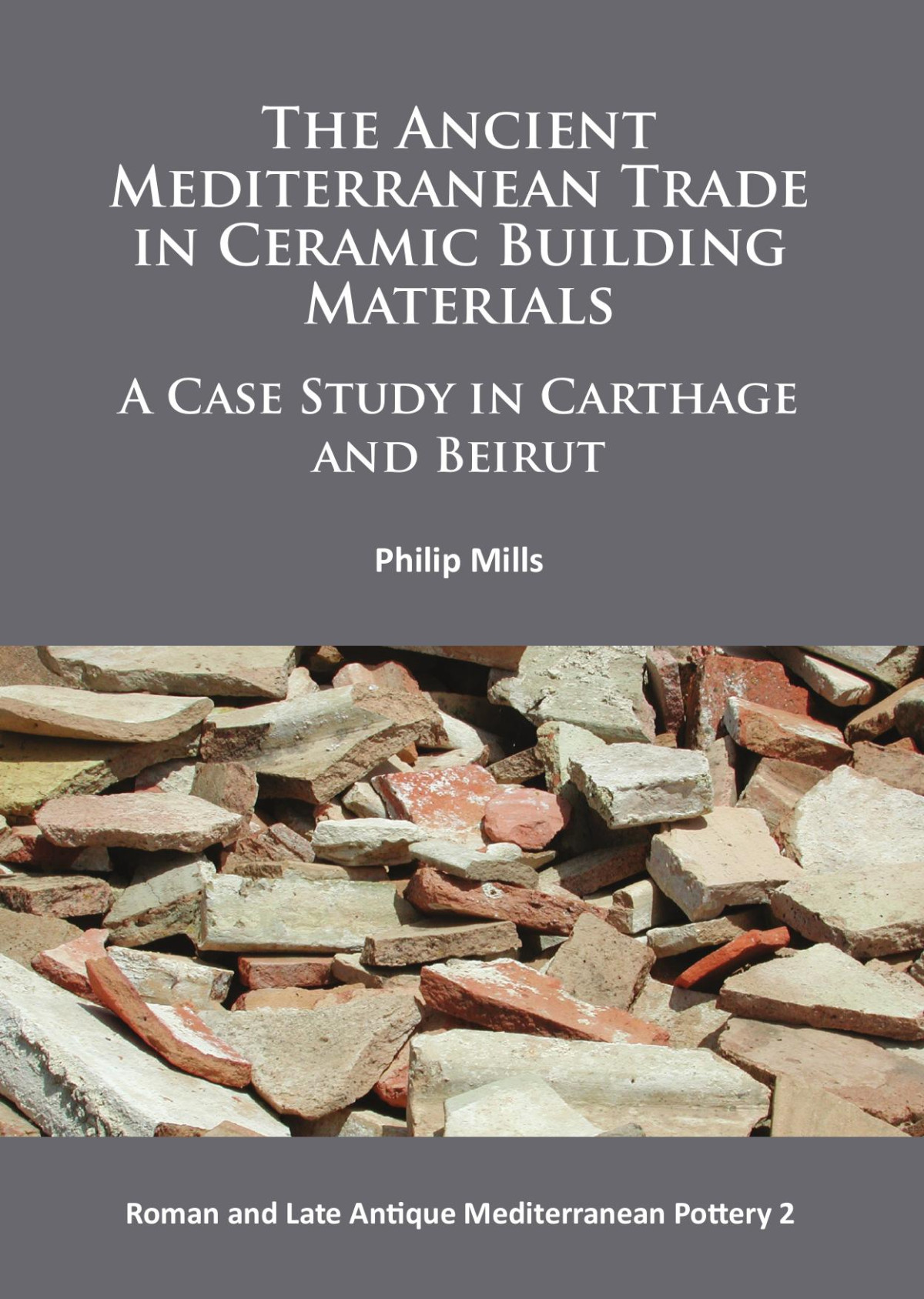
The Ancient Mediterranean Trade in Ceramic Building Materials A Case Study in Carthage and Beirut 1st Edition by Philip Mills ISBN 978-1905739608 1905739605


Original price was: $50.00.$35.00Current price is: $35.00.
The Ancient Mediterranean Trade in Ceramic Building Materials A Case Study in Carthage and Beirut 1st Edition by Philip Mills- Ebook PDF Instant Download/Delivery: 978-1905739608, 1905739605
Full download The Ancient Mediterranean Trade in Ceramic Building Materials A Case Study in Carthage and Beirut 1st Edition after payment
Product details:
ISBN 10: 1905739605
ISBN 13: 978-1905739608
Author: Philip Mills
This study (the second volume in the Archaeopress series devoted to the publication of ceramics in the Roman Mediterranean and outlying territories from the late Republic to late Antiquity) addresses the level of interregional trade of ceramic building material (CBM), traditionally seen as a high bulk low value commodity, within the ancient Mediterranean between the third century BC and the seventh century AD. It examines the impact of different modes of production, distribution and consumption of CBM and how archaeological assemblages differ from what is predicted by current models of the ancient economy. It also explores how CBM can be used to investigate cultural identity and urban form. CBM has great potential in investigating these topics. It survives in large quantities in the archaeological record; it is transported as a commodity in its own right, not as a container for other products like amphorae. The amount of CBM used in a building can be estimated, and this can be extrapolated to urban centres to model consumption in ways that are not possible for other goods. This allows the potential derivation of economic information to a higher level of precision than is the case for other materials. The material used in this study derives from stratified assemblages from two major ports of the ancient Mediterranean: Carthage and Beirut. CBM as a material is comparable to pottery, only it does not exhibit the same range of forms. This leaves fabric as a major means of analysing CBM samples. For this reason a programme of petrological thin sectioning has been carried out on these assemblages. These data have been combined with the taphonomic and dating evidence from the excavations. The results showed that the levels of imports of CBM into these two cities were much higher than would normally be expected from the orthodox model of the consumer city. They also suggest that CBM can be used as a tool to investigate cultural identity. This study is the second volume in the Archaeopress series devoted to the publication of ceramics in the Roman Mediterranean and outlying territories from the late Republic to late Antiquity. See below for LRFW 1. Late Roman Fine Wares. Solving problems of typology and chronology. A review of the evidence, debate and new contexts (2012) edited by Miguel Ángel Cau, Paul Reynolds and Michel Bonifay. ISBN 9781905739462.
Table of contents:
Chapter 1 Introduction and Theory
Chapter 2 Methodology
Chapter 3 Analysis of the Fabrics
Chapter 4 Taphonomic and Other Analysis
Chapter 5 The Cultural Biography of CBM
Chapter 6 Conclusions and Further Work
People also search for:
an ancient north african port on the mediterranean
magic and religion in the ancient mediterranean world
maritime networks in the ancient mediterranean world
medicine and healing in the ancient mediterranean world
map of the ancient mediterranean sea
Tags: Philip Mills, The Ancient Mediterranean, Trade in Ceramic, A Case Study