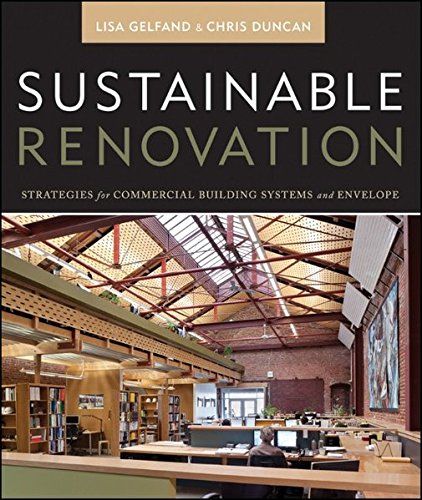
Sustainable renovation strategies for commercial building systems and envelope 1st Edition by Chris Duncan, Lisa Gelfand – Ebook PDF Instant Download/Delivery: 978-0470872611, 0470872616
Full download Sustainable renovation strategies for commercial building systems and envelope 1st Edition after payment

Product details:
ISBN 10: 0470872616
ISBN 13: 978-0470872611
Author: Chris Duncan, Lisa Gelfand
The complete resource on performing sustainable renovations for both Historic and modern existing buildings
This forward-looking and insightful guide explores how the sustainable renovation of existing buildings presents great opportunities for initiating extensive changes in the performance of the built environment. Great examples of existing building upgrades are examined, illustrating how to do sustainable renovations, along with current design approaches for radically improving the functionality of existing prewar, postwar, and late modern buildings. Sustainable Renovation saves its key focus for institutional and commercial buildings, but discusses the challenges they pose within a global scope that encompasses all building practices. Some of the discussions in this book include:
The significance of energy and resource demands by the building sector and the urgency of reducing loads in existing buildings
Management, design, and construction approaches to achieve major modernization in occupied buildings
International case studies that focus on methods and benefits of successful sustainable transformations of existing building performance
Repurposing buildings to preserve style and add performance remains a work in progress as designers and builders discover new methods for improving sustainable practices and standards. With incremental modernization and operations strategies available for immediate implementation, this book demonstrates the different ways of thinking necessary when considering and attempting the integration of sustainable concepts into existing buildings―and enables readers to rethink the world that’s built around them.
Table of contents:
Chapter 1 – Introduction
Sustainability Defined
The Urgency of Sustainability in Buildings
The Importance of Existing Buildings
Renovation Contrasted with Replacement
Facility Management and Incremental Renovation
The Benefits of Sustainable Renovation
Health and Comfort
Economic Returns
Reduction of Climate Change Impact
Chapter 2 – Whole Building Design
Introduction
Existing Building Context
Climate and Function
Building Energy Simulation Models
Testing and Benchmarking Performance
Understanding Existing Building Strategies
Daylight
Ventilation
Permanent Materials
Building Envelope
Building Systems
Modern Building Code Implications
Chapter 3 – Facility Management Upgrades
Introduction
Immediate Improvement
Behaviors
Testing and Analyzing Performance
Retrocommissioning
Lighting
Plug Loads
Heating, Ventilating, and Air-Conditioning
Water Use
Beyond Energy—Green Operations and Maintenance
Indoor Environmental Quality
Regional Issues
Putting Your Program Together
Chapter 4 – Building Envelope Redesign
Introduction
Air Infiltration Losses
Insulation Strategies
Cold Climate
Humid Middle Latitude Climate
Hot Humid Climate
Hot Dry Climate
Continental Climate
Pre-War Buildings
Thermal Mass and Climate Zones
Masonry Wall Design
Window Replacement and Shading
Roof Structure and Insulation
Roofing
Mid-Century Modern Buildings
Curtain Wall Replacement, Modification, and Shading
Insulation Options
Window Replacement
Roofing
Late Modern Buildings
Introducing Daylight
Correcting Roof Structures and Slope
Insulation Options
Window Replacement
Roofing
Chapter 5 – Building Systems Replacement
Building System Needs
Thermal Comfort
Water Use
Light
Building Controls and Environmental Responsiveness
Pre-War Buildings
Steam and Hydronic Systems
Ventilation and Fire Safety
Daylighting
Water Saving Strategies
Electric Power and Controls
Mid-Century Modern Buildings
Hydronic Systems
Passive Ventilation
HVAC Replacement
Daylighting
Water Saving
Electric Power and Controls
Late Modern Buildings
Deep Floor Plate Strategies
Passive Ventilation
HVAC Replacement
Daylighting
Water Saving
Electric Power and Controls
Systems Replacement Summary
Chapter 6 – Building Materials
Environmentally Beneficial Products
Rating Systems and Lifecycle Assessment
LCA Tools
Recycling, Salvage, and Reuse
Resource Efficiency
Reduction in Operational Energy and Waste
Low-Emitting Materials
“Natural” Materials
Concrete and Stone
Metals
Wood
Carpet
Resilient Flooring
Wall Finishes
Pre-War Buildings
Salvage of Masonry and Finishes
Obsolete Plaster and Partition Systems
Mid-Century Modern Buildings
Disassembly Options
Late Modern Buildings
Hazardous Material Issues
Disposal Reduction
Chapter 7 – Construction Operations
Introduction
Initial Construction Activities
Assembling the Team
Exploratory Demolition and Investigations
Demolition Documents vs. Site Discussions
Hazardous Materials Abatement
Construction Debris
Occupied Rehabs
Relocation
Phasing
Separation and Noise
Notification
Elevators
Commissioning
Chapter 8 – High Performance Renovation
Transformation vs. Renovation
Change of Use
Additions and Deletions
Preservation of Historic Characteristics
Retrofitting Active Energy Systems
Combined Heat and Power
Solar Heating and Power
Wind Power
Geothermal Heat Exchange
Waste Water Strategies
Graywater Recirculation
Building System Water Reuse
Living Machine Wastewater Treatment
Passive House (Passivhaus) Design and Existing Buildings
Passive Solar Design
Superinsulation
Sealing the Envelope
Introducing Fresh Air – Heat and Energy Exchange
Chapter 9 – The Future of Renovation
Introduction
Energy Conservation and Building Lifecycle Strategy
Low and No Cost Strategies
2025 Improvements
2040 Improvements
People also search for:
sustainable remodeling
sustainable home renovation
sustainable house renovation
sustainable home remodeling
a sustainable solution to urban growth
Tags: Chris Duncan, Lisa Gelfand, Sustainable renovation, commercial building