
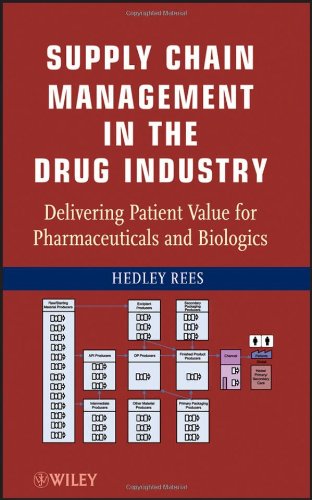
Supply Chain Management in the Drug Industry Delivering Patient Value for Pharmaceuticals and Biologics 1st Edition by Hedley Rees ISBN 0470555170 978-0470555170

Original price was: $50.00.$35.00Current price is: $35.00.
Supply Chain Management in the Drug Industry Delivering Patient Value for Pharmaceuticals and Biologics 1st Edition by Hedley Rees – Ebook PDF Instant Download/Delivery: 0470555170, 978-0470555170
Full download Supply Chain Management in the Drug Industry Delivering Patient Value for Pharmaceuticals and Biologics 1st Edition after payment
Product details:
ISBN 10: 0470555170
ISBN 13: 978-0470555170
Author: Hedley Rees
This book bridges the gap between practitioners of supply-chain management and pharmaceutical industry experts. It aims to help both these groups understand the different worlds they live in and how to jointly contribute to meaningful improvements in supply-chains within the globally important pharmaceutical sector. Scientific and technical staff must work closely with supply-chain practitioners and other relevant parties to help secure responsive, cost effective and risk mitigated supply chains to compete on a world stage. This should not wait until a drug has been registered, but should start as early as possible in the development process and before registration or clinical trials. The author suggests that CMC (chemistry manufacturing controls) drug development must reset the line of sight – from supply of drug to the clinic and gaining a registration, to the building of a patient value stream. Capable processes and suppliers, streamlined logistics, flexible plant and equipment, shorter cycle times, effective flow of information and reduced waste. All these factors can and should be addressed at the CMC development stage.
Table of contents:
I SURVEYING AND MAPPING THE TERRITORY
1 Setting a Transformational Agenda
- 1.1 Aims and Aspirations of the Book
- 1.2 Book Format
- 1.3 Intended Readership
- 1.4 A Book About Two Worlds in Contrast
- 1.5 The Pharmaceutical Lottery
- 1.6 Supply Chain Management in Context
- 1.7 The History of Supply and Value Generation
- 1.8 The Development of Processes to Manage the Supply Chain
- 1.9 Life in SCM
- 1.10 Moving Forward
2 Plotting a Course to Patient Value
- 2.1 Why Focus on Patient Value?
- 2.2 Where Does the Patient Currently Fit?
- 2.3 Why Is It Necessary to Plot a Course?
- 2.4 Understanding How the Course Is Presently Set
- 2.5 Capturing Value for Patients
3 Pharmaceutical Drug Development
- 3.1 Drug Development’s Role in the Supply Chain
- 3.2 Introduction to Drug Development
- 3.3 The Medicinal Product
- 3.4 Clinical Trials
- 3.5 Related Development Programs
- 3.6 Managing Clinical Programs
- 3.7 Regulatory Affairs and Authorities
- 3.8 Supply Chain Management in Development Programs
- 3.9 Manufacture and Supply of Commercial Products
- 3.10 Supply Chain Management for Commercial Products
4 End-to-End Pharmaceutical Supply Chains
- 4.1 Introduction
- 4.2 Where Does Responsibility for the Supply Chain Lay?
- 4.3 Sponsoring Companies, License Holders, and Their Supply Chains
- 4.4 Supply Chains for Small-Molecule Products
- 4.5 Starting at the Final Destination
- 4.6 How Drugs Enter the Body
- 4.7 Design of Drug Delivery Systems
- 4.8 What This Means for the Supply Chain
- 4.9 Key Aspects of GMP and GDP in Relation to SCM
- 4.10 Overview of the Stages on Route to Patient Delivery
- 4.11 Manufacture and Supply of Biological Entities
5 Why Pharma Supply Chains Don’t Perform
- 5.1 Supply Chain Underperformance
- 5.2 Is There a Case to Answer?
- 5.3 Birth to Infancy: The Supply Chain Critical Stage
- 5.4 Commercial Supply Under the Patent Protection Umbrella
- 5.5 What This Means for the Pharmaceutical Supply Chain
II BUILDING A KNOWLEDGE FOUNDATION IN SCM
6 Supply Chain Management as a Competitive Weapon
- 6.1 Competition and Business Strategy
- 6.2 The Marketing Mix
- 6.3 Porter’s Five Forces
- 6.4 Porter’s Generic Competitive Strategies
- 6.5 Porter’s Value Chain
- 6.6 Competitive Strategy and Customers
- 6.7 The Japanese Experience
- 6.8 Total Quality Management
- 6.9 Lean Thinking
- 6.10 Focusing on Value for Money
- 6.11 SCM Processes in Competitive Strategy
- 6.12 SCM in Biotech and Virtual Companies
- 6.13 Competition in Pharmaceuticals
7 Supply Chain Management Holistic
- 7.1 The Relevance of SCM to Pharmaceuticals
- 7.2 Production Systems and the SCM Holistic
- 7.3 The Core of SCM
- 7.4 First Principle of SCM
- 7.5 Supply Chains as a Series of Interconnected Systems
- 7.6 Processes to Manage the Supply Chain
- 7.7 A Word About Processes
- 7.8 How the SCM Processes Should Mesh Together
- 7.9 Production and Inventory Control
- 7.10 Strategic Procurement
- 7.11 Transportation, Storage, and Distribution
- 7.12 Information Systems and Technology
- 7.13 Improvement
8 Production and Inventory Control
- 8.1 Core Mission
- 8.2 First Principles of Production and Inventory Control
- 8.3 The Wholesome Trinity in P&IC
- 8.4 The Wholesome Trinity and Customer Expectations
- 8.5 Leveraging the Wholesome Trinity
- 8.6 The Impact of Variety on Supply Chains
- 8.7 Designing Appropriate Production Systems
9 Strategic Procurement
- 9.1 Core Mission
- 9.2 The Purchasing Portfolio
- 9.3 The Process of Procurement
- 9.4 Strategic Sourcing and Planning
- 9.5 Outsourcing
- 9.6 Basic Principles in Contracting for Supply
- 9.7 Finally, Typical Organizational Tension over Procurement
10 Transportation, Storage, and Distribution
- 10.1 Defining the Core Mission
- 10.2 International Trade and Commerce
- 10.3 The World Trade Organization
- 10.4 Intermediary Arrangements
- 10.5 Terms of Trade: Incoterms
- 10.6 Ownership of Goods: Title
- 10.7 Third-Party Logistics Providers
- 10.8 Customs
- 10.9 Shipping Regulations Relating to Materials
- 10.10 A Finishing Note
11 Information Systems and Information Technology
- 11.1 Overview
- 11.2 Brief Lay History of Computer Systems Development
- 11.3 Important Perspectives on Information Systems
12 Improvement
- 12.1 Why Improve?
- 12.2 Improvement and Production Systems
- 12.3 The Improvement Journey
13 Bringing the Holistic Together
- 13.1 Setting the Scene
- 13.2 The Process Explained
- 13.3 Developing an Action Agenda
- 13.4 Case Study
III PLANNING AND EXECUTING SUPPLY CHAIN CHANGE
14 Improvement in Pharmaceuticals
- 14.1 Where Are We Now?
- 14.2 Subsequent Developments Since Inception
- 14.3 A Blueprint for Quality by Design
15 Exemplar Thinking in Organizational Improvement
- 15.1 Where Are We Now?
- 15.2 What Is Meant by “Exemplar”?
- 15.3 A Dialogue on Exemplar Improvement
- 15.4 An Approach to SCM Based on Systems Thinking
16 Building a Foundation for Sustainable Change
- 16.1 Focus on the Individual
- 16.2 Individuals as Leaders
- 16.3 Individuals as Motivators and the Motivated
- 16.4 Individuals as Group Members
- 16.5 Individuals as Participants in Cultural Change
- 16.6 Case Study: Miles Ltd., Bridgend, Glamorgan
17 A Cure for the Pharmaceutical Supply Chain
- 17.1 What Is the Disease State?
- 17.2 What Is the Label Claim for the Medicine?
- 17.3 What Will Life Hold Without the Medicine?
- 17.4 What Is This Better Way to Develop Drugs?
- 17.5 Full-Scale Production of Drugs
- 17.6 What Are the Barriers to Change?
- 17.7 What Are the Potential Benefits of Change?
- 17.8 Defining the Art of the Possible
- 17.9 Ending with the Beginning
People also search for:
supply chain management in the drug industry
what is supply chain management in healthcare
what is drug supply management
what is supply chain management with example
supply chain management what is it
Tags:
Hedley Rees,Supply Chain,the Drug Industry,Delivering Patient