
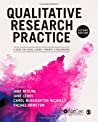
Qualitative Research Practice A Guide for Social Science Students and Researchers 2nd Edition by Jane Beaglehole Ritchie ISBN 9781446209127 1446209121


Original price was: $50.00.$35.00Current price is: $35.00.
Qualitative Research Practice A Guide for Social Science Students and Researchers 2nd Edition by Jane Beaglehole Ritchie – Ebook PDF Instant Download/Delivery: 9781446209127, 1446209121
Full download Qualitative Research Practice A Guide for Social Science Students and Researchers 2nd Edition after payment
Product details:
ISBN 10: 1446209121
ISBN 13: 9781446209127
Author: Jane Beaglehole Ritchie
Qualitative Research Practice: A Guide for Social Science Students and Researchers (2nd Edition) is a comprehensive textbook edited by Jane Ritchie, Jane Lewis, Carol McNaughton Nicholls, and Rachel Ormston. This edition, published in 2013, serves as an essential resource for students and researchers engaged in qualitative research within social sciences
Table of contents:
1 The Foundations of Qualitative Research
Rachel Ormston, Liz Spencer, Matt Barnard, Dawn Snape
The nature of qualitative research
Key philosophical issues in social research
Ontology
Epistemology
Positivism and the scientific method
Key developments and traditions in qualitative research
Interpretivism and the origins of qualitative research
Advancement and diversification of qualitative research
Choosing an approach
The ‘approach’ within this book
Realism
Interpretivism and the role of theory
Pragmatism
Reflexivity
Rigour
Inferential status
2 The Applications of Qualitative Methods to Social Research
Jane Ritchie and Rachel Ormston
Theoretical and applied research
The growth in applied qualitative research
The functions of qualitative research
Qualitative research as an independent research strategy
Combining qualitative and quantitative methods
Approaches to mixing methods
Sequencing of quantitative and qualitative methods
Mixing qualitative methods
3 Design Issues
Jane Lewis and Carol McNaughton Nicholls
Defining the research questions
Identifying the research topic
Developing research questions
Incorporating literature and theory
Choosing a data collection method
Secondary data analysis
Naturally occurring and generated data
Rationale for different types of data
Interview and focus group data
The nature of the data sought
Subject matter
Research population
Combining qualitative methods
Using the Internet to collect data
Selecting the time frame for research
The number of research episodes and the role of longitudinal research
Key considerations – repeat research episodes
Building comparison into the research design
Comparison
Case study research
Participatory action research
Resourcing and timetabling qualitative research studies
4 Ethical Considerations in Qualitative Research
Stephen Webster, Jane Lewis and Ashley Brown
Theoretical perspectives
Ethical guidelines and codes – and why they are not enough
Ethical issues raised by qualitative research
Avoiding undue intrusion
Informed consent
Voluntary consent and pressure to participate
Avoiding adverse consequences
Confidentiality
Enabling participation
Protecting researchers from adverse consequences
Developing ethical practice
Research governance
Developing an ethical conscience
5 Designing and Selecting Samples
Jane Ritchie, Jane Lewis, Gilliam Elam, Rosalind Tennant and Nilufer Rahim
Sampling strategies for qualitative research
Purposive sampling
Theoretical sampling
Convenience sampling
Key features of qualitative sampling
The use of prescribed selection criteria
Sample size
Additional and supplementary samples
Study populations and sample frames
Study population or constituency
Options for sample frames
Stages in designing a purposive sample
Identifying the population for study
The choice of purposive selection criteria
Prioritising the selection criteria
Deciding on the locations for the study
Setting quotas for selection
Purposive sampling for group discussions
Implementing the sample design
Recruitment
Documenting outcomes
6 Designing Fieldwork
Sue Arthur, Martin Mitchell, Jane Lewis and Carol McNaughton Nicholls
Approaching data collection
Designing topic guides
The content, structure and length of guides
Ordering data collection
Language and terminology
Incorporating structured data in qualitative fieldwork
Enabling techniques
Projective techniques
Creative and visual methods
Using case examples and vignettes
Providing information to participants
Card sorting, ranking and prioritising exercises
Mapping key or emergent issues
Using enabling techniques
Designing fieldwork material for Internet research
Fieldnotes, summary sheets and recording data
Fieldnotes
Recording data
Preparing for fieldwork and refining fieldwork strategies
7 In-depth Interviews
Alice Yeo, Robin Legard, Jill Keegan, Kit Ward, Carol McNaughton Nicholls and Jane Lewis
Perspectives on the interview
The nature and meaning of the interview interaction
The nature and meaning of the relationship between interviewer and interviewee
Critiques of the interview as a method
Forms and features of in-depth interviews
Key features of in-depth interviews
Attributes and skills of a qualitative interviewer
The stages of an interview
Stage one: arrival and introductions
Stage two: introducing the research
Stage three: beginning the interview
Stage four: during the interview
Stage five: ending the interview
Stage six: after the interview
Formulating questions to achieve breadth and depth
Some principles in formulating questions
Open questions
Non-leading questions
Asking clear questions
Asking mapping questions
Probing
Using prompts
Supporting the interview dynamic
Approaches to interviewing
Responding to challenging situations in interviews
Strong emotional responses
Maintaining interview focus
Practical considerations
Scheduling appointments
Venues and the interview environment
Other people attending the interview
8 Focus Groups
Helen Finch, Jane Lewis and Caroline Turley
Features and types of focus groups
Key features of the focus group
Types of focus groups
Group processes and the stages of a focus group
The group process
The stages of a focus group
Conducting the discussion
An overview of the researcher’s role
Flexibility or structure: moderating the discussion
Probing for fuller responses
Noting non-verbal language
Controlling the balance between individual contributions
Using the group process: some further strategies
Encouraging in-depth exploration of emergent issues
Exploring diversity of view
Challenging social norms and apparent consensus
Group composition and size
Heterogeneity versus homogeneity
Strangers, acquaintances and pre-existing groups
Group size
Practicalities in organising the group
Time and place
Provision at the discussion venue
Recording
Online focus groups
‘Chat room’ focus groups
Bulletin board focus groups
9 Observation
Carol McNaughton Nicholls, Lisa Mills and Mehul Kotecha
The nature of observational evidence
The central presence of the researcher
Overt and covert research – and where they blur
Intention and forms of data capture
Choosing observation as method
Observation for familiarization
Observation in a multi-method design
Observation as a central method
Collecting observation data
Selecting what to observe
Site arrangements
Recording observation data
Developing fieldnotes
Structured fieldnotes and proformas
Video and photographic records
Labelling observations
Internet observation
Doing online observations
A point on data protection
10 Analysis: Principles and Processes
Liz Spencer, Jane Ritchie, Rachel Ormston, William O’Connor and Matt
Barnard
Traditions and approaches
Key features of different approaches
The analytic journey
A question of terminology
Formal analysis
Data management – an overview
Familiarization
Constructing an initial thematic framework
Indexing and sorting
Reviewing data extracts
Data summary and display
Abstraction and interpretation – an overview
Description
Explanation
Routes through the analytic process
Computer-assisted qualitative analysis
Using CAQDAS
Benefits of CAQDAS
The debate about CAQDAS
Choosing a software package
11 Analysis in Practice
Liz Spencer, Jane Ritchie, William O’Connor, Gareth Morrell and Rachel
Ormston
Data management
Familiarization
Constructing an initial thematic framework (Box 11.1)
Indexing and sorting (Boxes 11.2 and 11.3)
Reviewing data extracts
Data summary and display, using Framework (Box 11.4)
Abstraction and interpretation
Description: developing categories (Boxes 11.5 to 11.8)
Description: mapping linkage (Boxes 11.9 to 11.14)
Explanation: accounting for patterns (Boxes 11.15 to 11.17)
Analysing other forms of qualitative data
Focus groups
Data generated online
Documentary data
Observation
Visual data
12 Generalising from Qualitative Research
Jane Lewis, Jane Ritchie, Rachel Ormston and Gareth Morrell
Approaches to generalisation
Representational generalisation
Inferential generalisation
Theoretical generalisation
Reliability and validity
Reliability
Validity
Validation
Generalising from qualitative data
Questions relating to the interpretive process
Questions relating to validation
Questions relating to the design and conduct of the research
13 Writing up Qualitative Research
Clarissa White, Kandy Woodfield, Jane Ritchie and Rachel Ormston
Qualitative research outputs
Challenges in reporting qualitative data
Telling the story
Displaying the evidential base
Displaying diversity
Length in written accounts
Explaining the boundaries of qualitative research
Writing up qualitative research findings
Preparing to write
Deciding on a narrative and structure
Reporting voice and language
Explaining methods
Avoiding numerical statements about qualitative findings
The use of illustrative material
Combining qualitative and quantitative data
Displaying qualitative evidence
Displaying range and diversity
Displaying linkage
Displaying typologies
Explaining findings
Using diagrams and visual representations
People also search for:
qualitative research practice
ritchie and lewis qualitative research practice
ritchie lewis 2003 qualitative research practice
good qualitative research practice
qualitative research practice problems
Tags: Jane Beaglehole Ritchie, Qualitative Research, Practice A Guide, Social Science