
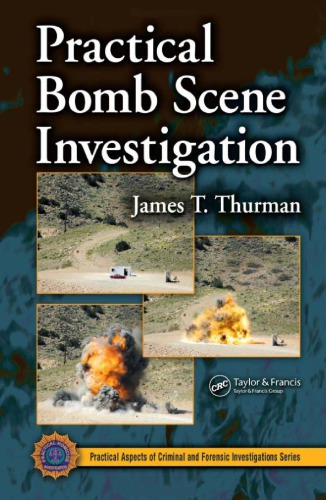
Practical Bomb Scene Investigation Practical Aspects of Criminal Forensic Investigations 1st Edition by James Thurman ISBN 978-0849341984 0849341984


Original price was: $50.00.$35.00Current price is: $35.00.
Practical Bomb Scene Investigation Practical Aspects of Criminal Forensic Investigations 1st Edition by James T. Thurman- Ebook PDF Instant Download/Delivery: 978-0849341984, 0849341984
Full download Practical Bomb Scene Investigation Practical Aspects of Criminal Forensic Investigations 1st Edition after payment
Product details:
ISBN 10: 0849341984
ISBN 13: 978-0849341984
Author: James T. Thurman
The illicit use of explosives has become a growing international concern. Those investigating the scenes of these bombings must do so expeditiously and effectively in order to locate any and all evidence among the rubble that can identify the culprits and bring them to justice.
Written by an explosives expert with over thirty years in the field, Practical Bomb Scene Investigation is an accessible step-by-step guide through the postblast investigative process. It is the first single-source reference that not only provides essential information on locating and safeguarding evidence at the scene, but it also takes the investigator through all phases of the inquiry.
This book uses case studies to promote an organized, methodical approach to investigations. It addresses safety issues such as military ordnance identification procedures and indicators of biological, chemical, and radiological material use. It also provides full color photographs of bomb scenes and related evidence.
Practical Bomb Scene Investigation is an essential book for not only the explosion/bomb scene investigator and technician, but also for homeland security professionals, first responders, terrorism/intelligence analysts, military personnel, trainers, educators, criminalist and forensic scientists
Table of contents:
1 Explosion Theory and Dynamics
1.1 Introduction
1.2 Scientific Method
1.3 Explosives
1.4 Types of Explosives
1.5 Classification and Sensitivity of Explosives
1.6 Explosive Performance
1.7 Firing Trains
1.8 Additional Characteristics of Explosives
1.9 Accountability of Explosives and Explosives Detection
1.10 Explosions
1.10.1 Types of Explosions
1.10.2 Explosion Effects
1.11 Explosion Scene Investigation
1.12 Summary
Review Questions
References and Additional Reading
2 Identification and Recognition of Commercial, Improvised, and Military Explosives
2.1 Introduction
2.2 Short History of Explosives
2.3 Low Explosives
2.3.1 Black Powder
2.3.2 Pyrodex
2.3.3 Photoflash Powder
2.3.4 Smokeless Powder
2.4 Commercial High Explosives
2.4.1 Primary Explosives
2.4.1.1 Lead Azide
2.4.1.2 Lead Styphnate
2.4.1.3 Mercury Fulminate
2.4.1.4 Diazodinitrophenol
2.4.1.5 Tetrazene
2.4.2 Secondary Explosives
2.4.2.1 Ammonium Nitrate
2.4.2.2 Ammonium Nitrate and Fuel Oil (ANFO)
2.4.2.3 Nitroglycerin
2.4.2.4 Dynamite
2.5 Water-Based Products
2.5.1 Water Gel or Slurry Explosives
2.5.2 Emulsion Explosives
2.5.2.1 Trinitrotoluene (TNT)
2.5.2.2 Pentaerythritol Tetranitrate (PETN)
2.5.2.3 Cyclotrimethylene Trinitramine (RDX)
2.6 Boosters
2.7 Binary Explosives
2.8 Sheet Explosives
2.9 Foreign Explosives
2.10 United States Military Explosives
2.10.1 Trinitrotoluene Charges (TNT)
2.10.2 Composition 4 (C-4)
2.10.3 Sheet Explosives
2.10.4 Military Dynamite
2.11 Improvised Explosives
2.12 Initiation Systems and Components
2.12.1 Initiators
2.12.1.1 Safety and Hobby Fuse
2.12.1.2 Fuse Lighter
2.12.1.3 Detonating Cord
2.12.1.4 Shock Tube
2.12.1.5 Thermo Tube
2.12.1.6 Detonator
2.13 Chapter Summary
Review Questions
References and Additional Reading
3 Improvised Explosive Device
Components: Pre- and Post-Blast Identification
3.1 Introduction
3.2 Improvised Explosive Devices
3.2.1 Factors Affecting Improvised Explosive
Device Construction
3.2.2 Basic Components of the Improvised Explosive Device
3.2.3 Primary Effect Provided by Type of Improvised Explosive Devices
3.2.4 Appearance of an Improvised Explosive Device
3.2.5 Components of the Improvised Explosive Device
3.2.5.1 Initiators
3.2.5.2 Containers
3.2.5.3 Electrical Components
3.2.5.4 Timing Mechanisms
3.2.5.5 Shrapnel
3.2.5.6 Adhesives
3.2.5.7 Tape
3.2.5.8 Wood
3.2.5.9 Paper
3.2.5.10 Fasteners
3.2.5.11 Nonelectrical Wire
3.3 Fuzing Systems
3.4 Investigative Process
3.5 Chapter Summary
Review Questions
References and Additional Reading
4 Investigation of the Explosion Scene and Collection of Evidence
4.1 Introduction
4.2 Investigative Outline
4.2.1 Initial Response
4.2.2 Evaluation of the Explosion Scene
4.2.2.1 Evaluation and Establishment of Scene Perimeters, Inner and Outer, and Scene Security
4.2.2.2 Establishment of a Command Post Location for the Crime Scene Investigation Team
4.2.2.3 Establishment of Documentation Procedures to Account for Personnel Entering and Exiting the Scene
4.2.2.4 Establishment of Entry and Exit Paths for Crime Scene Investigation Team Members
4.2.2.5 Establishment of Staging Areas for Team Members
4.2.2.6 Safety (to the Extent Possible) for Entry by the Investigation Team
4.2.2.7 Level of Investigative Assistance and Resources Required
4.2.2.8 Whether a Search Warrant or Permission to Search Is Required
4.2.2.9 What Documentation Procedures Will Be
Utilized for Evidence Collection, Control, and Chain of Custody
4.2.2.10 What Procedures Will Be Utilized to Prevent Scene Contamination
4.2.2.11 Scene Walk-Through
4.2.2.12 Attempt to Locate the Epicenter of the Explosion
4.2.2.13 Personnel, Supplies, and Equipment Resources
4.2.3 Entering the Scene (Scene Investigation)
4.2.3.1 Entering the Scene
4.2.4 Documentation of the Explosion Scene
4.2.5 Where to Find Evidence at the Bomb Scene
4.2.6 How to Find Evidence at the Bomb Scene
4.2.7 How to Collect Evidence at the Bomb Scene
4.2.7.1 Special Situations for Evidence Collection
4.2.8 Final Survey
4.2.9 Release of the Scene
4.2.9.1 Submission of Evidence to the Laboratory
4.2.10 Field (or Outside) Investigation
4.2.10.1 Where to Start the Field Investigation
4.2.10.2 Determining the Explosives Weight of the Improvised Explosive Device
4.2.10.3 Post-Investigation: The Investigative Report
4.3 Summary
Review Questions
References and Additional Reading
5 Bomb Scene Investigator and Weapons of Mass Destruction
5.1 Introduction
5.2 Types of Weapons of Mass Destruction
5.3 Nuclear, Biological, and Chemical Materials
5.3.1 Nuclear Materials
5.3.2 Biological Materials
5.3.2.1 Biological Microorganisms Classifications
5.3.3 Chemical Agents
5.4 Weapons of Mass Destruction Hazards
5.5 Determining the Presence of Weapons of Mass Destruction
5.6 Weapons of Mass Destruction Protection Methods
5.7 Key Issues for Investigating a Weapons of Mass Destruction Scene
5.7.1 Preincident Planning
5.7.2 Determining Whether a WMD Was Used
5.7.3 Assessing Scene Control and Security
5.7.4 Ensuring That Appropriate Protection Methods Are Employed
5.7.5 Addressing Immediate Life Safety Hazards
5.7.6 Contacting Appropriate Outside Agencies for Assistance
5.7.7 Identifying and Preserving Evidence
5.8 Summary
Review Questions
References and Additional Reading
6 Introduction to the Identification of Military Ordnance
6.1 Introduction
6.2 Definitions
6.3 Physical Characteristics of Military Ordnance
6.4 Identification Features of Military Ordnance
6.4.1 Dropped Ordnance
6.4.2 Projected Ordnance
6.4.3 Thrown Ordnance
6.4.4 Placed Ordnance
6.5 Chapter Summary
Review Questions
References and Additional Reading
7 Capabilities of the Forensic Laboratory: Reading the Bomber’s Signature
7.1 Introduction
7.2 Laboratory Capabilities in the Examination of Improvised Explosive Devices
7.2.1 Device Reconstruction
7.2.2 Explosive Residue Analysis
7.2.3 Latent Fingerprint Examinations
7.2.4 Materials Analysis
7.2.5 Document Examinations
7.2.6 Toolmark Examinations
7.2.7 Metallurgical Examinations
7.2.8 DNA Analysis
7.3 Reading the Bomber’s Signature
7.3.1 Introduction
7.4 Chapter Review
Review Questions
References and Additional Reading
8 Tactical Post-Blast Investigation
8.1 Introduction
8.2 Tactical Scene Investigative Outline
8.3 Organization of the Investigative Team: Personnel and Equipment
8.4 Route Security and Access to the Scene
8.5 Scene Assessment
8.6 Scene Investigation: Documentation, Collection of Evidence, and Witness Interviews
8.7 Final Survey
8.8 Return to the Secure Zone
8.9 Summary
Review Questions
References and Additional Reading
People also search for:
o-bomb shot
bomb in office prank
quantico bomb scene
q bomb explosion
q-bomb
Tags: James Thurman, Practical Bomb, Investigation Practical, Aspects of Criminal