
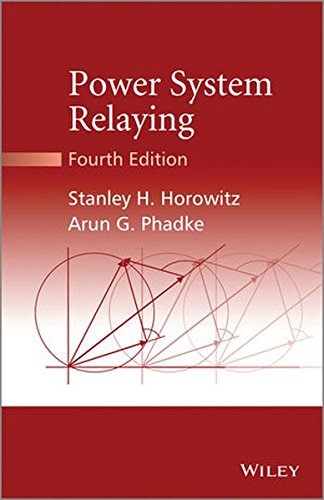
Power System Relaying 4th Edition by Stanley Horowitz, Arun Phadke, James Niemira ISBN 978-1118662007 1118662008


Original price was: $50.00.$35.00Current price is: $35.00.
Power System Relaying 4th Edition by Stanley H. Horowitz, Arun G. Phadke, James K. Niemira – Ebook PDF Instant Download/Delivery: 978-1118662007, 1118662008
Full download Power System Relaying 4th Edition after payment
Product details:
ISBN 10: 1118662008
ISBN 13: 978-1118662007
Author: Stanley H. Horowitz, Arun G. Phadke, James K. Niemira
With emphasis on power system protection from the network operator perspective, this classic textbook explains the fundamentals of relaying and power system phenomena including stability, protection and reliability. The fourth edition brings coverage up-to-date with important advancements in protective relaying due to significant changes in the conventional electric power system that will integrate renewable forms of energy and, in some countries, adoption of the Smart Grid initiative.
New features of the Fourth Edition include:
an entirely new chapter on protection considerations for renewable energy sources, looking at grid interconnection techniques, codes, protection considerations and practices.
new concepts in power system protection such as Wide Area Measurement Systems (WAMS) and system integrity protection (SIPS) -how to use WAMS for protection, and SIPS and control with WAMS.
phasor measurement units (PMU), transmission line current differential, high voltage dead tank circuit breakers, and relays for multi-terminal lines.
revisions to the Bus Protection Guide IEEE C37.234 (2009) and to the sections on additional protective requirements and restoration.
Used by universities and industry courses throughout the world, Power System Relaying is an essential text for graduate students in electric power engineering and a reference for practising relay and protection engineers who want to be kept up to date with the latest advances in the industry.
Table of contents:
1. Introduction to Protective Relaying
1.1 What is Relaying?
1.2 Power System Structural Considerations
1.3 Power System Bus Configurations
1.4 The Nature of Relaying
1.5 Elements of a Protection System
1.6 International Practices
1.7 Summary
Problems
References
2. Relay Operating Principles
2.1 Introduction
2.2 Detection of Faults
2.3 Relay Designs
2.4 Electromechanical Relays
2.5 Solid-State Relays
2.6 Computer Relays
2.7 Other Relay Design Considerations
2.8 Control Circuits: A Beginning
2.9 Summary
Problems
References
3. Current and Voltage Transformers
3.1 Introduction
3.2 Steady-State Performance of Current Transformers
3.3 Transient Performance of Current Transformers
3.4 Special Connections of Current Transformers
3.5 Linear Couplers and Electronic Current Transformers
3.6 Voltage Transformers
3.7 Coupling Capacitor Voltage Transformers
3.8 Transient Performance of CCVTs
3.9 Electronic Voltage Transformers
3.10 Summary
Problems
References
4. Nonpilot Overcurrent Protection of Transmission Lines
4.1 Introduction
4.2 Fuses, Sectionalizers, and Reclosers
4.3 Inverse, Time-Delay Overcurrent Relays
4.4 Instantaneous Overcurrent Relays
4.5 Directional Overcurrent Relays
4.6 Polarizing
4.7 Summary
Problems
References
5. Nonpilot Distance Protection of Transmission Lines
5.1 Introduction
5.2 Stepped Distance Protection
5.3 R–X Diagram
5.4 Three-Phase Distance Relays
5.5 Distance Relay Types
5.6 Relay Operation with Zero Voltage
5.7 Polyphase Relays
5.8 Relays for Multiterminal Lines
5.9 Protection of Parallel Lines
5.10 Effect of Transmission Line Compensation Devices
5.11 Loadability of Relays
5.12 Summary
Problems
References
6. Pilot Protection of Transmission Lines
6.1 Introduction
6.2 Communication Channels
6.3 Tripping Versus Blocking
6.4 Directional Comparison Blocking
6.5 Directional Comparison Unblocking
6.6 Underreaching Transfer Trip
6.7 Permissive Overreaching Transfer Trip
6.8 Permissive Underreaching Transfer Trip
6.9 Phase Comparison Relaying
6.10 Current Differential
6.11 Pilot Wire Relaying
6.12 Multiterminal Lines
6.13 The Smart Grid
6.14 Summary
Problems
References
7. Rotating Machinery Protection
7.1 Introduction
7.2 Stator Faults
7.3 Rotor Faults
7.4 Unbalanced Currents
7.5 Overload
7.6 Overspeed
7.7 Abnormal Voltages and Frequencies
7.8 Loss of Excitation
7.9 Loss of Synchronism
7.10 Power Plant Auxiliary System
7.11 Winding Connections
7.12 Startup and Motoring
7.13 Inadvertent Energization
7.14 Torsional Vibration
7.15 Sequential Tripping
7.16 Summary
Problems
References
8. Transformer Protection
8.1 Introduction
8.2 Overcurrent Protection
8.3 Percentage Differential Protection
8.4 Causes of False Differential Currents
8.5 Supervised Differential Relays
8.6 Three-Phase Transformer Protection
8.7 Volts-per-Hertz Protection
8.8 Nonelectrical Protection
8.9 Protection Systems for Transformers
8.10 Summary
Problems
References
9. Bus, Reactor, and Capacitor Protection
9.1 Introduction to Bus Protection
9.2 Overcurrent Relays
9.3 Percentage Differential Relays
9.4 High-Impedance Voltage Relays
9.5 Moderately High-Impedance Relay
9.6 Linear Couplers
9.7 Directional Comparison
9.8 Partial Differential Protection
9.9 Introduction to Shunt Reactor Protection
9.10 Dry-Type Reactors
9.11 Oil-Immersed Reactors
9.12 Introduction to Shunt Capacitor Bank Protection
9.13 Static Var Compensator Protection
9.14 Static Compensator
9.15 Summary
Problems
References
10. Power System Phenomena and Relaying Considerations
10.1 Introduction
10.2 Power System Stability
10.3 Steady-State Stability
10.4 Transient Stability
10.5 Voltage Stability
10.6 Dynamics of System Frequency
10.7 Series Capacitors and Reactors
10.8 Independent Power Producers
10.9 Islanding
10.10 Blackouts and Restoration
10.11 Summary
Problems
References
11. Relaying for System Performance
11.1 Introduction
11.2 System Integrity Protection Schemes
11.3 Underfrequency Load Shedding
11.4 Undervoltage Load Shedding
11.5 Out-of-Step Relaying
11.6 Loss-of-Field Relaying
11.7 Adaptive Relaying
11.8 Hidden Failures
11.9 Distance Relay Polarizing
11.10 Summary
Problems
References
12. Switching Schemes and Procedures
12.1 Introduction
12.2 Relay Testing
12.3 Computer Programs for Relay Setting
12.4 Breaker Failure Relaying
12.5 Reclosing
12.6 Single-Phase Operation
12.7 Summary
References
13. Monitoring Performance of Power Systems
13.1 Introduction
13.2 Oscillograph Analysis
13.3 Synchronized Sampling
13.4 Fault Location
13.5 Alarms
13.6 COMTRADE and SYNCHROPHASOR Standards
13.7 Summary
Problems
References
14. Improved Protection with Wide Area Measurements (WAMS)
14.1 Introduction
14.2 WAMS Organization
14.3 Using WAMS for Protection
14.4 Supervising Backup Protection
14.5 Impedance Excursions into Relay Settings
14.6 Stability-Related Protections
14.7 SIPS and Control with WAMS
14.8 Summary and Future Prospects
References
15. Protection Considerations for Renewable Resources
15.1 Introduction
15.2 Types of Renewable Generation
15.3 Connections to the Power Grid and Protection Considerations
15.4 Grid Codes for Connection of Renewables
15.5 Summary
People also search for:
ieee power system relaying and control committee
power system protection and relaying
power system protection and relaying book
adaptive relaying power system protection
power system protection fault detection and adaptive relaying
Tags: Stanley Horowitz, Arun Phadke, James Niemira, Power System Relaying