
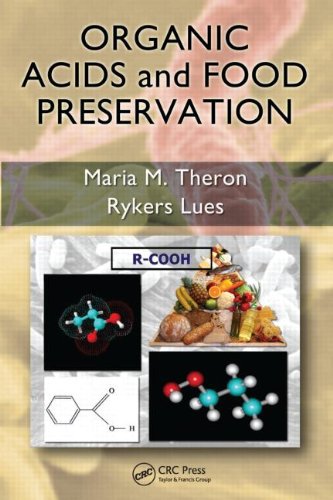
Organic Acids and Food Preservation 1st Edition by Maria Theron, Rykers Lues ISBN 978-1420078428 1420078429

Original price was: $50.00.$35.00Current price is: $35.00.
Organic Acids and Food Preservation 1st Edition by Maria M. Theron, J. F. Rykers Lues – Ebook PDF Instant Download/Delivery: 978-1420078428, 1420078429
Full download Organic Acids and Food Preservation 1st Edition after payment
Product details:
ISBN 10: 1420078429
ISBN 13: 978-1420078428
Author: Maria M. Theron, J. F. Rykers Lues
Although organic acids have been used to counteract pathogens in food for many years, there is a glaring need to assess and improve their continued effectiveness and sustainability. There is also a growing demand for foods that are produced using milder treatments (e.g., less heat, salt, sugar, and chemicals) and newer technologies to prevent the growth of dangerous bacteria.
Organic Acids and Food Preservation concentrates on safe and effective techniques for applying organic acids to prevention of bacterial growth. Despite the wide range of potentially useful antimicrobials, relatively few are suitable in practice―and this invaluable hands-on guide explains why. With its wealth of information and rare focus solely on the subject, it provides practical tools that can be used in the food industry, various academic disciplines, research, education, and food technology fields to better understand the problem and develop optimal solutions.
Why are preservative strategies ineffective?
Why are microorganisms becoming acid tolerant and resistant in other ways?
To answer these and other key questions, the authors combine research findings from industries and laboratories around the globe, specific application regimen, future prospects, and other information that is vital to the successful use of organic acids as food preservatives. After outlining challenges that the food industry faces from modern consumer trends, food legislation, and other obstacles, this book then explores possible solutions that are applicable not only to food science but to microbiology, food science, food technology, biochemistry, and biotechnology. It will become a valuable addition to the library of any scientist or researcher working in these and other fields.
Table of contents:
Chapter 1 Introduction
1.1 The evolution of preservation with organic acids: From stone age to space age
More than a century of preservation with organic acids…
1.1.2 Toward preservative-free food
1.2 Unrivaled advantages
1.3 Economic implications: “Safer food, better business”
1.4 Legislative issues in food production…
1.5 Problems in an “organic world”
1.5.1 Nutrition and consumer perceptions
1.5.2 Pesticides
1.5.3 Mycotoxins.
1.5.4 Food safety control measures
1.5.5 Seeking alternatives.
1.6 New and emerging pathogens
1.6.1 Introduction
1.6.2 Foodstuffs implicated
1.6.3 Laboratory methodologies
1.6.4 Epidemiology
1.6.5 A review of emerging organisms.
1.6.5.1 Bacteria
1.6.5.2 Fungi.
1.6.5.3 Viruses.
1.6.5.4 Protozoa..
References
Chapter 2 Nature and composition of organic acids.
2.1 General characterization
2.2 Structural description.
2.3 An overview of individual organic acids and their applications
2.3.1 Acetic acid.
2.3.2 Ascorbic acid
2.3.3 Benzoic acid
2.3.4 Cinnamic acid
2.3.5 Citric acid
2.3.6 Formic acid
2.3.7 Fumaric acid
2.3.8 Gluconic acid
2.3.9 Lactic acid
2.3.10 Malic acid.
2.3.11 Propionic acid.
2.3.12 Sorbic acid
2.3.13 Succinic acid
2.3.14 Tartaric acid
2.3.15 Other acids…
2.4 General applications.
2.5 Food products naturally containing organic acids…
2.5.1 Fruit
2.5.2 Juices.
2.5.3 Wine and vinegar.
2.5.4 Dairy
2.5.5 Coffee..
2.5.6 Bakery products.
2.5.7 Honey
References
Chapter 3 Application of organic acids in food preservation
3.1 Introduction..
3.2 Foodstuffs
3.2.1
Meat
3.2.1.1 Cured meat..
3.2.1.2 Poultry
3.2.1.3 Seafood
3.2.2 Acidic foods.
3.2.3 Confectionery.
3.2.4 Fruits and vegetables
3.2.5 Fruit juices.
3.2.6 Salads……
3.2.7 Vegetables
3.2.8 Dairy
3.2.9 Soft drinks
3.2.10 Sport drinks.
3.2.11 Animal feed
3.3 Industrial applications
3.3.1 Labeling……..
3.3.2 Vacuum packaging.
Meat
3.3.4 Processed meats.
3.3.5 Seafood.
3.3.6 Poultry
3.3.7 Dipping/spraying.
3.3.8 Acidified foods.
3.4 Salts of organic acids
3.4.1 Potassium sorbate
3.4.2 Sodium benzoate
3.4.3 Sodium lactate.
3.4.4 Other.
3.5 Organic acid combinations
3.5.1 Combinations in general
3.5.2 Salt combinations…
3.5.2.1 Possible adverse effects
3.5.3 Aromatic compounds..
3.5.4 Ethanol
3.5.5 Irradiation
3.5.6 Emulsifiers
3.5.7 Spices.
3.5.8 Liquid smoke.
3.6 Considerations in the selection of organic acids.
3.6.1 Sensory properties..
3.6.2 Color stability
3.6.3 Flavor.
3.6.4 Carcass decontamination
3.6.5 Chemical stability
3.7 Organic acids in antimicrobial packaging.
3.7.1 Antimicrobial films.
3.7.2 Active packaging.
3.7.3 Edible films…..
3.7.4 Modified atmosphere packaging (MAP).
3.8 Organic acids in animal feed preservation……
3.8.1 The essence of preserving feed…
3.8.2 The postantibiotic era…..
3.8.3 Chicken feed….
3.8.4 In combination with heat treatment
3.8.5 Propionic acid in feed
3.8.6 Organic acids in animal nutrition.
3.9 Concentrations.
3.9.1 Pressure toward decreased concentrations
3.9.2 Concentrations effective against common pathogens….
3.9.3 Daily consumption of organic acids.
3.9.4 Legislation
3.10 A review of current methodologies.
3.11 Recommended applications.
3.11.1 Carcasses..
3.11.2 Processed meats.
3.12 Control of common pathogens
3.12.1 Chickens…
3.12.2 Fruit
3.12.3 Vegetables
3.13 Organic acids as additives in chilled foods.
3.14 Marinating.
References
Chapter 4 Microbial organic acid producers.
4.1 Introduction…
4.2 Predominant antimicrobial substances produced by LAB.
4.2.1 Lactic acid
4.2.2 Bacteriocins..
4.3 Principles of lactic acid fermentation..
4.4 Other applications of LAB..
4.5 Genetic and bioinformatic characterization of LAB..
4.6 Acetic acid bacteria (AAB)..
4.6.1 Acetic acid (vinegar) production
4.6.2 Microorganisms involved in the production of vinegar.
4.6.2.1 Acetobacter and yeasts..
4.6.3 Industrial importance-essential versus undesirable…
4.6.4 Glucose, acid, and ethanol tolerance.
4.7 Susceptibility of and resistance to organic acids.
4.8 Other organisms
4.8.1 Fungi.
4.8.2 Other bacteria
References
Chapter 5 Mechanisms of microbial inhibition
5.1 Introduction
5.2 Activity of organic acids..
5.3 Physiological actions of organic acids.
5.3.1 Introduction..
5.3.2 Bacterial membrane disruption.
5.3.3 Accumulation of toxic anions
5.3.4 Inhibition of essential metabolic reactions
5.3.5 Stress on intracellular pH homeostasis.
5.4 Factors that influence organic acid activity
5.4.1 Number of undissociated organic acids that enter the bacterial cell.
5.4.2 Acidity constant (pK value).
5.4.3 Water activity (a)
5.4.4 Temperature
5.4.5 Production of H₂O₂
5.5 The role of pH
5.6 Antibacterial action
5.7 Antifungal action…
5.8 Antiviral action
5.9 Acidified foods.
5.10 Comparing effectiveness of organic acids with inorganic acids.
5.11 Spectra of inhibition.
5.12 Improving effectiveness.
5.13 (Physical) factors that will enhance effectiveness
5.13.1 Ozone
5.13.2 Ultrasound..
5.13.3 Ionizing radiation.
5.13.4 Heat treatment
5.13.5 Steam washing.
5.13.6 Vacuum
5.13.7 Freezing..
5.13.8 Storage temperature.
5.13.9 Do interactions exist?
5.13.10 Buffering.
5.14 Comparisons among organic acids..
References
Chapter 6 Problems associated with organic acid preservation
6.1 Adverse effects on humans and animals.
6.1.1 Chemical reactions in humans (“allergies”).
6.1.2 Organic acids as pro-oxidants.
6.2 Adverse effects on foodstuffs
6.3 Protective effects on microorganisms
6.4 Sensorial effects and consumer perception
6.5 Recommended daily intake
6.6 Odors and palatability.
6.7 Cost.
6.8 Application methods.
6.9 Oxidation
6.10 Ineffectiveness..
6.11 Influence on tolerance to other stresses..
References
Chapter 7 Large-scale organic acid production
7.1 Introduction..
7.2 Naturally occurring weak organic acids..
7.3 Microbial physiology and organic acids.
7.4 Substrates and yields…..
7.5 Industrial fermentation..
7.5.1 Monopolar
7.5.2 Bipolar
7.6 Organic acid demand.
7.7 Lactic acid production.
7.7.1 Factors affecting production of lactic acid.
7.8 Citric acid production
References
Chapter 8 Resistance to organic acids
8.1 Introduction
8.2 Intrinsic (natural) resistance
8.2.1 Bacteria
8.2.2 Fungi
8.3 Development of resistance
8.4 Inducible resistance.
8.5 Mechanisms of resistance..
8.5.1 Bacteria
8.5.2 Fungi.
8.6 Transmission of resistance
8.7 Extent of the situation
8.8 E. coli O157:H7
8.9 Protective effects of organic acids.
8.10 Possible advantages of organic acid resistance
8.11 Industry strategies.
8.11.1 Targets.
References
Chapter 9 Acid tolerance.
9.1 Introduction
9.2 Delineating the difference among acid adaptation, acid tolerance, and acid resistance.
9.3 Role of organic acids in tolerance.
9.4 Acid tolerance of gastrointestinal pathogens.
9.5 Cross-resistance to secondary stresses.
9.6 Mechanisms of acid tolerance development.
9.6.1 Passive homeostasis
9.6.2 Active PH homeostasis
9.7 Known acid-tolerant organisms
9.8 Development of acid tolerance…
9.9 Implications of acid tolerance
9.10 Contribution of acidic foodstuffs
9.11 Analytical procedures.
9.12 Interacting mechanisms
9.13 Control strategies.
References
Chapter 10 Modeling organic acid activity
10.1 Introduction.
10.2 Genomics
10.3 Growth models in defined systems.
10.4 Different predictive models.
10.4.1 Partial least squares regression (PLS).
10.4.2 Stoichiometric models…
10.5 Predictive indices for organic acids
10.6 Toward improving on existing models.
10.7 Significance of modeling.
References
Chapter 11 Legislative aspects.
11.1 Introduction.
11.2 Differences in regulatory authorities…
11.3 Application guidelines for organic acid preservation
11.4 The role of general food safety regulations.
11.5 Codex Alimentarius Commission
11.6 Proposed amendments.
11.7 Role of government and parastatals.
11.8 Feed preservation
11.9 Commercial trials
References
Chapter 12 Incidental and natural organic acid occurence.
12.1 Introduction…..
12.2 Honey
12.3 Sourdough
12.4 Berries…
12.5 Wine.
12.6 Coffee…
12.7 Vinegar
12.8 Acid foods
12.9 Kombucha.
12.10 Edible films.
12.11 Summary
References
Chapter 13 Biopreservation.
13.1 Introduction
13.2 LAB and biopreservation.
13.3 Other organisms implicated in biopreservation.
13.4 New technologies and applications.
13.5 Consumer acceptance
13.6 Organic acids and probiotics.
References
Chapter 14 Novel applications for organic acids..
14.1 Emerging challenges..
14.2 Consumer satisfaction….
14.3 Optimizing organic acid application in animal feed.
14.4 Preservative combinations
14.5 Antimicrobial packaging….
14.5.1 Factors for the design of antimicrobial film or packaging.
14.6 Optimizing commercial trials.
14.7 New possibilities in minimally processed foods..
14.8 Alternatives to washing techniques.
14.9 Alternative application regimes
14.10 Recognizing the need in RTE foods..
References
Chapter 15 Detection of organic acids..
15.1 Introduction…
15.2 Traditional detection methods.
15.3 Contemporary methods…
15.4 The importance of effective detection.
15.5 Detection in specific foodstuffs
15.6 Characteristics of detected organic acids….
15.7 Comparing sample preparation techniques.
References
Index
People also search for:
organic acids and food preservation
list of organic acids
list of organic acids and their sources
organic acids in food
organic acids functional group
Tags: Maria Theron, Rykers Lues, Organic Acids, Food Preservation