
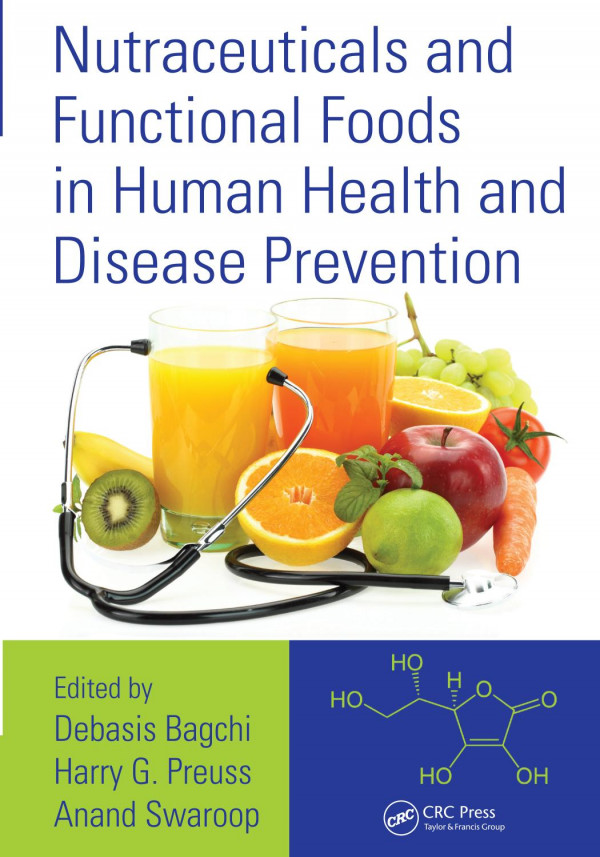
Nutraceuticals and Functional Foods in Human Health and Disease Prevention 1st Edition by Debasis Bagchi, Harry G Preuss, Anand Swaroop ISBN 9781482237221 1482237229
Original price was: $50.00.$35.00Current price is: $35.00.
Nutraceuticals and Functional Foods in Human Health and Disease Prevention 1st Edition by Debasis Bagchi, Harry G Preuss, Anand Swaroop – Ebook PDF Instant Download/Delivery: 9781482237221 ,1482237229
Full download Nutraceuticals and Functional Foods in Human Health and Disease Prevention 1st Edition after payment
Product details:
ISBN 10: 1482237229
ISBN 13: 9781482237221
Author: Debasis Bagchi, Harry G Preuss, Anand Swaroop
Nutraceuticals and Functional Foods in Human Health and Disease Prevention 1st Edition Table of contents:
Section I Introduction
Chapter 1 Global Food Habits and Trends An Overview
1.1 Introduction
1.2 Nutrition Transition From “Fit To Fat”
1.3 Global Health Issues
1.4 Food Consumption Pattern
1.5 Conclusion
References
Chapter 2 Safety and Toxicity of Functional Foods and Nutraceuticals
2.1 Introduction
2.1.1 Classification of Functional Foods
2.2 Regulatory Standards for Functional Foods
2.2.1 Functional Food Labeling Regulation
2.2.2 Regulation of Functional Food Health Claims
2.3 Evaluation of Functional Foods
2.3.1 Exposure and Concern Level
2.3.2 Safety and Toxicological Determinants
2.3.2.1 Analytic Characterization of Functional Foods
2.3.2.2 Regulatory and Preclinical Assessment
2.3.2.3 Clinical Assessment
2.4 Novel Considerations in Functional Food Safety
2.4.1 Foods Derived from Genetically Modified Organisms
2.4.2 Foods Derived from the Use of Nanotechnology
2.4.3 Beverages and Energy Enhancers
2.4.4 Hemp and Marijuana
2.5 Potential Undesirable Effects Associated with Functional Foods
2.5.1 Allergens
2.5.2 Natural and Unintended Contaminants
2.5.2.1 Heavy Metals
2.5.2.2 Pesticides and Herbicides
2.5.2.3 Molds, Mycotoxins, and Natural Plant Toxins
2.5.2.4 Microbiological Agents in Food
2.5.3 Marine Foods and Toxins
2.5.4 Plant Toxins and Bioactives
2.6 Food Processing, Preservation, Packaging, and Preparation
2.7 Functional Food: Present and Future Trends
2.8 External Events Influencing the Food Supply: Conclusions
References
Chapter 3 Functional Foods in the Treatment of Processed Food Addiction and the Metabolic Syndrome
3.1 Introduction
3.2 Methods
3.3 Results
3.3.1 Results from PubMed for Research Related to Food Addiction and Functional Food Plans
3.3.1.1 Introduction to PubMed Results
3.3.1.2 Evidence for the Efficacy of Diabetes, Mediterranean, and Paleo Diets
3.3.1.3 Outcomes and Food Plans
3.3.1.4 Evidence for the Neurological Basis of Processed Food Addiction
3.3.1.5 Evidence for Addictive Properties in Foods
3.3.2 Food Disappearance Data from the USDA Economic Service
3.3.3 Qualitative Data from 12-Step Food Addiction Literature
3.3.3.1 Introduction to 12-Step Food Addiction Literature
3.3.3.2 Conformance to DSM-V Addiction Diagnostic Criteria
3.3.3.3 Abstinent Food Plans
3.3.3.4 Other Eliminated Foods
3.3.3.5 Recovery through Abstinent Food Plans
3.3.3.6 Summary of 12-Step Literature
3.3.4 Summary of the Results
3.4 Discussion
3.4.1 Issues in Implementing an Abstinent Food Plan
3.4.1.1 Food Addiction vs. Drug and Alcohol Addiction
3.4.1.2 Achieving Effective Abstinence: Adequate Elimination of Addictive Foods
3.4.1.3 Adequate Reduction in Exposure to Craving Cues
3.4.1.4 Effective Level of Recovery Activities
3.4.2 Summary of Discussion
3.5 Conclusion
References
Chapter 4 Nutraceuticals and Their Role in Human Health A Review
4.1 Introduction
4.2 Classifying Nutraceuticals
4.3 Dietary Fiber
4.4 Probiotics and Prebiotics
4.5 Omega Fatty Acids
4.6 Antioxidant Vitamins
4.7 Polyphenols
4.8 Herbs and Spices
4.9 Minerals
4.10 Current Status of Nutraceutical Industry
4.11 Conclusion
References
Section II Obesity, Diabetes, and Metabolic Syndrome
Chapter 5 Dietary Factors in Promoting Healthy Lifestyle A New Prospect of Neuroendocrine in Obesity
Abbreviations
5.1 Introduction
5.2 Epidemiology, Pathology, and Prevalence
5.2.1 Obesity, Body Weight, and Waist-to-Hip Ratio
5.2.2 Proteomics, Genetics, and Epigenetics
5.2.3 Emerging Countries, Dietary Factors, and Obesogens
5.3 Complications: Immune System and Cell Biological Insights
5.3.1 Adipocyte Differentiation
5.3.2 Metabolic Syndrome
5.3.3 Immunology: iNKT and Macrophage
5.3.4 Mitochondrial Stress: Nf-κb and PPARγ
5.4 Brain Function Cross Talk Between Adiposity and Endocrine
5.4.1 Adipokine Endocrinology
5.4.2 Cognitive Impairment and Intestinal Microbiome
5.4.3 Obesity and Infertility: HPG axis, Kisspeptin, and Sex Hormone
5.5 Conclusion
References
Chapter 6 Health Effects and Weight Loss Benefits of Calorie Restriction Dietary Regimens
6.1 Introduction
6.2 Effects of Calorie Restriction Regimens on Body Composition
6.3 Effects of Calorie Restriction Regimens on Plasma Lipids
6.4 Effects of Calorie Restriction Regimens on Insulin and Glucose
6.5 Effects of Calorie Restriction Regimens on Blood Pressure
6.6 Effects of Calorie Restriction on Oxidative Stress and Inflammatory Mediators
6.7 Effects of Calorie Restriction Regimens on Plasma Toxins
6.8 Summary
References
Chapter 7 Overview of Novel Herbal Supplements in Diabetes
7.1 Introduction
7.2 Indian Plants with Antidiabetic Properties
7.2.1 Syzygium cumini
7.2.2 Momordica charantia
7.2.3 Trigonella foenum-graecum
7.2.4 Pterocarpus marsupium
7.2.5 Ocimum sanctum
7.2.6 Gymnema sylvestre
7.2.7 Cinnamomum zeylanicum
7.2.8 Zingiber officinale
7.2.9 Aegle marmelos
7.3 Other Effective Supplements Having Beneficial Effect Against Diabetes
7.3.1 Alpha-lipoic acid
7.3.2 Magnesium
7.3.3 Manganese
7.3.4 Zinc
7.3.5 Chromium
7.3.6 Selenium
7.4 Conclusion
References
Chapter 8 Recommended Diet for Diabetics Hydrocarbons, Glycemic Impact, Glycemic Load, Glycemic Index, and Mediterranean Diet
8.1 Introduction
8.2 Epidemiology and Classification of Dm (Figure 8.1)
8.3 An Overview of Diabetic Complications
8.4 Relationship Between Obesity, Metabolic Syndrome, and T2dm
8.5 Carbohydrates
8.5.1 Types of Carbohydrates
8.5.2 Absorption and Metabolism
8.5.3 Absorption and Metabolism of Fructose
8.6 Health Consequence of Low-/High-Carbohydrate Diets
8.7 Caloric Intake
8.7.1 Calorie Counting and Energy Balance
8.8 Health Consequences of Low-/High-Caloric Diets
8.9 Glycemic Impact, Glycemic Index, and Glycemic Load
8.9.1 Definitions
8.10 Health Effects of Low-Gi/Load Versus High-Gi/Load Diets
8.11 Mediterranean Diet (Figure 8.2)
8.11.1 Various Dietetic Features of MedDiet
8.12 Glycation End Products in Diabetes and Diabetic Complications
8.13 Health Benefits of Meddiet in Randomized Clinical Trials
8.14 Multifunctional Compounds of Meddiet
8.14.1 Extra-Virgin Olive Oil and Nuts
8.14.2 Red Wine and Alcohol
8.14.3 Resveratrol
8.14.4 Pomegranate
8.14.5 Polyunsaturated Fatty Acids
8.15 Conclusions
References
Chapter 9 Antioxidative and AntiInflammatory Effects and Health Implications of Berry Polyphenols Evidence from Compositional and Structural Background to Cell, Animal, and Human Studies
9.1 Introduction
9.2 Chronic Inflammation and Oxidative Stress in Obesity
9.2.1 Chronic Inflammation in Obesity
9.2.2 Partial Mechanisms of Oxidative Stress Generation by Inflammation in Obesity
9.3 Antioxidant System
9.3.1 Enzymatic Antioxidant Defense System
9.3.2 Dietary Antioxidant Intake
9.4 Berry Anthocyanins As Antioxidant and Anti-Inflammatory Phytochemical
9.4.1 Structural Differences in the Antioxidant Capacity of Berry Anthocyanins
9.4.2 Structural Differences in the Anti-inflammatory effects of berry anthocyanins
9.4.3 Structural Differences in the Effects of Berry Anthocyanins on Obesity-related disorder
9.5 Conclusion
References
Section III Cardiovascular Health
Chapter 10 Nutrition and Cardiovascular Health A Review
10.1 Introduction
10.2 Rationale for Dietary Pattern Analysis
10.3 Characterizing Dietary Patterns
10.4 Dietary Approach To Stop Hypertension
10.5 Mediterranean Diet
10.6 Very-Low-Carbohydrate Diet (Vlcd)
10.7 Summary
References
Section IV Arthritis, Inflammation, and Joint Disorders
Chapter 11 Review on the Efficacy of Probiotics in the Treatment of Rheumatic Diseases
11.1 Introduction
11.2 Probiotics in Systemic Rheumatic Diseases
11.2.1 Rheumatoid Arthritis
11.2.1.1 Gut Microbiota and Rheumatoid Arthritis
11.2.1.2 Probiotics in the Treatment of Rheumatoid Arthritis
11.2.1.2.1 Animal Studies
11.2.1.2.2 Human Studies
11.2.2 Gout
11.2.3 SjÖgren’s Syndrome
11.2.4 Fibromyalgia
11.2.5 Systemic Lupus Erythematosus
11.2.6 Scleroderma (Systemic Sclerosis)
11.3 Probiotics in Nonsystemic Rheumatic Diseases
11.3.1 Osteoarthritis
11.3.2 Bursitis and Tendonitis
11.4 Conclusion and Future Trends
References
Chapter 12 Phytochemicals as AntiInflammatory Agents
12.1 Introduction
12.2 Phytochemicals and Their Classification
12.3 Cell Signaling Pathway Associated with Inflammation
12.4 Phytochemicals and Their Effect on Inflammation
12.4.1 Capsaicin
12.4.2 Curcumin
12.4.3 Catechins
12.4.4 Resveratrol
12.4.5 Quercetin
12.4.6 Genistein
12.4.7 Indole-3-Carbinol and Lycopene
12.4.8 Apigenin and Luteolin
12.5 Conclusion
References
Section V Brain Functions
Chapter 13 ω-3 PUFA, Advancing Age, and Brain Function A Review
13.1 Introduction
13.2 Dietary ω-3 Pufa and the Brain
13.2.1 ω-3 PUFA in the Brain: Type, Structure, and Abundance
13.2.2 ω-3 PUFA Imbalance in the Western Diet
13.2.3 Influence of the Diet on Brain Lipid Composition
13.2.4 Aging and the Brain Lipid Composition
13.3 Dietary ω-3 Pufa and Brain Aging in Humans: A Hard-To-Establish Link
13.3.1 Human Studies on “ω-3 PUFA and Brain Aging”: A Brief History
13.3.2 Main Pitfalls of Human Studies
13.4 Brain Aging: How Can ω-3 Pufa Help? Mechanisms Revealed By Experimental Studies
13.4.1 ω-3 PUFA and Cognitive Decline
13.4.2 ω-3 PUFA and Neurotransmission (Figure 13.2)
13.4.3 ω-3 PUFA and Endogenous Brain Repair Processes (Figure 13.3)
13.4.3.1 ω-3 PUFA and Neuroinflammation
13.4.3.2 ω-3 PUFA and Oxidative Damage
13.4.3.3 ω-3 PUFA and Cerebral Circulation
13.5 Conclusion
Acknowledgment
References
Chapter 14 Stress, Parkinson’s, and Alzheimer’s Disease Role of Dietary Supplements
14.1 Introduction
14.2 Role of Dietary Supplements on Stress
14.3 Significance of Nutrition in Parkinson’S Disease
14.3.1 Optimal Nutrition for People Afflicted by Parkinson’s Disease
14.3.1.1 Bone Thinning
14.3.1.2 Dehydration
14.3.1.3 Bowel Impaction
14.3.1.4 Weight Loss
14.3.2 Role of Dietary Supplements in Parkinson’s Disease
14.4 Role of Supplements in Alzheimer’S Disease
14.4.1 Diet and Supplements for Alzheimer’s Disease
14.4.1.1 Alzheimer’s Prevention Diet
14.4.1.2 Vitamins and Other Memory-Specific Nutrients for Alzheimer’s
14.5 Conclusions
References
Chapter 15 Nutraceuticals and Functional Foods in the Prevention of Mental Disorders
15.1 Introduction
15.2 Causes of Mental Illness
15.2.1 Heredity (Genetics)
15.2.2 Biology
15.2.3 Psychological Trauma
15.2.4 Mental HEALTH
15.2.5 Aging
15.3 Role of Nutraceutical and Functional Foods in Mental Performance
15.3.1 Carbohydrates and Mental Health
15.3.2 Proteins and Mental Health
15.3.3 Fats and Mental Health
15.3.4 Vitamins and Mental Health
15.3.4.1 Vitamin A
15.3.4.2 Vitamin B1 (Thiamin)
15.3.4.3 Vitamin B2
15.3.4.4 Vitamin B6
15.3.4.5 Vitamin B9 (Folate)
15.3.4.6 Vitamin B12
15.3.4.7 Niacin
15.3.4.8 Vitamin C
15.3.4.9 Vitamin E
15.3.4.10 Vitamin D
15.3.5 Folic Acid
15.3.6 Caffeine and Mental Health
15.3.7 Minerals and Mental Health
15.3.7.1 Iron
15.3.7.2 Magnesium
15.3.7.3 Copper
15.3.7.4 Zinc
15.4 Other Plant- and Fruit-Derived Nutraceutical and Functional Foods Used in the Prevention of Mental Disorder
15.5 Conclusions
References
Section VI Pulmonary Diseases
Chapter 16 Prebiotics, Probiotics, and Synbiotics for the Management of Respiratory Disease
16.1 Introduction
16.2 Airway Microbiota
16.3 Gut–Airway Cross Talk
16.4 Pre-, Pro-, and Synbiotic-Based Therapies
16.5 Mechanism of Action of Pre-, Pro-, and Synbiotics
16.6 Concluding Comments
References
Chapter 17 Pulmonary and Respiratory Health Antioxidants and Nutraceuticals
17.1 Introduction
17.2 Antioxidants and Nutraceuticals in Pulmonary and Respiratory Health
17.2.1 Enzymatic Antioxidants
17.2.2 Nonenzymatic Antioxidants
17.2.2.1 Vitamin C (Ascorbic Acid)
17.2.2.2 Vitamin E (α-Tocopherol)
17.2.2.3 Glutathione
17.2.2.4 Carotenoids (β-Carotene)
17.2.2.5 Lycopene
17.2.2.6 Tannins
17.2.2.7 Catechins
17.2.2.8 Luteolin
17.2.2.9 Ellagic Acid
17.2.2.10 Gingerol
17.2.2.11 Chlorogenic Acid
17.3 Therapeutic Intervention with Antioxidants
17.4 Polyphenols As Antioxidant
17.5 Other Plant-Derived Nutraceuticals Used in the Prevention of Pulmonary and Respiratory Disease
17.6 Conclusions
References
Section VII Hypertension
Chapter 18 Nutrition and Nutraceutical Supplements for the Treatment of Hypertension
18.1 Introduction
18.2 Epidemiology
18.3 Pathophysiology
18.3.1 Oxidative Stress
18.3.2 Inflammation
18.3.3 Autoimmune Dysfunction
18.4 Treatment
18.4.1 DASH DIETS
18.4.1.1 Sodium (Na+) Reduction
18.4.1.2 Potassium
18.4.1.3 Magnesium (Mg2+)
18.4.1.4 Zinc (Zn2+)
18.4.2 Protein
18.4.3 Amino Acids and Related Compounds
18.4.3.1 L-Arginine
18.4.3.2 L-Carnitine and Acetyl-L-Carnitine
18.4.3.3 Taurine
18.4.4 Omega-3 Fats
18.4.4.1 Omega-9 Fats
18.4.4.2 Fiber
18.4.4.3 Vitamin C
18.4.4.4 Vitamin E
18.4.4.5 Vitamin D
18.4.4.6 Vitamin B6 (Pyridoxine)
18.4.4.7 Flavonoids
18.4.4.8 Lycopene
18.4.4.9 Pycnogenol
18.4.4.10 Garlic
18.4.4.11 Seaweed
18.4.4.12 Sesame
18.4.4.13 Beverages: Tea, Coffee, and Cocoa
18.4.4.14 Additional Compounds
18.4.4.15 Coenzyme Q10 (Ubiquinone)
18.4.4.16 Alpha Lipoic Acid
18.4.5 N-ACETYL Cysteine
18.4.6 Hawthorn
18.4.7 Quercetin
18.5 Clinical Considerations
18.5.1 Combining Food and Nutrients with Medications
18.6 Summary
References
Chapter 19 Effects of Different Dietary Fibers on Sugar-Induced Blood Pressure Elevations in Hypertensive Rats Focus on Viscosity
Abbreviations
19.1 Introduction
19.2 Materials and Methods
19.2.1 Protocol
19.2.2 Body Weight
19.2.3 Food Intake
19.2.4 Systolic Blood Pressure
19.2.5 Viscosity Measurements
19.2.6 Xylose Test
19.2.7 Statistical Analyses
19.3 Results
19.3.1 Systolic Blood Pressure (Figure 19.1a through c)
19.3.2 Food Consumption (Table 19.2)
19.3.3 Body Weight (Figure 19.3a through c)
19.3.4 Viscosity Measurements of Fiber and Fiber-Containing Feed (Table 19.3)
19.3.5 Xylose Excretory Test (Table 19.3, Third Column)
19.4 Discussion
References
Section VIII Immune Health
Chapter 20 Dietary Supplements, Nutraceutical, and Functional Foods in Immune Response (Immunomodulators)
20.1 Introduction
20.2 Dietary Supplements, Nutraceutical, and Functional Foods in Immune Response
20.2.1 Dietary Fibers in Immune Response
20.2.2 Probiotics in Immune Responses
20.2.3 Antioxidants in Immune Response
20.2.4 Mushrooms in Immune Response
20.2.5 Vitamins in Immune Response
20.2.5.1 Vitamin A
20.2.5.2 Vitamin C
20.2.5.3 Vitamin D
20.2.5.4 Vitamin E
20.2.6 Folic Acid in Immune Response
20.2.7 Polysaccharides in Immune Response
20.2.8 Phytochemicals in Immune Response
20.3 Conclusions
References
Section IX Cancer
Chapter 21 Natural Products in the Prevention of Cancer A Review
21.1 Introduction
21.2 Molecular Targets of Natural Chemopreventive Agents
21.2.1 Oxidant and Xenobiotic Defense
21.2.2 Inflammatory Signaling
21.2.3 Growth Factor Signaling
21.2.4 Apoptosis
21.2.5 Epigenome
21.3 Efficacy and Mechanisms of Chemopreventive Phytochemicals
21.3.1 Retinoids
21.3.2 Phenolic Compounds
21.3.2.1 Flavonoids
21.3.2.1.1 Catechins
21.3.2.1.2 Quercetin
21.3.2.2 Stilbenes
21.3.2.3 Curcuminoids
21.3.3 Glucosinolates
21.4 Overcoming Challenges in the Development of Chemopreventive Modalities
21.4.1 Bioavailability
21.4.2 Individualization
21.5 Perspective
References
Chapter 22 Helicobacter pylori Infection and Phytochemicals
22.1 Introduction
22.2 Pathogenicity of H. pylori
22.3 Epidemiological Studies Supporting the Role of Phytochemicals
22.4 In Vitro Studies
22.5 In Vivo Studies
22.6 Combined in Vitro and in Vivo Studies
22.7 Conclusion/Future Direction
References
Section X Ocular Health and Vision
Chapter 23 Integrative View of the Nutrition of the Eye
23.1 Handling Sunlight: Parallels Between the Human Eye and Photosynthesis
23.1.1 Introduction
23.1.2 Structures of Carotenoids with Important Biological Function
23.1.3 Carotenoids and Light Harvesting
23.1.4 Carotenoids and Photoprotection
23.2 Overview of Carotenoid Function in Plants
23.2.1 Photoprotection by Prevention of ROS Formation
23.2.2 Photoprotection by ROS Detoxification
23.2.3 Trade-Offs
23.3 Overview of Photoprotective Carotenoid Functions in the Human Eye
23.3.1 Roles of Zeaxanthin versus Lutein in the Human Eye
23.3.2 Role of Carotenoids in Redox-Modulated Gene Regulation
23.4 Management of Eye Health
23.4.1 Diet for Eye Health
23.4.2 Holistic Eye-Health Management through Nutrition and Lifestyle
References
Section XI Prostate Health
Chapter 24 Nutraceuticals for Prostate Cancer
24.1 Introduction
24.1.1 Androgen Receptor and Prostate Cancer
24.1.2 Inflammation and Prostate Cancer
24.2 Antitumorigenic Properties of Nutraceuticals
24.2.1 Lycopene (Tomatoes)
24.2.2 EGCG (GREEN TEA)
24.2.3 Isothiocyanates (Cruciferous Vegetables)
24.2.4 Tocopherols (Vitamin E)
24.2.5 Isoflavones (Soy)
24.2.5.1 Mode of Action of Soy Isoflavones on Prostate Cancer
24.2.5.1.1 Androgen Receptor
24.2.5.1.2 Cell Proliferation and Apoptosis
24.2.5.1.3 Cell Cycle
24.2.5.1.4 Protein Kinases
24.2.5.1.5 Epigenetics
24.2.5.1.6 Inflammation
24.2.5.1.7 Antioxidant Activity
24.2.5.1.8 Animal Models
24.2.5.2 Clinical Applications of Soy Isoflavones
24.2.6 Curcumin (Diferuloylmethane)
24.2.6.1 Mode of Action of Curcumin on Prostate Cancer
24.2.6.1.1 Androgen Receptor
24.2.6.1.2 Cell Proliferation and Apoptosis
24.2.6.1.3 Protein Kinases
24.2.6.1.4 Cell Cycle
24.2.6.1.5 Antioxidant Activity and Inflammation
24.2.6.2 Clinical Applications of Curcumin
24.3 Combined Treatment with Soy Isoflavones and Curcumin
24.3.1 Effects of Soy Isoflavones and Curcumin on DNA Damage Response (DDR)
24.4 Conclusions
References
Section XII Sleeping Disorders
Chapter 25 Nutrition and Sleep An Overview
25.1 Introduction
25.1.1 Sleep Measures
25.1.2 Sleep Terminology
25.1.3 Macronutrients Associated with Sleep
25.2 Dietary Fat and Sleep
25.2.1 Fatty Acids and Sleep
25.2.2 Saturated Fatty Acids and Sleep
25.2.3 Monounsaturated Fatty Acids and Sleep
25.2.4 Polyunsaturated Fatty Acids and Sleep
25.2.5 Cholesterol and Sleep
25.3 Protein and Sleep
25.4 Carbohydrates and Sleep
25.5 Micronutrients: Vitamins, Minerals, and Sleep
25.6 Caffeine, Alcohol, and Sleep
25.7 Kilocalories and Sleep
25.8 Fluid Intake and Sleep
25.9 Implications
25.10 Summary
References
Section XIII Wound Healing
Chapter 26 Oral Supplementation of a Standardized Naturally Fermented Papaya Preparation May Correct Type 2 Diabetes Mellitus-Induced Reactive Oxygen Species Dysregulation
26.1 Introduction
26.2 Fermented Papaya Preparation
26.3 Ros: the Good, the Bad, and the Ugly
26.4 Fpp in Diabetic Wound Healing
26.5 Fpp in T2dm Immune Cell Function
26.6 Conclusions
References
Section XIV Hair and Skin Health
Chapter 27 Herbal Treatment for Hair Loss and Alopecia An Overview
27.1 Introduction
27.2 Nutricosmetics and Hair
27.3 Herbal Treatment for Hair Loss
27.3.1 Botanical Treatment
27.3.1.1 Capsaicin and Isoflavone
27.3.1.1.1 Glycine max
27.3.1.1.2 Panax ginseng
27.3.1.1.3 Serenoa repens
27.3.1.1.4 Kampo Medicine
27.3.2 Amino Acid Treatment
27.3.3 Mineral and Vitamin Treatment
27.4 Conclusions
References
Chapter 28 Nutrition, Nutraceuticals, and Hair Growth
28.1 Introduction
28.2 Mechanism of Hair Growth
28.2.1 Structure of Hair Follicles
28.2.2 Hair Growth Cycle
28.2.3 Molecular Factors Controlling Hair Growth
28.2.4 Hormonal Factors Controlling Hair Growth
28.3 Hair Loss
28.3.1 Alopecia
28.3.2 Factors Leading to Hair Loss
28.4 Nutrition and Hair Growth
28.5 Nutraceuticals and Hair Growth
28.5.1 Nutraceuticals from Plant Sources
28.5.2 Nutraceuticals from Animal Sources
28.5.3 Polyherbal Complex
28.5.4 Single Compounds
28.6 Conclusions
References
Chapter 29 Herbal Treatment for Skin Wrinkle An Overview
29.1 Introduction
29.2 Nutricosmetics and Skin
29.3 Herbal Actives for Skin Wrinkle Treatment
29.3.1 Carotenoids
29.3.2 Polysaccharides
29.4 Minerals for Skin Wrinkle Treatment
29.5 Vitamins and Essential Fatty Acids for Skin Wrinkle Treatment
29.6 Conclusions
References
Section XV Fertility and Sexual Health
Chapter 30 Nutraceuticals and Male Fertility A Review
Abbreviations
30.1 Introduction
30.2 Oxidative Stress
30.3 Antioxidants
30.4 Diet and Obesity
30.5 Review of Nutraceuticals
30.5.1 Arginine
30.5.1.1 Mechanism of Action
30.5.1.2 Evidence for Benefit
30.5.1.3 Evidence against Benefit
30.5.1.4 Conclusion
30.5.2 Carnitines
30.5.2.1 Mechanism of Action
30.5.2.2 Evidence for Benefit
30.5.2.3 Evidence against Benefit
30.5.2.4 Conclusion
30.5.3 Coenzyme Q10
30.5.3.1 Mechanism of Action
30.5.3.2 Evidence for Benefit
30.5.3.3 Evidence against Benefit
30.5.3.4 Conclusion
30.5.4 Folic Acid
30.5.4.1 Mechanism of Action
30.5.4.2 Evidence for Benefit
30.5.4.3 Evidence against Benefit
30.5.4.4 Conclusion
30.5.5 Glutathione
30.5.5.1 Mechanism of Action
30.5.5.2 Evidence for Benefit
30.5.5.3 Evidence against Benefit
30.5.5.4 Conclusion
30.5.6 Lycopene
30.5.6.1 Mechanism of Action
30.5.6.2 Evidence for Benefit
30.5.6.3 Evidence against Benefit
30.5.6.4 Conclusion
30.5.7 Omega Fatty Acids (Polyunsaturated Fatty Acids)
30.5.7.1 Mechanism of Action
30.5.7.2 Evidence for Benefit
30.5.7.3 Evidence against Benefit
30.5.7.4 Conclusion
30.5.8 Pentoxyfylline
30.5.8.1 Mechanism of Action
30.5.8.2 Evidence for Benefit
30.5.8.3 Evidence against Benefit
30.5.8.4 Conclusion
30.5.9 Phytoestrogens (Isoflavones)
30.5.9.1 Mechanism of Action
30.5.9.2 Evidence for Benefit
30.5.9.3 Evidence against Benefit
30.5.9.4 Conclusion
30.5.10 Selenium
30.5.10.1 Mechanism of Action
30.5.10.2 Evidence for Benefit
30.5.10.3 Evidence against Benefit
30.5.10.4 Conclusion
30.5.11 Vitamin A
30.5.11.1 Mechanism of Action
30.5.11.2 Evidence for Benefit
30.5.11.3 Evidence against Benefit
30.5.11.4 Conclusion
30.5.12 Vitamin C
30.5.12.1 Mechanism of Action
30.5.12.2 Evidence for Benefit
30.5.12.3 Evidence against Benefit
30.5.12.4 Conclusion
30.5.13 Vitamin D
30.5.13.1 Mechanism of Action
30.5.13.2 Evidence for Benefit
30.5.13.3 Evidence against Benefit
30.5.13.4 Conclusion
30.5.14 Vitamin E
30.5.14.1 Mechanism of Action
30.5.14.2 Evidence for Benefit
30.5.14.3 Evidence against Benefit
30.5.14.4 Conclusion
30.5.15 ZINC
30.5.15.1 Mechanism of Action
30.5.15.2 Evidence for Benefit
30.5.15.3 Evidence against Benefit
30.5.15.4 Conclusion
30.6 Discussion
30.7 Summary
References
Chapter 31 Sexual Dysfunctions and Nutraceutical Therapy An Examination of Human Research
Introduction
31.1 Prevalence of Sexual Dysfunctions
31.2 d-Aspartic Acid
31.2.1 Background
31.2.2 Clinical Research
31.2.3 Adverse Reactions/Drug Interactions
31.2.4 Comments
31.3 Fenugreek
31.3.1 Background
31.3.2 Clinical Research
31.3.2.1 Testofen Study 1
31.3.2.2 Testofen Study 2
31.3.2.3 Libifem
31.3.2.4 Testosurge
31.3.3 Adverse Reactions/drug Interactions
31.3.4 Comments
31.4 Eurycoma Longifolia
31.4.1 Background
31.4.2 Clinical Research
31.4.2.1 Physta/LJ100 Study 1
31.4.2.2 Physta/LJ100 Study 2
31.4.2.3 Physta/LJ100 Study 3
31.4.2.4 Physta/LJ100 Study 4
31.4.2.5 Physta/LJ100 Study 5
31.4.2.6 Physta/LJ100 Study 6
31.4.2.7 Physta/LJ100 Study 7
31.4.2.8 Physta/LJ100 Study 8
31.4.2.9 Physta/LJ100 Study 9
31.4.2.10 Physta/LJ100 Study 10
31.4.3 Adverse Reactions/drug Interactions
31.4.4 Comments
31.5 Yohimbine
31.5.1 Background
31.5.2 Clinical Research
31.5.2.1 Yohimbine Study 1
31.5.2.2 Yohimbine Study 2
31.5.2.3 Yohimbine Study 3
31.5.2.4 Yohimbine Study 4
31.5.2.5 Yohimbine Study 5
31.5.2.6 Yohimbine Study 6
31.5.2.7 Yohimbine Study 7
31.5.3 Adverse Reactions/drug Interactions
31.5.4 Comments
31.6 Vitamin D
31.6.1 Background
31.6.2 Clinical Research
31.6.2.1 Vitamin D Study 1
31.6.2.2 Vitamin D Study 2
31.6.3 Adverse Reactions/drug Interactions
31.6.4 Comments
31.7 Dhea
31.7.1 Background
31.7.2 Clinical Research
31.7.2.1 DHEA Study 1
31.7.2.2 DHEA Study 2
31.7.2.3 DHEA Study 3
31.7.2.4 DHEA Study 4
31.7.2.5 DHEA Study 5
31.7.3 Adverse Reactions/drug Interactions
31.7.4 Comments
31.8 l-Arginine
31.8.1 Background
31.8.2 Clinical Research
31.8.2.1 l-Arginine Study 1
31.8.2.2 l-Arginine Study 2
31.8.3 Adverse Reactions/drug Interactions
31.8.4 Comments
31.9 l-Citrulline
31.9.1 Background
31.9.2 Clinical Research
31.9.3 Adverse Reactions/drug Interactions
31.9.4 Comments
31.10 l-Arginine with Other Nutraceuticals
31.10.1 Background
31.10.2 Clinical Research
31.10.2.1 l-Arginine + Yohimbine Study 1
31.10.2.2 l-Arginine + Yohimbine Study 2
31.10.2.3 l-Arginine + Pycnogenol Study 1
31.10.2.4 l-Arginine + Pycnogenol Study 2
31.10.2.5 l-Arginine + Pycnogenol Study 3
31.10.2.6 l-Arginine + Pycnogenol Study 4
31.10.3 Adverse Reactions/drug Interactions
31.10.4 Comments
31.11 Saw Palmetto + Astaxanthin
31.11.1 Background
31.11.2 Clinical Research
31.11.2.1 Saw Palmetto + Astaxanthin Study 1
31.11.2.2 Saw Palmetto + Astaxanthin Study 2
31.11.3 Adverse Reactions/drug Interactions
31.11.4 Comments
31.12 Shilajit
31.12.1 Background
31.12.2 Clinical Research
31.12.2.1 Shilajit Study 1
31.12.2.2 Shilajit Study 2
31.12.3 Adverse Reactions/drug Interactions
31.12.4 Comments
31.13 Ashwagandha
31.13.1 Background
31.13.2 Clinical Research
31.13.2.1 Ashwagandha Study 1
31.13.2.2 Ashwagandha Study 2
31.13.2.3 Ashwagandha Study 3
31.13.2.4 Ashwagandha Study 4
31.13.3 Adverse Reactions/drug Interactions
31.13.4 Comments
References
Section XVI Cosmeceuticals
Chapter 32 Nutraceuticals in Cosmeceuticals
32.1 Introduction
32.2 Regulatory Agencies Governing Food Safety and Cosmetics
32.2.1 International
32.2.2 United States
32.3 Classification of Cosmeceuticals and Nutricosmetics
32.4 Nutritional, Efficacy, and Quality
32.4.1 Sensory Properties
32.4.1.1 Physical and Chemical Characteristics
32.4.1.1.1 Appearance and Texture
32.4.1.1.2 Flavors and Colorants in Nutriceuticals
32.4.1.2 Processing, Preservation, and Packaging of Functional Foods and Cosmeceuticals
32.4.2 Functional Responses, Safety, and Efficacy of Nutritional Cosmeceuticals
32.4.2.1 Cosmeceutical Classifications
32.4.2.1.1 Antioxidants and Collagens
32.4.2.1.2 Anti-Inflammatories
32.4.2.2 Nutricosmetics
32.5 Targeted Populations
32.6 Future Considerations
References
Section XVII Exercise and Physical Health
Chapter 33 Nutrition, Functional Foods, and Exercise A Review
33.1 Introduction
33.2 Replenishment of Water
33.3 Improvement of Energy Metabolism and Replenishment of Energy Substrates
33.4 Building Muscle
33.5 Maintenance of Exercise-Induced Homeostasis Disturbance
33.6 Conclusion
References
Section XVIII Sickle Cell Anemia
Chapter 34 Nutraceuticals in the Management of Sickle Cell Anemia
34.1 Introduction
34.2 Antisickling Phytochemicals
34.3 Antioxidants
34.4 Nutritional Supplementation
34.5 Current Trends in the Use of Nutraceuticals for Sickle Cell Anemia Management
References
Section XIX Role of Probiotics in Gastrointestinal and Dental Health
Chapter 35 Health Benefits of Human Probiont Lactobacillus plantarum
35.1 Background
35.2 Benefecial Role of Lactobacillus plantarum in Human Health Conditions
35.2.1 Inflammatory Bowel Disease
35.2.2 Protection against Influenza Virus
35.2.3 Toxic Shock Syndrome
35.2.4 Obstructive Jaundice
35.2.5 Prevention of Hyperlipidemia
35.2.6 Typhoid
35.2.7 Colorectal Cancer
35.2.8 Gastroenteritis
35.3 Possible Mechanism of Probiotic Action of Lactobacillus plantarum
35.3.1 Adherence Mechanism in Lactobacillus plantarum
35.3.2 Extracellular Polysaccharide
35.3.3 Bacteriocins
35.3.4 Competitive Exclusion
35.3.5 Immunomodulation
35.3.6 Peptidoglycan Hydrolases
35.4 Summary
References
People also search for Nutraceuticals and Functional Foods in Human Health and Disease Prevention 1st Edition:
handbook of nutraceuticals and functional foods pdf
definition of nutraceuticals and functional foods
examples of nutraceuticals and functional foods
classification of nutraceuticals and functional foods
international society for nutraceuticals and functional foods
Tags: Debasis Bagchi, Harry G Preuss, Anand Swaroop, Nutraceuticals, Functional Foods, Human Health