
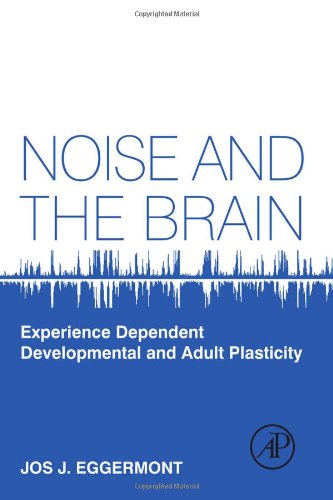
Noise and the Brain Experience Dependent Developmental and Adult Plasticity 1st Edition by Jos Eggermont ISBN 978-0124159945 012415994X
Original price was: $50.00.$35.00Current price is: $35.00.
Noise and the Brain Experience Dependent Developmental and Adult Plasticity 1st Edition by Jos Eggermont – Ebook PDF Instant Download/Delivery: 978-0124159945, 012415994X
Full download Noise and the Brain Experience Dependent Developmental and Adult Plasticity 1st Edition after payment
Product details:
ISBN 10: 012415994X
ISBN 13: 978-0124159945
Author: Jos Eggermont
In our industrialized world, we are surrounded by occupational, recreational, and environmental noise. Very loud noise damages the inner-ear receptors and results in hearing loss, subsequent problems with communication in the presence of background noise, and, potentially, social isolation. There is much less public knowledge about the noise exposure that produces only temporary hearing loss but that in the long term results in hearing problems due to the damage of high-threshold auditory nerve fibers. Early exposures of this kind, such as in neonatal intensive care units, manifest themselves at a later age, sometimes as hearing loss but more often as an auditory processing disorder. There is even less awareness about changes in the auditory brain caused by repetitive daily exposure to the same type of low-level occupational or musical sound. This low-level, but continuous, environmental noise exposure is well known to affect speech understanding, produce non-auditory problems ranging from annoyance and depression to hypertension, and to cause cognitive difficulties. Additionally, internal noise, such as tinnitus, has effects on the brain similar to low-level external noise.
Noise and the Brain discusses and provides a synthesis of hte underlying brain mechanisms as well as potential ways to prvent or alleviate these aberrant brain changes caused by noise exposure.
Table of contents:
Chapter 1. Introduction
1.1 Discovery of Noise as a Cause of Hearing Loss
1.2 Experimental Studies in Animals and the Establishment of the Neural Substrates of Hearing
1.3 Towards the Estimation of Exposure Levels not Causing Permanent Hearing Loss
1.4 Towards Legal Limits of Occupational Noise Exposure Levels
1.5 The Surging Manifestation of Recreational Noise
1.6 The Emergence of Noise Annoyance
1.7 Long-Term Exposure to Sound at Levels Well below the Legal Limits Causes Changes in the Central Auditory System
1.8 The Need to Move beyond Threshold Audiometry as an Indicator of Safe Exposure Levels
1.9 Prevention as the Best Solution
References
Chapter 2. Epidemiology, Etiology and Genetics of Hearing Problems
2.1 Epidemiology and Etiology
2.2 Genetic Basis of NIHL
2.3 Summary
References
Chapter 3. Neural Substrates of Noise-Induced Hearing Loss
3.1 Structural Changes in the Auditory System Following Noise Trauma
3.2 Behavioral and Neural Changes
3.3 Molecular Changes
3.4 Summary
References
Chapter 4. Effects of Nondamaging Sound on the Developing Brain
4.1 Animal Studies
4.2 Human Studies
4.3 Effects of Noise on School-Age Children
4.4 Music and Music Training
4.5 Detection of Affected Brains
4.6 Summary
References
Chapter 5. Effects of Deafness on the Young Brain
5.1 Overview
5.2 Newborn Hearing Screening
5.3 Effects of Sensorineural Hearing Loss
5.4 Conductive Hearing Loss
5.5 Effects of Cochlear Implantation
5.6 Performance in Early and Late Implanted Children
5.7 Summary
References
Chapter 6. Speech Understanding in Noise
6.1 Effects of Noise and Reverberation on Speech Perception: Role of Age
6.2 Adult Hearing in Noise
6.3 Aging and Speech Perception
6.4 Electrophysiology and Imaging
6.5 Summary
References
Chapter 7. Effects of “Nondamaging Sound” on the Adult Auditory Brain
7.1 Introduction
7.2 Auditory Plasticity in Human Adults
7.3 Animal Studies of Adult Auditory Plasticity
7.4 Brain Changes Following Long-Term Exposure to “Safe” Noise Levels
7.5 Putative Mechanisms and Implications for Clinical Audiology
7.6 Summary
References
Chapter 8. Noise and the Aging Brain
8.1 Causes of Aging
8.2 Age-Related Hearing Impairment and Presbycusis
8.3 Animal Models for Age-Related Hearing Impairment
8.4 Neural Transmitter and Receptor Changes with Age
8.5 Genetics of Presbycusis
8.6 Psychological Aspects
8.7 Comparison of ARHI with NIHL
8.8 Summary
References
Chapter 9. Music and the Brain
9.1 The “Good” Aspects of Music
9.2 Music and Language
9.3 The “Bad” Aspects of Music
9.4 Benefit of Music after All?
9.5 Summary
References
Chapter 10. Nonauditory Effects of Noise
10.1 Annoyance
10.2 Stress
10.3 Sleep
10.4 Cardiovascular Effects
10.5 What Causes the Nonauditory Effects of Noise?
10.6 Summary
References
Chapter 11. Noise in the Brain
11.1 Phantom Sounds
11.2 Relationship to NIHL and ARHI
11.3 Where in the Brain is Tinnitus?
11.4 Listening to Tinnitus
11.5 Nonauditory Effects of Tinnitus
11.6 Similarities of Tinnitus and Environmental Sound Effects on the Brain
11.7 Summary
References
Chapter 12. Protection Against Noise-Induced Brain Changes: Are there Safe Noise Levels?
12.1 Drug-Based Protection
12.2 Sound-Based Protection
12.3 The Role of the Olivocochlear Bundle in Protection
12.4 Short Duration Stress Protects
12.5 Hormonal Factors
12.6 Delaying Age-Related Hearing Loss
12.7 Earlier Diagnosis to Reduce the Impact
12.8 Hearing Protection Devices
12.9 Changing the Attitudes about Noise
12.10 Introducing New Legal Standards?
12.11 Summary
People also search for:
noise and the brain
noise and depression
experience-dependent brain functions
experience and brain development
a loud noise would be an example of
Tags: Jos Eggermont, the Brain Experience, Dependent Developmental