
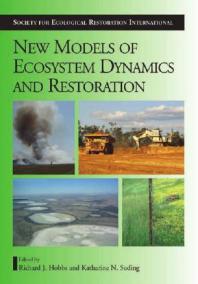
New Models for Ecosystem Dynamics and Restoration 1st Edition by Richard Hobbs, Katharine Suding ISBN 978-1597261845 159726184X


Original price was: $50.00.$35.00Current price is: $35.00.
New Models for Ecosystem Dynamics and Restoration 1st Edition by Richard J. Hobbs, Katharine N. Suding – Ebook PDF Instant Download/Delivery: 978-1597261845, 159726184X
Full download New Models for Ecosystem Dynamics and Restoration 1st Edition after payment
Product details:
ISBN 10: 159726184X
ISBN 13: 978-1597261845
Author: Richard J. Hobbs, Katharine N. Suding
As scientific understanding about ecological processes has grown, the idea that ecosystem dynamics are complex, nonlinear, and often unpredictable has gained prominence. Of particular importance is the idea that rather than following an inevitable progression toward an ultimate endpoint, some ecosystems may occur in a number of states depending on past and present ecological conditions. The emerging idea of “restoration thresholds” also enables scientists to recognize when ecological systems are likely to recover on their own and when active restoration efforts are needed. Conceptual models based on alternative stable states and restoration thresholds can help inform restoration efforts. New Models for Ecosystem Dynamics and Restoration brings together leading experts from around the world to explore how conceptual models of ecosystem dynamics can be applied to the recovery of degraded systems and how recent advances in our understanding of ecosystem and landscape dynamics can be translated into conceptual and practical frameworks for restoration. In the first part of the book, background chapters present and discuss the basic concepts and models and explore the implications of new scientific research on restoration practice. The second part considers the dynamics and restoration of different ecosystems, ranging from arid lands to grasslands, woodlands, and savannahs, to forests and wetlands, to production landscapes. A summary chapter by the editors discusses the implications of theory and practice of the ideas described in preceding chapters. New Models for Ecosystem Dynamics and Restoration aims to widen the scope and increase the application of threshold models by critiquing their application in a wide range of ecosystem types. It will also help scientists and restorationists correctly diagnose ecosystem damage, identify restoration thresholds, and develop corrective methodologies that can overcome such thresholds.
Table of contents:
PART I. Background: Concepts and Models
1. Models of Ecosystem Dynamics as Frameworks for Restoration Ecology
Katharine N. Suding and Richard J. Hobbs
2. Critical Transitions and Regime Shifts in Ecosystems: Consolidating Recent Advances
Stephen R. Carpenter and Marten Scheffer
3. Transition Dynamics in Succession: Implications for Rates, Trajectories, and Restoration
Lawrence R. Walker and Roger del Moral
4. Inference about Complex Ecosystem Dynamics in Ecological Research and Restoration Practice
Arne Schröder
5. Thresholds in Ecological and Linked Social-Ecological Systems: Application to Restoration
Elizabeth G. King and Steven Whisenant
6. Resilience Theory in Models of Rangeland Ecology and Restoration: The Evolution and Application of a Paradigm
Brandon T. Bestelmeyer, Kris M. Havstad, Bolormaa Damindsuren, Guodong Han, Joel R. Brown, Jeffrey E.. Herrick, Caitriana M. Steele, and Debra P. C. Peters
PART II. Dynamics and Restoration of Different Ecosystem Types
ARID ECOSYSTEMS
7. Long-Term Dynamics and Rehabilitation of Woody Ecosystems in Dryland South Island, New Zealand
Susan Walker, Ellen Cieraad, Adrian Monks, Larry Burrows, Jamie Wood,
Robbie Price, Geoff Rogers, and Bill Lee
8. Dryland Dynamics and Restoration: Perspectives for the Use of Climatic Swings Milena Holmgren
GRASSLAND, WOODLAND, AND SAVANNA ECOSYSTEMS
9. Developing Data-Driven Descriptive Models for Californian Grasslands James W. Bartolome, Randall D. Jackson, and Barbara H. Allen-Diaz
10. Management and Restoration in African Savannas: Interactions and Feedbacks
Mahesh Sankaran and T. Michael Anderson
11. Rapid Internal Plant-Soil Feedbacks Lead to Alternative Stable States in Temperate Australian Grassy Woodlands
Suzanne M. Prober, lan D. Lunt, and John W. Morgan
12. A Revised State-and-Transition Model for the Restoration of Woodlands in Western Australia
Rachel J. Standish, Viki A. Cramer, and Colin J. Yates
FOREST ECOSYSTEMS
13. A State-and-Transition Model for the Recovery of Abandoned Farmland in New Zealand
Rachel J. Standish, Ashley D. Sparrow, Peter A. Williams, and Richard J. Hobbs
14. Dynamics and Restoration of Australian Tropical and Subtropical Rainforests John Kanowski, Robert M. Kooyman, and Carla P. Catterall
WETLAND ECOSYSTEMS
15. Interactions between Lesser Snow Geese and Arctic Coastal Vegetation Leading to Alternative Stable States
1. Tanya Handa and Robert L.. Jefferies
16. Feedbacks That Might Sustain Natural, Invaded, and Restored States in Herbaceous Wetlands
Joy B. Zedler
17. Development of Conceptual Models for Ecological Regime Change in Temporary Australian Wetlands
Lien L. Sim, Jenny A. Davis, and Jane M. Chambers
PRODUCTION LANDSCAPES
18. State-and-Transition Models for Mining Restoration in Australia
Carl Grant
19. An Alternative Stable State Model for Landscape-Scale Restoration in South Australia
Peter Cale and Nigel Willoughby
20. Alternative Stable States for Planning and Implementing Restoration of Production Systems in Michoacán, Mexico
Roberto Lindig-Cisneros
PART III. Synthesis: Implications for Theory and Practice
21. Synthesis: Are New Models for Ecosystem Dynamics Scientifically Robust and Helpful in Guiding Restoration Projects?
Richard J. Hobbs and Katharine N. Suding
People also search for:
new models for ecosystem dynamics and restoration
types of ecosystem models
ecosystem model examples
how to make an ecosystem model
ecosystem models
Tags: Richard Hobbs, Katharine Suding, New Models, Dynamics and Restoration