
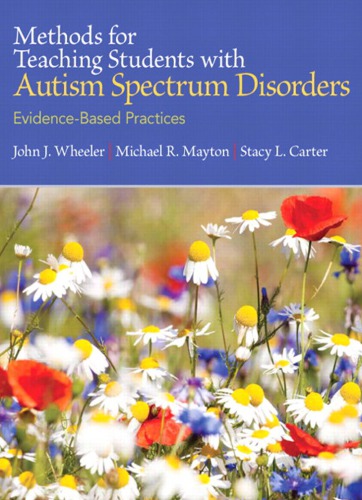
Methods for Teaching Students with Autism Spectrum Disorders with Access Code Evidence Based Practices 1st Edition by John Wheeler, Stacy Carter, Michael Mayton ISBN 978-0137071715 013707171X

Original price was: $50.00.$35.00Current price is: $35.00.
Methods for Teaching Students with Autism Spectrum Disorders with Access Code Evidence Based Practices 1st Edition by John J. Wheeler, Stacy L. Carter, Michael R. Mayton – Ebook PDF Instant Download/Delivery: 978-0137071715, 013707171X
Full download Methods for Teaching Students with Autism Spectrum Disorders with Access Code Evidence Based Practices 1st Edition after payment
Product details:
ISBN 10: 013707171X
ISBN 13: 978-0137071715
Author: John J. Wheeler, Stacy L. Carter, Michael R. Mayton
Methods for Teaching Students with Autism Spectrum Disorders: Evidence-Based Practices by John J. Wheeler provides practical, research-supported strategies for teaching students with ASD. The book covers the characteristics of autism, assessment methods, and effective instructional practices, emphasizing evidence-based approaches to support learning and behavior in diverse educational settings.
Table of contents:
Chapter 1: Autism Spectrum Disorders
-
Concepts to Understand
-
Chapter 1 Mind Map
-
Definition of Autism
-
History of Autism
-
Core Characteristics of ASD
-
Prevalence of ASD
-
Causes of ASD
-
Brain Abnormalities
-
Environmental Factors
-
Genetic Factors
-
Characteristics Associated with ASD
-
Strengths
-
APPLIED VIGNETTE 1.1: Painting Her World
-
Differences in Executive Functioning
-
Sensory Differences
-
Differences in Theory of Mind
-
Summary
-
Activities to Extend Your Learning
-
Resources to Consult
Chapter 2: Diagnosis and Early Identification
-
Concepts to Understand
-
Chapter 2 Mind Map
-
Early Identification of ASD
-
DSM-5 Criteria
-
Screening Tools and Assessment Measures
-
APPLIED VIGNETTE 2.1: The Power of Early Intervention
-
Early Signs of ASD
-
Challenges to Early Identification
-
Diagnosis Across the Lifespan
-
Summary
-
Activities to Extend Your Learning
-
Resources to Consult
Chapter 3: Family Perspectives and Support
-
Concepts to Understand
-
Chapter 3 Mind Map
-
Family Systems Approach
-
APPLIED VIGNETTE 3.1: A Mother’s Journey
-
Impact on Siblings
-
Family Adaptation
-
Family-Centered Practices
-
Cultural Considerations
-
Building Partnerships with Families
-
Summary
-
Activities to Extend Your Learning
-
Resources to Consult
Chapter 4: Assessment and Progress Monitoring
-
Concepts to Understand
-
Chapter 4 Mind Map
-
Purpose and Types of Assessment
-
Principles of Progress Monitoring
-
APPLIED VIGNETTE 4.1: Learning to See Growth
-
Legal and Ethical Considerations
-
Tools for Monitoring Progress
-
Communicating Results
-
Summary
-
Activities to Extend Your Learning
-
Resources to Consult
Chapter 5: Individualized Education Programs (IEPs)
-
Concepts to Understand
-
Chapter 5 Mind Map
-
Legal Foundations of Special Education
-
Components of the IEP
-
Writing Measurable Goals and Objectives
-
APPLIED VIGNETTE 5.1: Setting the Path
-
Transition Planning in the IEP
-
Collaborating with Team Members
-
Summary
-
Activities to Extend Your Learning
-
Resources to Consult
Chapter 6: Evidence-Based Practices for Individuals with ASD
-
Concepts to Understand
-
Chapter 6 Mind Map
-
Definition of Evidence-Based Practices (EBPs)
-
Types of EBPs
-
APPLIED VIGNETTE 6.1: Visual Supports in Action
-
Selecting and Implementing EBPs
-
Monitoring and Evaluating Outcomes
-
Summary
-
Activities to Extend Your Learning
-
Resources to Consult
Chapter 7: Addressing Challenging Behavior
-
Concepts to Understand
-
Chapter 7 Mind Map
-
Functional Behavior Assessment (FBA)
-
Behavior Intervention Plans (BIP)
-
APPLIED VIGNETTE 7.1: Discovering the “Why”
-
Preventative Strategies
-
Teaching Replacement Behaviors
-
Reinforcement Strategies
-
Summary
-
Activities to Extend Your Learning
-
Resources to Consult
Chapter 8: Promoting Communication and Social Skills
-
Concepts to Understand
-
Chapter 8 Mind Map
-
Communication Challenges in ASD
-
Social Skills Deficits
-
APPLIED VIGNETTE 8.1: The Power of a Picture
-
Intervention Strategies
-
Use of Assistive Technology
-
Peer-Mediated Interventions
-
Summary
-
Activities to Extend Your Learning
-
Resources to Consult
Chapter 9: Facilitating Academic Skills
-
Concepts to Understand
-
Chapter 9 Mind Map
-
A Population with Diverse Learning Characteristics
-
Intellectual Ability
-
Attention and Processing
-
APPLIED VIGNETTE 9.1: Jared
-
Academic Achievement
-
Instructional Contexts
-
Skills Prerequisite to Academic Learning
-
Self-Regulation
-
Working Independently
-
Expected Social Behavior
-
Addressing Significant Challenges and Needs Within Learning Contexts
-
Stereotypes
-
Visual Learning Needs
-
Challenging Behavior
-
Increasing Motivation, Compliance, and Engagement
-
Motivation
-
Compliance
-
Engagement
-
Selected Academic Methods
-
Reading Instruction
-
Teaching Mathematics
-
CONSIDER THIS
-
Science Instruction
-
Applied Behavior Analysis for Academic Instruction
-
Exemplary Programs and Practices
-
Chapter Summary
-
Activities to Extend Your Learning
-
Resources to Consult
Chapter 10: Fostering Self-Determination Skills
-
Concepts to Understand
-
Chapter 10 Mind Map
-
Defining Self-Determination
-
Barriers to Self-Determination for Individuals with ASD
-
Personal Characteristics
-
Environment
-
Social Variables
-
APPLIED VIGNETTE 10.1: Video Game Enthusiast
-
Teaching Essential Components of Self-Determination
-
Making Decisions and Deriving Solutions to Problems
-
Monitoring Self
-
Accurately Appraising Skills
-
Adapting to Environments
-
EBP Methods for Teaching Self-Determination Skills
-
Practicing Self-Determination Skills
-
CONSIDER THIS
-
Self-Determined Model of Instruction
-
Exemplary Programs and Practices
-
Chapter Summary
-
Activities to Extend Your Learning
-
Resources to Consult
Chapter 11: Transition to Adulthood
-
Concepts to Understand
-
Chapter 11 Mind Map
-
The Importance of Transition Planning
-
Transition Planning Process
-
Person-Centered Planning
-
Providing Training Across All Relevant Domains
-
Employment
-
Community Integration and Recreation
-
Postsecondary Education
-
APPLIED VIGNETTE 11.1: Life Decisions
-
Community Living
-
Promoting Self-Determination and Choice Making in the Planning Process
-
CONSIDER THIS
-
Building Interagency Collaboration and Partnerships
-
Promoting Quality Assurance in the Transition Process
-
Exemplary Programs and Practices
-
Chapter Summary
-
Activities to Extend Your Learning
-
Resources to Consult
Chapter 12: Enhancing Quality of Life for Persons with Autism Spectrum Disorders
-
Concepts to Understand
-
Chapter 12 Mind Map
-
Quality of Life and Access to Services
-
Defining Quality of Life
-
CONSIDER THIS
-
Evaluating QOL Outcomes for Persons with ASD
-
Community/Residential Outcomes
-
Employment Outcomes
-
Postsecondary Education
-
Recommendations for Enhancing Quality of Life
-
Transition Services
-
Effective Transition Planning
-
Promoting Successful Post-School Options Through Effective Supports
-
Formal and Informal Supports
-
Determining Requisite Skills
-
Home and Community Living
-
APPLIED VIGNETTE 12.1: Teaching a Functional Skill Sequence
-
Integrated Employment
-
Postsecondary Education
-
Recommendations for Future Research on Promoting Successful Life Outcomes for Persons with ASD
-
Exemplary Programs and Practices
-
Chapter Summary
-
Activities to Extend Your Learning
-
Resources to Consult
People also search for:
teaching methods for special needs students
teaching methods for students
teaching methods for college students
teaching methods for primary students
strategies for teaching autistic students
Tags: John Wheeler, Stacy Carter, Michael Mayton, Methods for Teaching, Autism Spectrum