
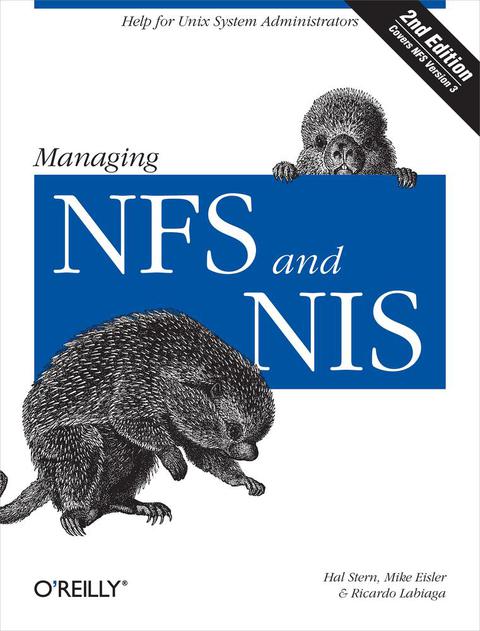
Managing NFS and NIS 2nd Edition by Mike Eisler, Ricardo Labiaga, Hal Stern ISBN 978-1565925106 1565925106

Original price was: $50.00.$35.00Current price is: $35.00.
Managing NFS and NIS 2nd Edition by Mike Eisler, Ricardo Labiaga, Hal Stern – Ebook PDF Instant Download/Delivery: 978-1565925106, 1565925106
Full download Managing NFS and NIS 2nd Edition after payment
Product details:
ISBN 10: 1565925106
ISBN 13: 978-1565925106
Author: Mike Eisler, Ricardo Labiaga, Hal Stern
A modern computer system that’s not part of a network is even more of an anomaly today than it was when we published the first edition of this book in 1991. But however widespread networks have become, managing a network and getting it to perform well can still be a problem. Managing NFS and NIS, in a new edition based on Solaris 8, is a guide to two tools that are absolutely essential to distributed computing environments: the Network Filesystem (NFS) and the Network Information System (formerly called the “yellow pages” or YP). The Network Filesystem, developed by Sun Microsystems, is fundamental to most Unix networks. It lets systems ranging from PCs and Unix workstations to large mainframes access each other’s files transparently, and is the standard method for sharing files between different computer systems. As popular as NFS is, it’s a “black box” for most users and administrators. Updated for NFS Version 3, Managing NFS and NIS offers detailed access to what’s inside, including:
How to plan, set up, and debug an NFS network
Using the NFS automounter
Diskless workstations
PC/NFS
A new transport protocol for NFS (TCP/IP)
New security options (IPSec and Kerberos V5)
Diagnostic tools and utilities
NFS client and server tuning
NFS isn’t really complete without its companion, NIS, a distributed database service for managing the most important administrative files, such as the passwd file and the hosts file. NIS centralizes administration of commonly replicated files, allowing a single change to the database rather than requiring changes on every system on the network. If you are managing a network of Unix systems, or are thinking of setting up a Unix network, you can’t afford to overlook this book.
Table of contents:
1. Networking Fundamentals
1.1 Networking overview
1.2 Physical and data link layers
1.3 Network layer
1.4 Transport layer
1.5 The session and presentation layers
2. Introduction to Directory Services
2.1 Purpose of directory services
2.2 Brief survey of common directory services
2.3 Name service switch
2.4 Which directory service to use
3. Network Information Service Operation
3.1 Masters, slaves, and clients
3.2 Basics of NIS management
3.3 Files managed under NIS
3.4 Trace of a key match
4. System Management Using NIS
4.1 NIS network design
4.2 Managing map files
4.3 Advanced NIS server administration
4.4 Managing multiple domains
5. Living with Multiple Directory Servers
5.1 Domain name servers
5.2 Implementation
5.3 Fully qualified and unqualified hostnames
5.4 Centralized versus distributed management
5.5 Migrating from NIS to DNS for host naming
5.6 What next?
6. System Administration Using the Network File System
6.1 Setting up NFS
6.2 Exporting filesystems
6.3 Mounting filesystems
6.4 Symbolic links
6.5 Replication
6.6 Naming schemes
7. Network File System Design and Operation
7.1 Virtual filesystems and virtual nodes
7.2 NFS protocol and implementation
7.3 NFS components
7.4 Caching
7.5 File locking
7.6 NFS futures
8. Diskless Clients
8.1 NFS support for diskless clients
8.2 Setting up a diskless client
8.3 Diskless client boot process
8.4 Managing client swap space
8.5 Changing a client’s name
8.6 Troubleshooting
8.7 Configuration options
8.8 Brief introduction to JumpStart administration
8.9 Client/server ratios
9. The Automounter
9.1 Automounter maps
9.2 Invocation and the master map
9.3 Integration with NIS
9.4 Key and variable substitutions
9.5 Advanced map tricks
9.6 Side effects
10. PC/NFS Clients
10.1 PC/NFS today
10.2 Limitations of PC/NFS
10.3 Configuring PC/NFS
10.4 Common PC/NFS usage issues
10.5 Printer services
11. File Locking
11.1 What is file locking?
11.2 NFS and file locking
11.3 Troubleshooting locking problems
12. Network Security
12.1 User-oriented network security 12.2 How secure are NIS and NFS?
12.3 Password and NIS security
12.4 NFS security
12.5 Stronger security for NFS
12.6 Viruses
13. Network Diagnostic and Administrative Tools
13.1 Broadcast addresses
13.2 MAC and IP layer tools
13.3 Remote procedure call tools
13.4 NIS tools
13.5 Network analyzers
14. NFS Diagnostic Tools
14.1 NFS administration tools
14.2 NFS statistics
14.3 snoop
14.4 Publicly available diagnostics
14.5 Version 2 and Version 3 differences
14.6 NFS server logging
14.7 Time synchronization
15. Debugging Network Problems
15.1 Duplicate ARP replies
15.2 Renegade NIS server
15.3 Boot parameter confusion
15.4 Incorrect directory content caching
15.5 Incorrect mount point permissions
15.6 Asynchronous NFS error messages
16. Server-Side Performance Tuning
16.1 Characterization of NFS behavior
16.2 Measuring performance
16.3 Benchmarking
16.4 Identifying NFS performance bottlenecks
16.5 Server tuning
17. Network Performance Analysis
17.1 Network congestion and network interfaces
17.2 Network partitioning hardware
17.3 Network infrastructure
17.4 Impact of partitioning
17.5 Protocol filtering
18. Client-Side Performance Tuning
18.1 Slow server compensation
18.2 Soft mount issues
18.3 Adjusting for network reliability problems
18.4 NFS over wide-area networks
18.5 NFS async thread tuning
18.6 Attribute caching
18.7 Mount point constructions
18.8 Stale filehandles
People also search for:
managing nfs and nis
managing nfs and nis pdf
nfs names
nfs best practices
nfs manage-gids
Tags: Mike Eisler, Ricardo Labiaga, Hal Stern, Managing NFS