
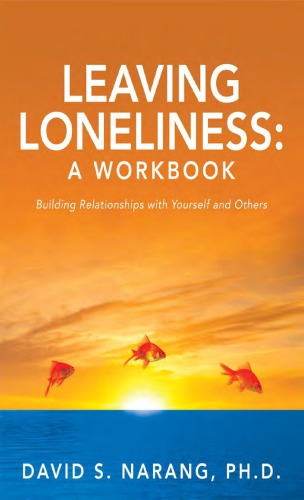
Leaving Loneliness 1st Edition by David S Narang Ph D ISBN 978-0615860893 0615860893


Original price was: $50.00.$35.00Current price is: $35.00.
Leaving Loneliness 1st Edition by David S Narang Ph D – Ebook PDF Instant Download/Delivery: 978-0615860893, 0615860893
Full download Leaving Loneliness 1st Edition after payment
Product details:
ISBN 10: 0615860893
ISBN 13: 978-0615860893
Author: David S Narang Ph D
Addressing persistent loneliness requires reflection and action to address the loneliness at its core. This book focuses squarely on what psychologists call your attachment style, an invisible but pervasive approach to relationships that influences how lonely or socially abundant your life is to become. Your attachment style can leave you nourished with love, isolated and longing, or trapped in stormy and unstable relationships, depending on your particular attachment style. Kirkus Reviews calls Leaving Loneliness, “A curative, uplifting workbook” (review available below). That is because attachment styles can be changed, and this workbook’s purpose is to help you on your path to do exactly that. Use the reflective activities to replace pangs of loneliness with connection.
Kindle Edition:
To respond to questions in the workbook, just touch the screen for several seconds, and a notepad will appear, allowing you to type and save your responses.
Editorial Review:
A gentle guide to healing childhood wounds and developing full, satisfying relationships in adulthood. Narang, in this book, seeks to identify barriers to emotional success, and his soothing tone enhances the work considerably. The author clearly explains the workbook’s overall format and each activity’s rationale (“you will address the problem first and then move toward building strength, much in the way that if you had an infection in your foot, you would heal that infection first before moving on to building muscles by running”). The variety of exercises is impressive. Not every exercise will apply to every person, he explains, which allows the reader to tailor the workbook to his or her own needs. This flexible approach, combined with the author’s easily understandable, peaceful style, make this a restorative work for a wide audience. A curative, uplifting attachment workbook. — Kirkus Reviews
Table of contents:
Chapter 1: Identifying the Obstacles in Your Attachment Style
Starting with Your Strengths
Writing the (Attachment) Story of Your Life Thus Far Identifying Your Challenges with Attachment (Note: This key activity determines if you should complete Chapter 2, Chapter 3, or both.)
Attachment Styles of Your Family Members
Notes
Chapter 2: Additional Activities to Specifically Address Attachment Anxiety
Finding Your Satisfaction
Why Do I Feel Desperation and Cling to Others?
What If I Don’t Really Need as Much From Them as I Think?
What If I’m More Scared of What I Can Do Than of What I Can’t Do?
Healing Your Deeper Emotional Injuries
The Person/s Who Was/Were Really There for Me
Experiencing Versus Addicting
But I Feel Hopeless and Lost Without His/Her Love
Why Do I Get So Upset When I Feel Ignored or Misunderstood?
I Get Really Mad When Others Don’t See Things the Way I Do
Why Do I Linger So Long at the End of a Conversation?
Why Can’t I Seem to Make a Decision?
Simple, Useful Meditation When Habitually Overly Busy Gratitude
Identifying My Attachment Fears
What Makes Me Strong?
Giving What I Have of Value to the World
My Rotation Between Idealizing Others and Being Disappointed
Repairing a Recent Interaction That Damaged a Relationship Why Do I Ask for Help When I Already Know What to Do?
Getting Love from Myself and Others by Being Strong and Healthy Instead of by Being Sick or Emotionally Injured
When I Truly Do Need Others’ Help: Asking in a Way That Respects Myself and
Does Not Burn Them Out
Sometimes I Just Want to Hurt People: Why Is That?
In Pain with Loneliness? Calm the Emotion and Make a Plan to Rescue Yourself
Chapter 3: Additional Activities to Specifically Address Attachment
Avoidance
Understanding Your Goal at a Gut Level
Happiness and Sadness: Accepting All Emotions as Part of Life
I Am Already Enough, Even Before Improving More
I Am Smart, So Why Am I Not Happier?
Getting to Know the Right Hemisphere of Your Brain
Finding Your Satisfactions and Pleasures
Getting Comfortable with Change
When Asking for Help Does Not Mean I Am Weak
Naming My Social Fears
Healing My Deeper Emotional Injuries
How Do I Let My Guard Down?
What Part/s of My Physical Health and Needs Have I Been Neglecting the Most?
Speedy Surface Interactions and Slower, Deeper Communication
Shame
Pride
Why Do I Work to the Point of Insanity to Be Competent/Perfect?
Lightness and Levity
I Am Not Here Simply to Be a Hero. My Purpose in Life Is Not to Emotionally Rescue Others or to Be Somebody Else’s “Tool”
A Very Different Way of Relating to Others
Continue to Help Others, but with the Right Intention
Repairing Angry Interactions
I Am Me and You Are You
Social Coping
Social Prioritizing: Deepening Select Relationships Instead of Having Light
Relationships with Dozens
Getting Curious About Yourself
You May Be Terrible at Surrender: Why You Need to Learn How
Practicing Receiving from Others
Learning to Cry to Prevent Becoming Truly Weak
What Actually Makes Me Strong?
Your Voice Tone
Why Do I Pretend to Myself That Things Are Not Dangerous to Me, When in Fact
They Injure and Exhaust Me?
Why Do I Stiffen Up So Quickly and Intensely in Arguments?
On Long-Distance Relationships, Porn, Social Networking Replacing Live Contact,
and Other Forms of Pseudo-Contact
Less Analyzing, More Experiencing
Finding Better Solutions: First Sit and Listen to Yourself, and Only Then Move into Action
From Compulsive, Unsatisfying Busyness to Purposeful Activity Beyond Constant Problem Solving
Responding with Logic When Logic Is Appropriate, Responding with Emotion When Emotion Is Appropriate
Allowing the Occasional Healthy Emotional Explosion
Notes
Chapter 4: Cultivating Earned Se cure Attachment To Self
Understanding This Chapter’s Purpose
Forgiving Yourself for Past Mistakes
Forgiving Others for Injuring or Failing You
Developing Your Complete, Detailed, Balanced Attachment Narrative: A Powerful
Tool
Approaching Insecurities in a Secure Manner
Meditation to Make Your External Support Internal
Meditation for Self-Soothing When Upset
Another Option to Use When Upset: Coping Thoughts
One More Option to Use When Upset: Art
Meditation of Self-Love in Action
Addressing Those More Embarrassing Needs of Your Body
Sleeping Well: Getting Enough Satisfaction from the Day
Sleeping Well: Releasing the Day’s Intensity
Secure Attachment Exercising
Right Now: What Do You Actually Want to Be Doing?
Music
Finding Your Inner Artist
Finding Your Inner Handyman/Woman
Becoming Aware of Your Deepest Desires
Seeking Satisfaction Instead of Solely Searching for Comfort
Allowing Yourself to Build and Have a Satisfying Life: Overcoming the Barrier of
Self-Criticism
Which Senses Are Most Satisfying to Stimulate?
Locating Beauty
Chapter 5: Applying the Foundation of Attachment to Self to Your Relationships with Others
Secure Attachment Driving
What Are Your Social Assumptions?
Shaking Off Obstacles to Being Yourself in Conversation
If You Get Anxious in a Conversation: Reconnecting to Yourself
Don’t Drop My Conversation Partners, or I Lose Them
Bringing in People Who Balance You
Meeting People: Posture of Openness
Meeting People: Emotional Openness
Meeting People: Replacing Self-Consciousness with Curiosity
Advanced Topic: Mind Mapping Instead of Projecting
Finding My Mentors
True Vulnerability
Secure Attachment Sex
An Ongoing Checklist about Your Relationship with Yourself
Becoming Free
No Compromise Decisions
I’m Alive: Living Before I Die
Openness to Experience
Notes
Conclusion
People also search for:
leaving you alone quotes
leaving lonely town
is loneliness lethal
is loneliness a leading cause of depression
is loneliness inevitable
Tags: David S Narang Ph D, Leaving Loneliness