
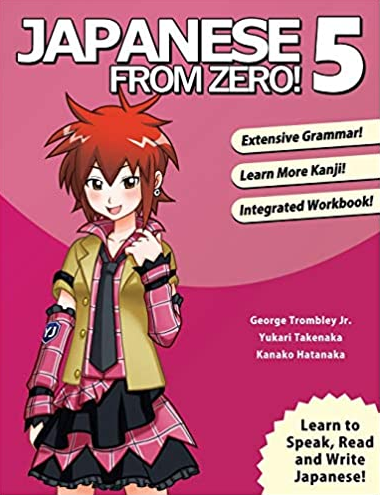
Japanese From Zero 5 Continue Mastering the Japanese Language and Kanji 1st Edition by George Trombley, Ms Kanako Hatanaka, Ms Yukari Takenaka ISBN 978-0989654555 0989654559
Original price was: $50.00.$35.00Current price is: $35.00.
Japanese From Zero 5 Continue Mastering the Japanese Language and Kanji 1st Edition by George Trombley, Ms Kanako Hatanaka, Ms Yukari Takenaka- Ebook PDF Instant Download/Delivery: 978-0989654555, 0989654559
Full download Japanese From Zero 5 Continue Mastering the Japanese Language and Kanji 1st Edition after payment
Product details:
ISBN 10: 0989654559
ISBN 13: 978-0989654555
Author: George Trombley, Ms Kanako Hatanaka, Ms Yukari Takenaka
Japanese From Zero! is an innovative and integrated approach to learning Japanese that was developed by professional Japanese interpreter George Trombley, Yukari Takenaka and has been refined for over fifteen years in the classroom by native Japanese professors.
Using up-to-date and easy-to-grasp grammar, Japanese From Zero! is the perfect course for current students of Japanese as well as absolute beginners.
Volume five of the Japanese From Zero! series teaches:
*advanced Japanese grammar concepts*over 110 new grammar and usage*all new verbs explained*new Kanji words and characters.
Table of contents:
THE BASICS A: BEFORE WE GET STARTED..
FROM ME TO YOU 私からあなたへ
A-1. Who are you, we, and them?
A-2. The benefits of learning a new language
A-3. How can I really improve?
A-4. What should I already know?
THE BASICS B: DIRECT VS NATURAL TRANSLATION
GRAMMAR AND USAGE 文法と使い方
B-1. The differences between 直訳 and 意訳
B-2. What is more important? Level 5 or 1 grammar
B-3. Grammar VS Vocabulary
THE BASICS C: MISSING KANJI
VOCABULARY BUILDER: GROUPS A, B, C, D.
Group A: Words with repeating sounds
Group B: Japanese dishes
Group C: “AS IS” borrowed words
Group D: Katakana words that require explanations
LESSON 1: EVEN THOUGH…
GRAMMAR AND USAGE 文法と使い方
1-1. 何とか+ verbs (to handle something)
1-2. Using のに (even though, despite) with verbs and adjectives
1-3. Using のに (even though, despite) with nouns and な adjectives
1-4. Trying to do something ~てみる
1-5. Verb + ~たりしますか (Do you ever~)
KANJI LESSON 1: 台組画番点語
KANJI CULTURE 漢字の文化
「点」 to mean “item” or “piece”
WORKBOOK 1: WORKBOOK ACTIVITIES.
VOCABULARY BUILDER: GROUPS E AND F
Group E: nature and weather
Group F: season related
LESSON 2: NATURAL DISASTERS
GRAMMAR AND USAGE 文法と使い方
2-1. Confirmation and Reasons ~(な)んです
2-2. Using ~(な)んです when emphasizing
2-3. The difference between (な)んです and から
2-4. Doing two actions at once using the ながら extension
2-5. Adding background information with が and けど
KANJI LESSON 2: 羽週曜才每半
KANJI CULTURE 漢字の文化
The difference between 才 and 歲
Every~ (day of week) 每
WORKBOOK 2: WORKBOOK ACTIVITIES
VOCABULARY BUILDER: GROUPS G, H, I, J
Group G: people
Group H: Japanese house areas (Part 1)
Group I: “AS IS” borrowed words
Group J: Katakana words that require explanation
LESSON 3: OTHERS WANTS AND THE FIVE SENSES
GRAMMAR AND USAGE 文法と使い方
3-1. Using 〜っぱなし (leaving something on; keep…-ing)
3-2. She said, he said 〜んだって、~って
3-3. Using って to say, “what do you mean?”
3-4. What someone else wants 〜がる (adjectives)
3-5. What someone else wants ~がる (たい form verbs)
3-6. Describing what you feel using ~がする
☐ KANJI LESSON 3: 東西南北方角
KANJI CULTURE 漢字の文化
北 symbolizes “defeat”
WORKBOOK 3: WORKBOOK ACTIVITIES
VOCABULARY BUILDER: GROUPS K AND L
Group K: money related
Group L: entertainment words
LESSON 4: ACTION IN A CERTAIN WAY
GRAMMAR AND USAGE 文法と使い方
4-1. In order to, so that ~ように
4-2. To become able to ~ようになる
4-3. せい fault, because, due to
4-4. Nouns made from verbs
☐ KANJI LESSON 4: 風雪星雲海谷岩
KANJI CULTURE 漢字の文化
What does “a person on the clouds” mean?
What does “a star is broken” mean?
WORKBOOK 4: WORKBOOK ACTIVITIES..
LESSON 5: UNINTENDED ACTIONS
GRAMMAR AND USAGE 文法と使い方
5-1. Using しまう when an action was carried out to the end
5-2. Using てしまう when things happen unconsciously
5-3. Using てしまう for unintended actions or circumstances
5-4. Using てしまう to show intention or a threat of a future action
5-5. てしまう with other forms
5-6. てしまう informal / casual version
5-7. The とIf-Then statement
5-8. Real life versus textbook sentences
KANJI LESSON 5: 家寺門店園場
KANJI CULTURE 漢字の文化
Same kanji parts, same reading
WORKBOOK 5: WORKBOOK ACTIVITIES..
VOCABULARY BUILDER: GROUP M
Group M: (time related word) + 中
LESSON 6: PASSIVE VERB FORM
CULTURE CLIP カルチャークリップ
Japan’s cute and scary mythical creature
Japan’s oldest national sport
GRAMMAR AND USAGE 文法と使い方
6-1. A thing called…, A place called… etc.
6-2. The beginning of an action ~しはじめる
6-3. Three ways something can end
6-4. The ending of an action ~しおえる、~しおわる
6-5. Passive verb form ~られる
KANJI LESSON 6: 原里野道地池
KANJI CULTURE 漢字の文化
Why is the kanji 池 (pond) used for “batteries”?
WORKBOOK 6: WORKBOOK ACTIVITIES..
VOCABULARY BUILDER: GROUPS N AND O
Group N: “AS IS” borrowed words
Group O: Katakana words that require explanation
☐ LESSON 7: HAVE TO DO
GRAMMAR AND USAGE 文法と使い方
7-1. Must do, なければなりません and ないといけません
7-2. Question word extensionsか、も、でも
7-3. In the middle of something (noun +中)
7-4. Within a time frame (time period + 中)
KANJI LESSON 7:国市京公内外
KANJI CULTURE 漢字の文化
Demons on the outside, fortune on the inside!
WORKBOOK 7: WORKBOOK ACTIVITIES
LESSON 8: TRYING TO DO SOMETHING
GRAMMAR AND USAGE 文法と使い方
8-2. ~しようとする (trying to do)
8-3. The moment 1… (とたんに)
8-4. Using ため with nouns
8-5. Using ため with verbs
☐ KANJI LESSON 8:色黄黑茶紙絵線
KANJI CULTURE 漢字の文化
What is “yellow voice” like?
What does “to become a picture” mean?
WORKBOOK 8: WORKBOOK ACTIVITIES
LESSON 9: MAKING ASSUMPTIONS
GRAMMAR AND USAGE 文法と使い方
9-1. Making assumptions (VERB + そうです)
9-2. Using そうです when talking about yourself
9-3. Two ways to make negative assumptions そうにない、なさそう
9-4. Using VERB + そう to modify
9-5. Expressing hearsay ~そうです
9-6. によると (according to; depending on)
KANJI LESSON 9: 春夏秋冬時間
KANJI CULTURE 漢字の文化
What does “a space of a hair” mean?
WORKBOOK 9: WORKBOOK ACTIVITIES
LESSON 10: ばかり AND かもしれない
GRAMMAR AND USAGE 文法と使い方
10-1. Using ばかり with a noun
10-2. Using ばかり with a number
10-3. Using ばかり with an う form verb
10-4. てばかり constantly or always doing something
10-5. たばかり just now completed an action
10-6. Indicating degree of certainty (~かも知れない)
10-7. I wish I could… たらいい
KANJI LESSON 10: 朝昼夜前後午今
KANJI CULTURE 漢字の文化
What does “before breakfast” really mean?
WORKBOOK 10: WORKBOOK ACTIVITIES.
LESSON 11: INTENTIONS AND BELIEFS
GRAMMAR AND USAGE 文法と使い方
11-1. Using つもり to show intentions with verbs
11-2. Using つもり to show belief in something false
11-3. Beginning an explanation of “why”
11-4. Using different question words with かと言うと
11-5. Using different tenses with かと言うと
June 11. Within a time span or amount (うち)
11-7. Being full of something
11-8. More nouns made from verbs
KANJI LESSON 11: 工理算図社科
KANJI CULTURE 漢字の文化
4 ways to write はかる?
WORKBOOK 11: WORKBOOK ACTIVITIES.
VOCABULARY BUILDER: GROUP P
Group P: Things around Japanese houses
LESSON 12: CAUSATIVE AND PERMISSIVE
GRAMMAR AND USAGE 文法と使い方
12-1. Making, letting someone do with ~させる form
12-2. Using appropriate particles with させる
12-3. Review of similar verb forms
12-4. Can we use を twice in a sentence? (NO)
12-5. Combination of させる with other grammar
12-6. Understanding double particles
KANJI LESSON 12:電船汽弓矢形..
KANJI CULTURE 漢字の文化
Names of Shapes using 形
WORKBOOK 12: WORKBOOK ACTIVITIES
LESSON 13: EVEN IF…
GRAMMAR AND USAGE 文法と使い方
13-1. The hardest working particle in Japanese (に)
13-2. When particle に can be translated as “for”
3-13. When のに doesn’t mean “even though”
4-13. How to distinguish のに (in order to) from のに (even though)
13-5. でも after a noun to mean “even if / even though~”
6-13. Using ても (even though, even if) with verbs
7-13. Using ても with い adjectives
8-13. Listing facts and conditions ~し〜し
KANJI LESSON 13:万戸室刀何同
KANJI CULTURE 漢字の文化
Types of rooms using 室
WORKBOOK 13: WORKBOOK ACTIVITIES
GLOSSARY – ENGLISH-JAPANESE
GLOSSARY – JAPANESE-ENGLISH
OTHER FROM ZERO BOOKS
People also search for:
japanese from zero 56
japanese from zero japanese in 5
japanese from zero 5
japanese from zero 55
after japanese from zero 5
Tags: George Trombley, Ms Kanako Hatanaka, Ms Yukari Takenaka, Japanese From Zero, the Japanese Language