
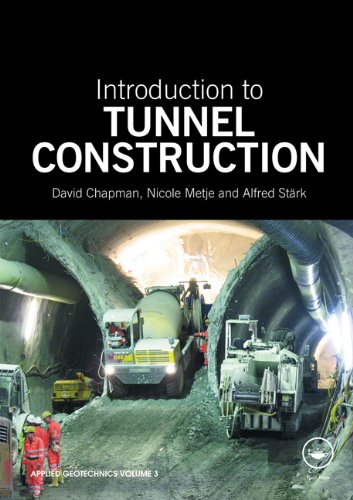
Introduction to Tunnel Construction Applied Geotechnics 1st Edition by David Chapman, Alfred Stärk, Nicole Metje ISBN 978-0415468428 0415468426


Original price was: $50.00.$35.00Current price is: $35.00.
Introduction to Tunnel Construction Applied Geotechnics 1st Edition by David Chapman, Alfred Stärk, Nicole Metje – Ebook PDF Instant Download/Delivery:978-0415468428, 0415468426
Full download Introduction to Tunnel Construction Applied Geotechnics 1st Edition after payment
Product details:
ISBN 10: 0415468426
ISBN 13: 978-0415468428
Author: David Chapman, Alfred Stärk, Nicole Metje
Tunnelling provides a robust solution to a variety of engineering challenges. It is a complex process, which requires a firm understanding of the ground conditions as well as structural issues. This book covers the whole range of areas that you need to know in order to embark upon a career in tunnelling. It also includes a number of case studies of real tunnel projects, to demonstrate how the theory applies in practice.
The coverage includes:
- Both hard-rock and soft-ground conditions
- Site investigation, parameter selection, and design considerations
- Methods of improving the stability of the ground and lining techniques
- Descriptions of the various tunnelling techniques
- Health and safety considerations
- Monitoring of tunnels during construction
Clear, concise, and heavily illustrated, this is a vital text for final-year undergraduate and MSc students and an invaluable starting point for young professionals.
Table of contents:
1. Introduction
1.1 Tunnel Excavation Philosophy
1.2 Scope of this Book
1.3 Historical Context
1.4 Nature of the Ground
1.5 Tunnel Cross-Section Terminology
1.6 Content and Layout of this Book
2. Site Investigation
2.1 Introduction
2.2 Site Investigation in a Project
2.2.1 Introduction
2.2.2 Desk Study
2.2.3 Site Reconnaissance
2.2.4 Ground Investigation (Overview)
2.3 Ground Investigation
2.3.1 Introduction
2.3.2 Field Investigation
2.3.2.1 Non-invasive Methods
2.3.2.2 Invasive Exploration
2.3.3 Laboratory Tests
2.4 Ground Characteristics/Parameters
2.4.1 Effect of Stratification on Young’s Modulus
2.4.2 Compressible and Swelling Ground
2.4.3 Typical Ground Parameters for Tunnel Design
2.4.4.1 Rock Quality Designation
2.4.4.2 Rock Mass Classification
2.4.4.3 Rock Quality Assessment (Q Method)
2.4.4.4 Remarks on Rock Mass Classification Systems
2.5 Site Investigation Report
2.5.1 Types of Site Investigation Reports
2.5.2 Key Information for Tunnel Design
3. Preliminary Tunnel Analysis
3.1 Introduction
3.2 Preliminary Stress Model in the Ground
3.3 Stability of Soft Soil
3.3.1 Stability of Fine-Grained Soil
3.3.2 Stability of Coarse-Grained Soil
3.4 Lateral Earth Pressure Coefficient (K₀)
3.5 Preliminary Analysis Methods
3.5.1 Introduction
3.5.2 Beam Spring Method with Layers
3.5.3 Continuous Method
3.5.4 Tunnel Support Resistance Method
3.6 Preliminary Numerical Models
3.6.1 Introduction
3.6.2 2-D Tunnel Construction Modeling
3.6.3 3-D Tunnel Construction Modeling
3.6.4 Selection of Soil Constitutive Models and Liner Layers
4. Ground Improvement Techniques and Lining Systems
4.1 Introduction
4.2 Ground Improvement and Stabilization Techniques
4.2.1 Ground Freezing
4.2.2 Lowering the Groundwater Table
4.2.3 Grouting
4.2.4 Soil Reinforcement
4.2.5 Forepoling
4.2.6 Face Bolting
4.2.7 Arch Tubes
**4.2.8 Compensation Grouting
**4.2.9 Pressure Tunnel Excavation (Compressed Air)
4.3 Tunnel Lining Systems
4.3.1 Lining Design Requirements
4.3.2 Shotcrete (Sprayed Concrete)
4.3.3 Ribbed Systems
4.3.4 Segmental Lining
4.3.5 Cast-in-Place Concrete Lining
4.3.6 Fire Resistance of Concrete Lining
5. Tunnel Construction Techniques
5.1 Introduction
5.2 Open-Faced Excavation Without Shielding
5.2.1 Timbering
5.2.2 Open-Faced Excavation with Alternative Lining
5.3 Tunnel Boring Machines (TBMs)
5.4 Tunnel Shields
5.5 Tunnel Excavators
5.5.1 Introduction
5.5.2 Hard Rock Tunnel Excavators
5.5.2.1 Shielded Tunnel Boring Machines
5.5.2.2 Tunnel Boring Machines (TBMs)
5.5.2.3 General Observations for Hard Rock Tunnel Excavators
5.5.3 Soft Ground Tunnel Excavators
5.5.3.1 Introduction
5.5.3.2 Slurry Tunnel Boring Machines
5.5.3.3 Earth Pressure Balance Tunnel Boring Machines
5.5.3.4 Multi-Mode Tunnel Boring Machines
5.5.3.5 Selection of Slurry or Earth Pressure Balance Machines
5.6 Drilling and Blasting for Tunnel Excavation
5.6.1 Introduction
5.6.2 Drilling
5.6.3 Charging
5.6.4 Backfilling
5.6.5 Blasting
5.6.5.1 Blasting Effects
5.6.5.2 Types of Explosives
**5.6.5.3 Detonators
**5.6.5.4 Types of Cuts
**5.6.5.5 Explosive Material Requirements
5.6.6 Ventilation
5.6.7 Excavated Material Transport and Support
5.7 New Tunnel Excavation Method and Shotcrete Lining
5.7.1 New Tunnel Excavation Method
5.7.2 Shotcrete Lining
5.7.3 LaserShell™ Technology
5.8 Cut-and-Cover Tunnels
5.8.1 Introduction
5.8.2 Construction Method
5.8.3 Design Issues
**5.8.4 Excavation Support Methods (Support Systems) for Excavation Faces
5.9 Submarine Tunnels
5.9.1 Introduction
5.9.2 Phases of Submarine Tunnel Construction
5.9.3 Types of Submarine Tunnels
**5.9.3.1 Steel Shell
**5.9.3.2 Concrete
**5.9.4 Foundation and Settlement of Submarine Tunnels
**5.9.5 Joints Between Pipe Elements
**5.9.6 Analysis and Design
**5.9.7 Examples of Submarine Tunnels
5.10 Box-jacking Tunnels
5.10.1 Introduction
5.10.2 Outline of the Method and Description of Key Components
5.10.3 Examples of Box-jacking Tunnels
**5.10.3.1 Road Underbridge Tunnel, M1 Motorway, J15A, Northamptonshire, UK
**5.10.3.2 I-90 Extension, Boston, Massachusetts, USA
5.11 Pipe-jacking and Microtunneling
5.11.1 Introduction
5.11.2 Pipe-jacking Construction Process
**5.11.3 Maximum Drive Length for Pipe-jacking and Microtunneling
5.12 Horizontal Directional Drilling
6. Health and Safety, and Risk Management in Tunnel Excavation
6.1 Health and Safety Hazards in Tunnel Construction
6.1.1 Introduction
6.1.2 Hazards in Tunnel Excavation
6.1.3 Risk Management Techniques
6.1.4 Legislation, Accidents, and Poor Health Statistics
6.1.5 The Role of Clients, Designers, and Contractors
6.1.6 Ground Risks
6.1.7 Excavation and Lining Methods
6.1.8 Tunnel Boring Machines
6.1.9 Tunnel Transport
6.1.10 Atmosphere and Ventilation in Tunnels
6.1.11 Explosives
6.1.12 Fire, Flood, and Emergency Evacuation
6.1.13 Occupational Health
6.1.14 Welfare and First Aid
6.1.15 Working in Compressed Air
6.1.16 Education, Training, and Competence
6.1.17 Conclusion
6.2 Risk Management in Tunnel Excavation Projects
6.2.1 Introduction
6.2.2 Risk Identification
6.2.3 Risk Analysis
6.2.4 Risk Assessment
6.2.5 Risk Monitoring and Review
7. Ground Movement and Monitoring
7.1 Ground Deformation in Soft Ground
7.1.1 Surface Settlement Profiles
7.1.1.1 Estimating the Width Trench Parameter, i
7.1.1.2 Volume Loss
7.1.2 Lateral Displacement
7.1.3 Long-Term Settlement
7.1.4 Multiple Tunnels
7.2 Effects of Tunnel Excavation on Surface and Subsurface Structures
7.2.1 Effects of Tunnel Excavation on Existing Tunnels, Underground Utilities, and Pile Foundations
7.2.2 Design Methods
7.3 Monitoring
7.3.1 Challenges and Objectives
7.3.2 Trigger Values
7.3.3 Observation Methods
7.3.4 Tunnel Monitoring During Construction Using the New Austrian Tunnel Method
7.3.4.4 Interpreting Measurements: Comparative Observations
7.3.4.5 Interpreting Measurements: Strain
7.3.4.6 Interpreting Measurements: Stress Intensity Index
7.3.4.7 Frequency and Duration of Measurements
7.3.4.8 Contingency Measures
7.3.5 Measuring Equipment for Monitoring in Tunnels and Ground
7.3.6 Measuring Equipment for Monitoring Existing Structures
8 Case Studies
People also search for:
introduction to tunnel construction by david chapman
introduction to tunnel design and construction
introduction to scanning tunneling microscopy
introduction to scanning tunneling microscopy pdf
introduction to wind tunnel
Tags: David Chapman, Alfred Stärk, Nicole Metje, Introduction to Tunnel, Construction Applied