
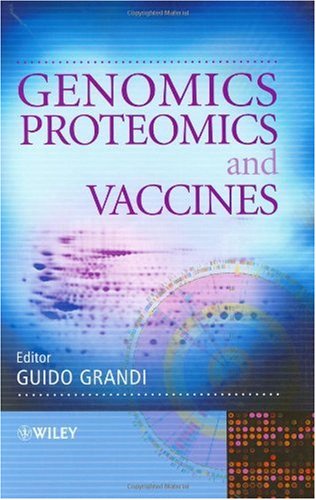
Genomics Proteomics and Vaccines 1st Edition by Guido Grandi ISBN 978-0470856161 0470856165

Original price was: $50.00.$35.00Current price is: $35.00.
Genomics Proteomics and Vaccines 1st Edition by Guido Grandi – Ebook PDF Instant Download/Delivery: 978-0470856161, 0470856165
Full download Genomics Proteomics and Vaccines 1st Edition after payment
Product details:
ISBN 10: 0470856165
ISBN 13: 978-0470856161
Author: Guido Grandi
While the sequence of the human genome sequence has hit the headlines, extensive exploitation of this for practical applications is still to come. Genomic and post-genomic technologies applied to viral and bacterial pathogens, which are almost equally important from a scientific perspective, have the potential to be translated into useful products and processes much more rapidly.
Genomics, Proteomics and Vaccines introduces the history of vaccinology and discusses how vaccines are expected to evolve in the future. It describes the relevant technologies, including genome sequencing and analysis, DNA microarrays, 2D electrophoresis and 2D chromatography, mass spectrometry and high-throughput protein expression and purification. The book also features examples of the exploitation of genomics and post-genomics in vaccine discovery, and contains useful descriptions of the biology and pathogenesis of clinically important bacterial pathogens.
This book should be of interest to all those working in vaccine discovery and development in pharmaceutical and biotechnology companies as well as in academic institutions
Table of contents:
PART 1: INTRODUCTION
1 Vaccination: Past, Present and Future
Maria Lattanzi and Rino Rappuoli
1.1 Introduction
1.2 Vaccination: the past
1.3 Vaccination: the present
1.4 Vaccination: the future
1.5 Conclusion: the intangible value of vaccination References
2 Bioinformatics, DNA Microarrays and Proteomics in Vaccine Discovery: Competing or Complementary Technologies?
Guido Grandi
2.1 Introduction
2.2 From genome sequence to vaccine discovery
2.3 A case study: the anti-meningococcus B vaccine
2.4 Comparison of the three approaches
2.5 Conclusions: a ‘nomics’ approach to vaccine discovery References
PART 2: TECHNOLOGIES
3 Genome Sequencing and Analysis
3.1 Hervé Tettelin and Tamara Feldblyum
Introduction
3.2 Genome sequencing
3.3 Genome analysis
3.4 Conclusion References
4 Understanding DNA Microarrays: Sources and Magnitudes of Variances in DNA Microarray Data Sets
She-pin Hung, Suman Sundaresh, Pierre F. Baldi and G. Wesley Hatfield
4.1 Introduction
4.2 DNA array formats
4.3 Data analysis methods
4.4 Sources and magnitudes of noise in DNA microarray experiments
4.5 Conclusions Acknowledgements References
5 The Proteome, Anno Domini Two Zero Zero Three
Pier Giorgio Righetti, Mahmoud Hamdan, Frederic Reymond and Joël S. Rossier
5.1 Introduction
5.2 Some definitions
5.3 What methods exist to tackle the proteome complexity?
5.4 Quantitative proteomics
5.5 Pre-fractionation in proteome analysis
5.6 Multi-dimensional chromatography
5.7 Protein chip arrays
5.8 Imaging mass spectrometry
Acknowledgements References
6 Mass Spectrometry in Proteomics
Pierre-Alain Binz
6.1 Introduction
6.2 MS technology
6.3 Principle of protein identification based on MS data
6.4 Proteomics workflows References
7 High Throughput Cloning, Expression and Purification Technologies
7.1 Andreas Kreusch and Scott A. Lesley
Introduction
Gene cloning
7.2 Protein expression
7.4 High-throughput protein purification
7.5 Validation of the pipeline and outlook
7.6 Conclusion References
PART 3: APPLICATIONS
8 Meningococcus B: from Genome to Vaccine
Davide Serruto, Rino Rappuoli, and Mariagrazia Pizza
8.1 Meningococcus, a major cause of bacterial meningitis
8.2 Group B meningococcus as an example of reverse vaccinology
8.3 Conclusions References
9 Vaccines Against Pathogenic Streptococci
John L. Telford, Immaculada Margarit y Ros, Domenico Maione, Vega Masignani, Hervé Tettelin, Giuliano Bensi, and Guido Grandi
9.1 Introduction
9.2 Comparative genomics of streptococci
9.3 A vaccine against group B streptococcus
9.4 A vaccine against group A streptococcus
9.5 Conclusions References
10 Identification of the ‘Antigenome’ a Novel Tool for Design and Development of Subunit Vaccines Against Bacterial Pathogens
Eszter Nagy, Tamás Henics, Alexander von Gabain and Andreas Meinke
10.1 Introduction
10.2 Small DNA insert libraries a tool to cover a pathogen’s ‘antigenome
10.3 Proper display platforms
10.4 Selected human sera to provide imprints of pathogen encounters
10.5 Cognate antibodies reveal the ‘antigenome’ of a pathogen
10.6 How to retrieve from the ‘antigenome’ the candidate antigens for vaccine development
10.7 Summary and discussion
References
11 Searching the Chlamydia Genomes for New Vaccine Candidates
Giulio Ratti, Oretta Finco and Guido Grandi
11.1 Old problems and new perspectives for chlamydial vaccines
11.2 Post-genomic approaches
11.3 Genomic screening results
11.4 Concluding considerations
2 References
12 Proteomics and Anti-Chlamydia Vaccine Discovery
Gunna Christiansen, Svend Birkelund, Brian B. Vandahl and Allan C Shaw
12.1 Introduction
12.2 Proteome analysis
12.3 Proteomics as a complement for genomics
12.4 Benefits that proteomics provide for vaccine development
References
13 Proteome Analysis of Outer Membrane and Extracellular Proteins from Pseudomonas aeruginosa for Vaccine Discovery
Stuart J. Cordwell and Amanda S. Nouwens
13.2 Membrane proteins in P. aeruginosa
13.3 Extracellular proteins in P. aeruginosa
13.4 Immunogenic proteins and vaccine discovery
13.5 Conclusions
References
People also search for:
how is genomics used in medicine
how is genetic engineering used in vaccines
how vaccines are an example of biotechnology
is genomics the future
is proteomics the new genomics
Tags: Guido Grandi, Genomics Proteomics