
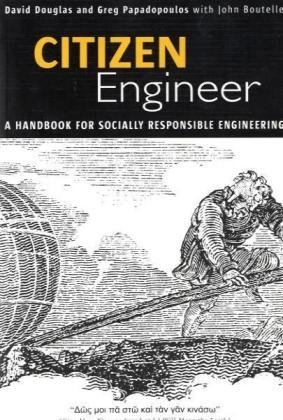
Citizen Engineer A Handbook for Socially Responsible Engineering 1st Edition by David Douglas, Greg Papadopoulos, John Boutelle ISBN 978-0137143924 0137143923
Original price was: $50.00.$35.00Current price is: $35.00.
Citizen Engineer A Handbook for Socially Responsible Engineering 1st Edition by David Douglas, Greg Papadopoulos, John Boutelle- Ebook PDF Instant Download/Delivery: 978-0137143924, 0137143923
Full download Citizen Engineer A Handbook for Socially Responsible Engineering 1st Edition after payment
Product details:
ISBN 10: 0137143923
ISBN 13: 978-0137143924
Author: David Douglas, Greg Papadopoulos, John Boutelle
“Engineers create many of the inventions that shape our society, and as such they play a vital role in determining how we live. This new book does an outstanding job of filling in the knowledge and perspective that engineers must have to be good citizens in areas ranging from the environment, to intellectual property, to ensuring the health of the innovation ecosystem that has done so much for modern society. This is exactly the sort of book that engineers and those who work with them should read and discuss over pizza, coffee, or some other suitable, discussion-provoking consumable.” –John L. Hennessy, president, Stanford University “Citizen Engineer is the bible for the new era of socially responsible engineering. It’s an era where, as the authors show, engineers don’t just need to know more, they need to be more. The work is an inspiration, an exhortation, and a practical how-to guide. All engineers concerned with the impact of their work–and that should be all engineers–must read this book.” –Hal Abelson, professor of computer science and engineering, MIT “Code is law. Finally, a map to responsible law making. This accessible and brilliant book should be required of every citizen, and especially, the new citizen lawmakers we call engineers.” –Lawrence Lessig, director, Safra Center for Ethics, Harvard University, and cofounder, Creative Commons Being an engineer today means being far more than an engineer. You need to consider not only the design requirements of your projects but the full impact of your work–from an ecological perspective, an intellectual property perspective, a business perspective, and a sociological perspective. And you must coordinate your efforts with many other engineers, sometimes hundreds of them. In short, we’ve entered an age that demands socially responsible engineering on a whole new scale: The era of the Citizen Engineer. This engaging and thought-provoking book, written by computer industry luminaries David Douglas and Greg Papadopoulos, focuses on two topics that are becoming vitally important in the day-to-day work of engineers: eco engineering and intellectual property (IP). Citizen Engineer also examines how and why the world of engineering has changed, and provides practical advice to help engineers of all types master the new era and start thinking like Citizen Engineers.
Table of contents:
Part I
Advent of the Citizen Engineer
Chapter 1
“Citizen Engineer” Defined
Responsibilities of the Citizen Engineer
Knowledge Base of the Citizen Engineer
Technology
Ecology
Intellectual Property
Business
Public Policy
Collaboration
Chapter 2
How Engineering Got Its Paradigm Shifted
Changes in the Nature of Engineering
Engineering on a Whole New Scale
Pervasive Collaboration
Broader Influence for Engineers
Externally Driven Changes in Engineering
The Green Explosion
Corporate Social Responsibility
Security and Privacy Concerns
Rise of Digital Goods
New Laws, Tighter Controls
Perspectives on an Engineering Transformation
Part I Summary, and What’s Next
Part II
Environmental Responsibility
Chapter 3 Environmental Impact: The Big Picture
Eco-Responsible Engineering: An Enormous
Opportunity
Core Challenges of Eco-Engineering
Chapter 4 Beyond the Black Cloud: Looking at Lifecycles
The “Cradle to Cradle” Vision
Chapter 5 A Pragmatic Approach to Lifecycle Analysis
A Basic Lifecycle Model
Additional Lifecycle Considerations
Supply Chains
“Mini Lifecycles” of Consumables
Hidden Impacts
Services
Design and Prototypes
Embodied Energy and Embodied Carbon
Lifecycle Assessment Tools
Starting a Top-Level Assessment
Deciding When to Stop Assessing
Chapter 6
Setting Priorities, Requirements, and Goals
Knowing the Law
Business Requirements and Opportunities
Areas of Greatest Impact
Quick Wins and Low-Hanging Fruit
Chapter 7
Energy and Emissions
Common Sources of Energy
Calculating Energy and Power
Energy Impacts: Finding the Cleanest Source of Power
Energy and GHG Emissions
Greenhouse Gas Primer
CO₂ Equivalents and Conversions
Calculating GHG Emissions
Putting a Value on Carbon (Dioxide!)
Heat, Noise, Light, and Radio Emissions
Process-Related GHG Emissions
Energy Efficiency in Product Design
Core Efficiency
Energy Transmission and Conversion
Power States
Standby Power
Batteries
Tracking Lost Energy
An
Example: Energy Efficiency in Data Centers
Where Energy Goes in Data Centers
Making Data Centers More Efficient
Example Results
Chapter 8
Chemicals, Materials, and Waste
Chemistry and the Law
Packaging and Documentation
Waste and Renewal
Disassembly
Reuse/Recycling
Take-Back
Chapter 9
Water and Other Natural Resources
Social Considerations
Business Considerations
Calculating the Water Footprint
Trading Virtual Water
Other Natural Resources
Chapter 10
An Example of Eco-Engineering: Interface, Inc. An Aggressive Initiative with Very Specific Goals
Chapter 11
Eco-Engineering: The Grass Is Always Greener
Carbon Neutrality: Good Start but Not Enough
Greenwashing and Green Noise
Measure and Label
Read “The Six Sins of Greenwashing”
Measuring and Sharing with OpenEco
Part II Summary, and What’s Next
Part III
Intellectual Responsibility
Chapter 12
Intellectual Property Law Fundamentals
IP 101: Core Concepts
Patents
A Closer Look: Why Get a Patent (and Why Not)?
When to Get a Patent
Applying the Standard of Novelty
Do Patents Stifle Innovation?
Common Mistakes to Avoid
Copyright
Copyright Using Creative Commons Licenses
Additional Concepts: Copyleft and FairShare
Trademarks
Trade Secrets
Nondisclosure Agreements
Employment Contracts and IP Ownership
Previous Inventions
Participation in Open Source Projects
Tip Sheet: Inbound and Outbound IP
How to Protect Your IP in Emerging Markets
Back to Patent Protection: The Good, the Bad, and the Ugly
Chapter 13
Open Source Software: Licenses and Leverage
“Free” Software Licenses
Nonfree but Free-Sounding Software Licenses
A Closer Look at the GPL
Contributor Agreements
What Does the CA Do?
Do I Lose the Rights to My Contribution by Signing a CA?
Will I Receive Credit for My Contributions?
Can I Contribute the Same Works to Other Projects?
When Should I Sign a CA?
What if I’m Working for a Company but Contributing as an Individual?
Software Indemnity
Chapter 14
Creativity and Control
Maximizing the Cycle of Innovation
How We Got Here
Control over Interfaces
Innovation Commons
CONT
The Economics of Open Source
Beyond Software
Goldcorp
TCHO Chocolates
The Open Prosthetics Project
Wikipedia
OpenSPARC
Building an Open Source Community: Practical
Advice from a Pro
Chapter 15
Protecting Digital Rights
Digital Rights Management
Is “Open DRM” an Oxymoron?
Fair Use and Other Concepts for Reducing Restrictions
Part III Summary, and What’s Next
Part IV
Bringing It to Life
Chapter 16
Education of the Citizen Engineer
Updating Engineering Curricula
Advice for Engineering Students
Advice for Engineering New Hires
Chapter 17
Citizen Engineers in Action
Appendix
Lifecycle Phase Checklists
The “Make” Phase
The “Use” Phase
The “Renew” Phase
Required Reading for Citizen Engineers
People also search for:
citizen engineer a handbook
citizenship handbook pdf
citizenship handbook answers
citizen engineer
citizenship handbook
Tags: David Douglas, Greg Papadopoulos, John Boutelle, Citizen Engineer, A Handbook