
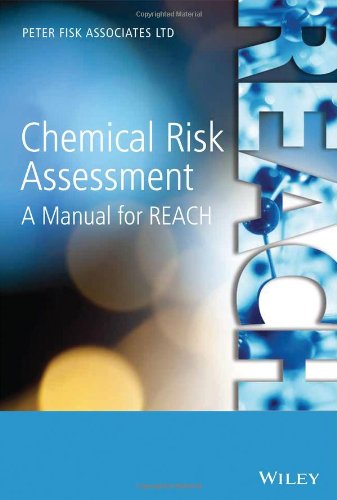
Chemical risk assessment a manual for REACH 1st Edition by Peter Fisk ISBN 1119953685 978-1119953685


Original price was: $50.00.$35.00Current price is: $35.00.
Chemical risk assessment a manual for REACH 1st Edition by Peter Fisk- Ebook PDF Instant Download/Delivery: 1119953685, 978-1119953685
Full download Chemical risk assessment a manual for REACH 1st Edition after payment
Product details:
ISBN 10: 1119953685
ISBN 13: 978-1119953685
Author: Peter Fisk
This book is an essential guide and support to understanding of the science and policy, procedure and practice that underpins the REACH risk assessments required for the use and placing on the market of chemicals in the European Union. A clear understanding of information provision and how this affects the assessment of chemical safety is fundamentally important to the success of policy on chemicals and ultimately to the sustainability of the chemicals industry.
Within the book, the scientific processes that underpin the policy are explained in a practical way. Importantly, it includes coverage of techniques to help solve the problems of using potentially risky and hazardous chemicals through the use of less hazardous alternatives and ‘green chemistry’, and also the analysis of the risks of the use of the most hazardous substances against the social and economic benefits of use.
Chemical Risk Assessment: A Manual for REACH covers the following main themes: i) Assessment of chemical risk; ii) Risk management; iii) Hazard reduction, substitution and green chemistry; iv) Risk versus benefit – socio-economic analysis.
The book acts as a practical guide and overview to chemicals risk assessment and risk management (in the EU context), as well as a support text for planning for the challenges of the future, which will see ever-increasing pressure to withdraw hazardous substances from the EU (and global) market, balanced against opportunities for innovation in the development of less hazardous chemicals.
Table of contents:
1. Introduction: Policy and Scientific Context of Chemicals Risk and Risk Management
-
1.1 Overview of the Risk Assessment of Chemical Substances
-
1.2 Chemical Hazard and Risk Programmes
-
1.2.1 REACH Overview
-
1.2.2 Registration
-
1.2.3 Evaluation
-
1.2.4 Authorisation and Restriction
-
1.2.5 Hazard and Risk Communication
-
1.2.6 Hazards
-
1.2.7 Overview of Types of Exposure
-
1.2.8 Overview of Risk Characterisation
-
1.2.9 Successful Interaction with REACH: Registration, Evaluation and Authorisation
-
1.2.10 Regulation and Assessment of Hazardous Chemicals Outside of the European Union
-
2. Roles and Responsibilities in REACH
-
2.1 The Structure and Responsibilities of the Authorities
-
2.1.1 Role of the ECHA
-
2.1.2 The Role of the Member State Committee (MSC)
-
2.1.3 The Role of the Member State Competent Authorities (MSCA)
-
-
2.2 Forum Enforcement Project – REACH-EN-FORCE-1
-
2.3 Future Aims of the HSE (UK Example)
-
2.4 Enforcement Requirements under REACH
-
2.5 Powers of Enforcing Authorities
-
2.6 Responsibilities of Industry
-
2.6.1 Manufacturer
-
2.6.2 Importer
-
2.6.3 The Only Representative
-
2.6.4 Downstream User
-
-
2.7 Communication in the Supply Chain and with Regulators
-
2.7.1 Use Descriptor System
-
3. Control of Chemicals – Legislative and Policy Context
-
3.1 Evolution of EU Chemical Legislation
-
3.2 Air Quality Regulations
-
3.3 Water Framework Directive
-
3.4 Carcinogens at Work
-
3.5 Cosmetics
-
3.6 Biocidal and Plant Protection Products
-
3.7 Nationally (UK)-Implemented Legislative and Policy Frameworks
-
3.7.1 Workplace Exposure
-
3.7.2 COSHH 2002
-
3.7.3 DSEAR 2002
-
-
3.8 UK Environmental Regulation
-
3.8.1 Overview and IPPC
-
3.8.2 Waste Regulations 2011
-
3.8.3 Water Legislation in the UK
-
3.8.4 Directive 2006/118/EC on Groundwater Protection
-
3.8.5 Groundwater Regulations 2009
-
3.8.6 Air Legislation in the UK
-
4. Identification of Substances for REACH – Practicalities
-
4.1 Substance Identification
-
4.1.1 Types of Substances
-
4.1.2 Mono-Constituent Substances
-
4.1.3 Multi-Constituent Substances (MCSs)
-
4.1.4 UVCBs
-
4.1.5 Nanomaterials
-
4.1.6 Articles
-
4.1.7 EC Number
-
-
4.2 Sameness
-
4.3 Essentially-Pure Substances
-
4.4 Approaching the Substance Data Set
5. Physico-Chemical Properties for REACH – Purpose and Practicalities
-
5.1 Physico-Chemical Properties
-
5.2 Testing Strategies
-
5.2.1 Tier 1 Tests
-
5.2.2 Tier 2 Tests
-
5.2.3 Tier 3 Tests
-
-
5.3 Difficult-to-Measure Substances
-
Multiconstituent/UVCB, Poorly Soluble, Volatile, Unstable, Ionisable, Surface Active
-
-
5.4 Hazardous Physico-Chemical Data
-
5.5 Relationships between Tests
-
5.6 Application of Data
-
5.7 Test Omissions
-
5.8 (Q)SAR and Physico-Chemical Tests
-
5.9 Quantitative Structure-Activity Relationships
6. Assessing and Documenting the Intrinsic Properties of Substances in REACH
-
6.1 Data Requirements
-
Strictly Controlled Conditions
-
-
6.2 Hazards
-
6.3 PBT
-
6.4 Equivalent Concern
-
6.5 Test Proposal Rule
-
6.6 Existing Data and Rights of Access
-
6.7 Data Reliability
-
6.8 Data Gaps and Surrogate Data
-
6.9 Read-Across
7. Assessing Environmental Properties Data
-
7.1 Environmental Properties
-
PNECs, Classification and Labelling, PBT
-
-
7.2 Environmental Fate
-
Degradation, Bioaccumulation, Adsorption
-
-
7.3 Ecotoxicology
-
Hazard Assessment, Data Review, Difficult Substances, (Q)SARs, Toxicity to STP Microorganisms
-
-
7.4 Turning Intrinsic Properties into ‘No-Effect’ Concentrations
-
PNEC Calculations
-
8. Environmental Exposure
-
8.1 Substance Identity and Exposure Assessment
-
8.2 Characterising Releases
-
8.3 Evaluating Releases (Top Down, Bottom Up)
-
8.4 Documentation for Registration
-
8.5 Local Scale Releases
-
8.6 Exposure Assessment – Models or Measurements
-
8.7 Water
-
8.8 Soil
-
8.9 Air
-
8.10 Food Chain
9. Assessing the Hazards to Human Health from Chemicals
-
9.1 Mammalian Toxicology
-
9.2 Exposure Routes
-
9.3 Acute and Chronic Effects
-
9.4 Influences on Toxicity
-
9.5 How Chemicals Cause Harm
-
9.6 Toxicokinetics
-
9.7 Toxicological Testing
-
9.8 Genetic Toxicology
-
9.9 Turning Intrinsic Properties into ‘No-Effect’ Levels
10. Human Exposure to Chemicals
-
Workplace Exposure (Models, Risk Management)
-
Consumer Exposure (Estimation, Models, Measures)
-
Indirect Exposure via Environment
-
Risk due to Physico-Chemical Hazard
11. Managing Hazard and Risk
-
11.1 Risk Characterisation and Management
-
11.2 Risk under REACH
-
11.3 Risk Reduction and Management
-
11.4 Special Cases: CMRs, PBTs, vPvBs
-
11.5 Responsibilities in the Supply Chain
-
11.6 Regulatory Requirements
-
11.7 Guidance
-
11.8 Extended Safety Data Sheet (eSDS)
-
11.9 Communication Issues
-
11.10 Exposure Measurements – Occupational Hygiene
-
11.11 Control of Environmental Releases
-
11.12 Effectiveness of Risk Reduction
-
11.13 Workplace Risk Management
-
11.14 Environmental Risk Management
-
11.15 Consumer Protection
12. Avoiding the Use of Hazardous Substances: Substitution and Alternatives
-
Hazardous Properties
-
Assessment of Alternatives
-
Substitution (Voluntary and Regulation-Led)
-
Sustainability and Green Chemistry
-
Principles and Practices of Green Chemistry
13. Hazards, Risks and Impacts – Assessment Frameworks
-
Policy Context and Precautionary Principle
-
From Hazards to Risks to Impacts
-
Risk Management Options in REACH
14. Socio-Economic Analysis in REACH
-
Background and Purpose
-
Role and Application of SEA
-
Difficulties Moving from Risks to Impacts
-
Regulatory Processes and Decision Makers
-
Wider Benefits of SEA
-
Future Developments
15. REACH: How It Is Working and May Develop
-
Experiences and Observations
-
Successful Submissions
-
Testing, Prediction and Read-Across
-
Community Rolling Action Plan
-
Risk-Based Regulation and Precaution
-
Higher Tier Assessment
-
REACH Developments
-
Overlaps with Other Legislation
-
Scientific Challenges
-
Impact on Industry
-
ECHA Evaluation Report
16. Resources, Official Guidance, Further Reading and Centres of Expertise
-
Official Journal
-
ECHA and REACH-IT
-
CEFIC and Sector Groups
-
IUCLID Guidance
-
ECETOC, OECD, EU JRC
-
Facts and Statistics
People also search for:
chemical risk assessment example
how to do a chemical risk assessment
chemical risk assessment steps
chemical risk assessment
chemical hazard assessment form