
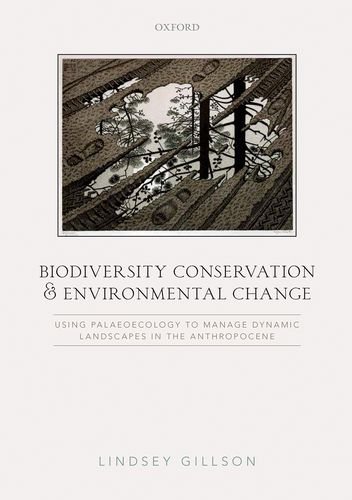
Biodiversity Conservation and Environmental Change Using palaeoecology to manage dynamic landscapes in the Anthropocene 1st Edition by Lindsey Gillson ISBN 978-0198713043 0198713045


Original price was: $50.00.$35.00Current price is: $35.00.
Biodiversity Conservation and Environmental Change Using palaeoecology to manage dynamic landscapes in the Anthropocene 1st Edition by Lindsey Gillson – Ebook PDF Instant Download/Delivery: 978-0198713043, 0198713045
Full download Biodiversity Conservation and Environmental Change Using palaeoecology to manage dynamic landscapes in the Anthropocene 1st Edition after payment
Product details:
ISBN 10: 0198713045
ISBN 13: 978-0198713043
Author: Lindsey Gillson
Ecosystems today are dynamic and complex, leaving conservationists faced with the paradox of conserving moving targets. New approaches to conservation are now required that aim to conserve ecological function and process, rather than attempt to protect static snapshots of biodiversity. To do this effectively, long-term information on ecosystem variability and resilience is needed. While there is a wealth of such information in palaeoecology, archaeology, and historical ecology, it remains an underused resource by conservation ecologists. In bringing together the disciplines of neo- and palaeoecology and integrating them with conservation biology, this novel text illustrates how an understanding of long-term change in ecosystems can in turn inform and influence their conservation and management in the Anthropocene. By looking at the history of traditional management, climate change, disturbance, and land-use, the book describes how a long-term perspective on landscape change can inform current and pressing conservation questions such as whether elephants should be culled, how best to manage fire, and whether ecosystems can or should be “re-wilded”
Biodiversity Conservation and Environmental Change is suitable for senior undergraduate and post-graduate students in conservation ecology, palaeoecology, biodiversity conservation, landscape ecology, environmental change and natural resource management. It will also be of relevance and use to a global market of conservation practitioners, researchers, educators and policy-makers.
Table of contents:
1. The Conservation Paradox
Two early conservation approaches: preservation and utilization
The balance of nature?
A paradigm shift in ecology
Ecosystem management: coping with complexity
The role of long-term data in ecosystem management
2. The Elephant Dilemma: A Long-term Perspective on the Management of African Savannas
The Tsavo ‘experiment’
From ‘command and control’ to flux of nature: elephant management
in the Kruger National Park, South Africa
Elephants, trees, and carbon dioxide
Palaeoecology and thresholds of potential concern
Summary: too many elephants-or too many trees?
3. Where The Wild Things Were: Re-wilding and the Sixth Extinction
Late Quaternary extinctions
Pleistocene parks
Wild wood or wood-pasture? Re-wilding in europe
Carnivores as keystone species
Resurrecting island ghosts
Summary: towards wildness?
4. A Burning Question: Can Long-term Data Inform Fire Management in the Twenty-first Century?
Shifting baselines
Resilience, feedbacks, and complexity
What is natural?
Fire management, biodiversity, and ecosystem services
To burn or not to burn? Fire management in the Anthropocene
Summary: friend or foe?
5. Past, Present, and Future Climate Change: Can Palaeoecology Help Manage a Warming World?
Learning from past warm climates
Climate change, palaeoecology, and conservation planning
Summary: can we build resilience in a perfect storm?
6. Ecosystem Services: Lessons From the Past for a Sustainable Future
Water management
Soil management, carbon storage, and sustainable agriculture in the tropics
Biocultural diversity
Cultural ecosystem services
Summary: an integrated approach to ecosystem service management
7. Nature, Culture, and Conservation in the Anthropocene
Adaptive cycles in the palaeoecological and historical records
Towards multifunctional landscapes
Conserving the cultural landscapes of the Anthropocene
Summary: can multifunctional landscapes sustain biodiversity in the Anthropocene?
8. Conclusions: Conservation in the Anthropocene
Can ecosystem management resolve the conservation paradox?
Benchmarks, baselines, and thresholds of potential concern
Climate change adaptation and amelioration
Complexity, uncertainty, and modelling the past-present-future continuum
Disturbance, resilience, and heterogeneity
Restoring ecosystem services
Sustainability and adaptive capacity in socioecological systems; merging
‘traditional’ and adaptive management approaches
Is there a place for ‘wilderness’ in the Anthropocene?
Stakeholder engagement and collaborative learning
Sustainability and multifunctional landscapes
Summary: using palaeoecology to manage dynamic landscapes in the Anthropocene
People also search for:
biodiversity conservation and environmental issues class 12 notes
biodiversity conservation and environmental issues notes pdf
biodiversity conservation and environmental issues class 12 pdf
biodiversity conservation and environmental issues ppt
biodiversity conservation and environmental issues mht cet pyq
Tags: Lindsey Gillson, Biodiversity Conservation, Environmental Change, Using palaeoecology