
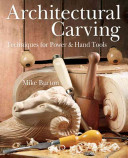
(Ebook PDF) Architectural Carving Techniques for Power Hand Tools 1st edition by Mike Burton 0806969156 9780806969152 Full chapter
Original price was: $50.00.$35.00Current price is: $35.00.
Architectural Carving Techniques for Power Hand Tools 1st edition by Mike Burton – Ebook PDF Instant Download/Delivery: 0806969156, 978-0806969152
Full dowload Architectural Carving Techniques for Power Hand Tools 1st Edition after payment
Product details:
ISBN 10: 0806969156
ISBN 13: 978-0806969152
Author: Mike Burton
“…an experienced architectural carver…shows his craft in a step-by -step manner, explaining tool use, wood choices, and different styles of carving….stands out because of its great section on tool use….offers a wealth of both traditional and innovative information; for example, he employs inexpensive pneumatic chisels…a great technique that this reviewer has never seen anywhere else. The techniques revealed here could be used by most woodcarvers, not just those interested in architectural carving….among the best on the subject and is essential for all woodcraft collections…”–Library Journal.
Architectural Carving Techniques for Power Hand Tools 1st Table of contents:
1. Reviving the Nation
- “Heil Hitler!” – An exploration of the Nazi salute as a symbol of allegiance to Hitler and its role in reinforcing the regime’s ideology.
- How Far Did Germans Support the Nazis? – An analysis of popular support for the Nazi regime among Germans, considering both voluntary and coerced participation.
- Volksgemeinschaft, or the People’s Community – Discussion on the Nazi concept of a “people’s community,” which aimed to unite all ethnic Germans while excluding Jews and other “undesirable” groups.
- Consuming the Nation – Likely refers to the ways the Nazi regime consumed and manipulated national identity, propaganda, and mass consumption for its own ends.
- Unter Uns, or Nazism’s Audiovisual Space – This could be an exploration of Nazi propaganda, including film, radio, and other audiovisual means used to shape public perception and culture under the Nazis.
2. Racial Grooming
- Aryan Passports – A discussion about the racial categorization of individuals, likely referring to the Nazi regime’s issuance of identity papers to Aryans, and how race was a determinant in privileges and rights.
- Biology and the National Revolution – The role of eugenics and racial biology in shaping Nazi policies, including the idea of “racial purity” and the National Socialist agenda.
- Seeing like an Aryan – This could delve into the way Aryan identity was constructed and promoted by the Nazis, potentially examining perceptions of race and hierarchy.
- The Camp – Likely refers to concentration camps, their role in Nazi racial policy, and the systematic persecution of Jews and others.
- Unworthy Life – A term the Nazis used to describe individuals deemed unfit for life, including the disabled, mentally ill, and others targeted by the regime for extermination or forced sterilization.
- The Assault on German Jews – A focused examination of the systematic discrimination, persecution, and violence directed toward Jews in Germany leading up to and during the Holocaust.
3. Empire of Destruction
- Writing Letters – Perhaps a metaphorical or literal exploration of communication during Nazi rule, potentially focusing on how information was controlled or how correspondence was used in the persecution process.
- The Imperial Project – This could discuss Nazi Germany’s imperialistic expansionist policies, particularly the plans for Lebensraum (living space) in Eastern Europe.
- The Expansion of the German Empire – The annexations and occupations of various European countries, including Poland, France, and others, as part of Nazi expansionism.
- Final Solutions to the “Jewish Problem” – Likely a reference to the formulation of the “Final Solution,” the Nazi policy of the systematic extermination of the Jewish people.
- The Deportation of German Jews – The forced removal of Jews from Germany and occupied territories to ghettos, concentration camps, and extermination camps.
- The Holocaust – A comprehensive examination of the Holocaust, including the scale of the genocide, methods of execution, and the aftermath of the mass murder of six million Jews.
4. Intimate Knowledge
- Train Station – Possibly referring to the deportation process, where Jews and other victims were transported by train to concentration camps or death camps.
- Jewish Witnesses – The experiences and testimonies of Jewish survivors and victims, and how they witnessed and survived the horrors of the Nazi regime.
- German Witnesses – German individuals who were witnesses to the atrocities committed by the Nazis, including bystanders and those who supported or participated in the regime’s actions.
- Perpetrators and Victims – A look at the relationships between those who carried out Nazi policies and those who suffered under them, exploring both groups’ roles in the Holocaust.
- Imagining the End of the War – The mindset of both perpetrators and victims as the war and Nazi regime neared collapse. This could include discussions on resistance, fear, and hope for liberation.
- Reading Catastrophe – A reflection on how historians, survivors, and others have read or understood the catastrophe of the Holocaust, including efforts to memorialize and understand the scale of the genocide.
People also search for Architectural Carving Techniques for Power Hand Tools 1st:
power carving vs hand carving
bowl carving power tools
carpentry hand and power tools
quizlet hand and power tools
architectural hand lettering
Tags:
Mike Burton,Architectural,Carving,Techniques,Power Hand,Tools 1st