
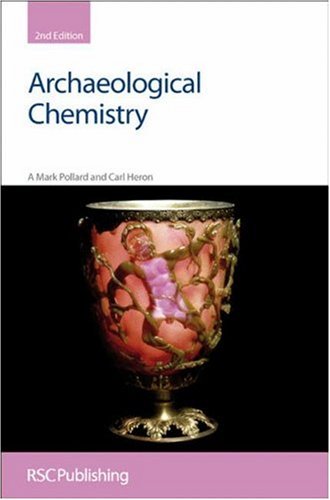
Archaeological Chemistry 2nd Edition by Mark Pollard, Carl Heron ISBN 978-0854042623 0854042623


Original price was: $50.00.$35.00Current price is: $35.00.
Archaeological Chemistry 2nd Edition by Mark A. Pollard, Carl Heron – Ebook PDF Instant Download/Delivery: 978-0854042623, 0854042623
Full download Archaeological Chemistry 2nd Edition after payment
Product details:
ISBN 10: 0854042623
ISBN 13: 978-0854042623
Author: Mark A. Pollard, Carl Heron
The second edition of this popular title Archaeological Chemistry builds on the successful formula of the first edition. The existing case studies have been expanded to take account of new perspectives and new data in the intervening decade since the 1st edition was published. In addition, two new chapters emphasise the significant increase in molecular and isotopic analysis of organic remains. The two new chapters (stable isotopes and molecules and milk) bring together recent literature about ancient human diets.
Archaeological Chemistry 2nd edition aims to demonstrate the importance and utility of scientific techniques applied to the study of the past. In particular, the role of chemistry is emphasised through a series of case studies. The authors present the scientific investigation as a challenging field of enquiry rather than a routine application of established procedures.
Table of contents:
Chapter 1
The Development of Archaeological Chemistry
1.1 Introduction
1.2 Early Investigations
1.3 The Growth of Scientific Archaeology in the 20th Century
1.4 Current Status and Scope of Archaeological Chemistry
1.5 The Structure of this Volume
1.6 Further Reading
References
Chapter 2
Analytical Techniques Applied to Archaeology
2.1 Introduction
2.2 The Structure of the Atom, the Electromagnetic Spectrum and Analytical Spectroscopy
2.3 Techniques Based on Optical Wavelengths
2.3.1 Optical Emission Spectroscopy
2.3.2 Atomic Absorption Spectrometry
2.3.3 Inductively Coupled Plasma Emission Spectrometry
2.4 Techniques Using X-Rays
2.4.1 X-Ray Fluorescence Spectrometry
2.4.2 Analytical Electron Microscopy
2.4.3 Proton-Induced X-Ray Emission
2.5 Neutron Activation Analysis
2.6 Mass Spectrometric Techniques
2.7 Chromatographic Techniques
2.8 Infrared and Raman Spectroscopy
2.9 Other Techniques
References
Chapter 3
Obsidian Characterization in the Eastern Mediterranean
3.1 Introduction
3.2 Origin and Formation of Obsidian
3.3 Sources of Obsidian in the Eastern Mediterranean and Neighbouring Regions
3.4 Review of Analytical Work
3.5 Archaeological Implications
3.6 Summary
References
Chapter 4
The Geochemistry of Clays and the Provenance of Ceramics
4.1 Introduction
4.2 The Structure of Clay Minerals
4.3 The Firing of Clays and the Mineralogical Composition of Ceramics
4.4 Trace Element Geochemistry in Clays
4.5 The Provenance of Archaeological Ceramics: Roman Finewares
4.6 Summary References
Chapter 5
The Chemistry, Corrosion and Provenance of Archaeological Glass
5.1 Introduction
5.2 The Structure and Chemistry of Archaeological Glass
5.3 The Colour of Glass
5.4 The Decay of Medieval Window Glass
5.5 The Corrosion of Buried Glass
5.6 Radiogenic Isotopes and the Provenance of Glass
5.7 Summary
References
Chapter 6
The Chemical Study of Metals – the Medieval and Later Brass Industry in Europe
6.1 Introduction
6.2 The Production Methods of Brass in Antiquity
6.3 The Early History of Brass and Zinc
6.4 The Medieval and Later European Brass Industry
6.5 The Chemical Analysis of Metal Objects
6.6 The Chemical Study of European Brass Tokens and Coins
6.7 The Analysis of European Brass Scientific Instruments
6.8 The Analytical Authentication of Brass Instruments
6.9 European Copper and Brass in North America
6.10 Summary
References
Chapter 7
The Chemistry and Use of Resinous Substances
7.1 Introduction
7.2 Resins: Definition and Uses
7.3 Chemistry of Resins
7.3.1 Monoterpenoids and Sesquiterpenoids
7.3.2 Diterpenoids
7.3.3 Triterpenoids
7.4 Analysis of Resins in Archaeological Contexts
7.5 Neolithic Tar
7.5.1 The Chemistry of Birch Bark and Birch Bark Tars
7.5.2 The Production and Uses of Neolithic Tars
7.5.3 Alternatives to Birch Bark and Softwood Tar
7.6 Summary: Evidence for Other Organic Substances
References
Chapter 8
Amino Acid Stereochemistry and the First Americans
8.1 Introduction
8.2 The Structure of Bone
8.3 Stereochemistry of Amino Acids
8.4 Racemization of Amino Acids
8.5 Amino Acid Racemization Dating of the Californian Paleoindians
8.6 The End of a Paradigm: Early Humans in the Americas
8.7 ‘Some Kind of Joke’? Current Uses of Amino Acid Racemization
8.8 Summary
References
Chapter 9
Lead Isotope Geochemistry and the Trade in Metals
9.1 Introduction
9.2 The Trace Element Approach to Metal Provenance
9.3 Natural Radioactivity and the Stable Isotopes of Lead
9.4 The Lead Isotopic Composition of Metalliferous Deposits
9.5 Lead Isotopes in Archaeology
9.5.1 Isotopic Fractionation by Non-Equilibrium Evaporation
9.5.2 Defining an Ore Field
9.6 Lead Isotopes and the Bronze Age Mediterranean
9.7 Epilogue ‘What A Long Strange Trip Its Been’!
9.8 Summary
References
Chapter 10
The Chemistry of Human Bone: Diet, Nutrition, Status and Mobility
10.1 Introduction
10.2 Dietary Reconstruction from Trace Elements in Bone Mineral
10.3 Light Isotope Systematics and Trophic Levels
10.4 Isotopic Dietary Reconstruction from Human Bone
10.5 Status and Health
10.6 Mobility
10.7 Other Isotopic Approaches to Diet and Mobility
10.7.1 Carbonates and ‘Deep Time’
10.7.2 Other Biomolecules and Isotopes
10.8 ‘Provenancing Humans’ – Strontium and Oxygen Isotopes
10.9 Summary
References
Chapter 11
The Detection of Small Biomolecules: Dairy Products in the Archaeological Record
11.1 Introduction
11.2 Fatty Acids: a Brief Overview of Chemistry and Occurrence
11.3 Dairy Chemistry
11.4 Archaeological Investigations of Dairying
11.5 DNA, Lactase Persistence and Early Dairying
11.6 Summary: Where do we go from here?
References
Chapter 12 Summary – Whither Archaeological Chemistry?
12.1 Historical Summary
12.2 The Archaeological Relevance of Chemical Applications
12.3 Whither Archaeological Chemistry? References
Appendix 1 The Structure of the Atom, and the Electromagnetic Spectrum
Appendix 2 Isotopes
Appendix 3 Fundamental Constants
Appendix 4 Atomic Number and Approximate Atomic Weights (based on 2C = 12.000) of the Elements
Appendix 5 Periodic Table of the Elements
Subject Index
People also search for:
an introduction to archaeological chemistry
an archaeological culture
5 archaeological sites
archeology and chemistry
archaeological chemistry definition
Tags: Mark Pollard, Carl Heron, Archaeological Chemistry