
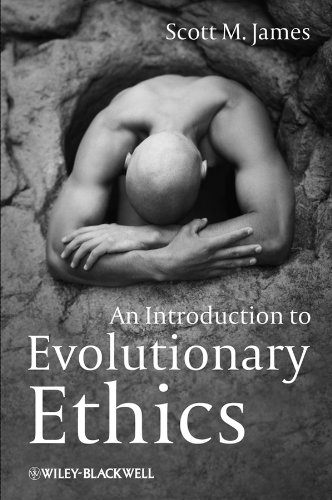
An Introduction to Evolutionary Ethics 1st Edition by Scott James ISBN 978-1405193962 1405193964


Original price was: $50.00.$35.00Current price is: $35.00.
An Introduction to Evolutionary Ethics 1st Edition by Scott M. James- Ebook PDF Instant Download/Delivery: 978-1405193962, 1405193964
Full download An Introduction to Evolutionary Ethics 1st Edition after payment
Product details:
ISBN 10: 1405193964
ISBN 13: 978-1405193962
Author: Scott M. James
Offering the first general introductory text to this subject, the timely Introduction to Evolutionary Ethics reflects the most up-to-date research and current issues being debated in both psychology and philosophy. The book presents students to the areas of cognitive psychology, normative ethics, and metaethics.
The first general introduction to evolutionary ethics
Provides a comprehensive survey of work in three distinct areas of research: cognitive psychology, normative ethics, and metaethics
Presents the most up-to-date research available in both psychology and philosophy
Written in an engaging and accessible style for undergraduates and the interested general reader
Discusses the evolution of morality, broadening its relevance to those studying psychology
Table of contents:
Part I. From “Selfish Genes” to Moral Beings: Moral Psychology after Darwin
1 Natural Selection and Human Nature
1.1 The Basic Story
1.2 Some Common Misunderstandings
1.3 Mother Nature as Tinkerer
1.4 Evolutionary Psychology and Human Nature
1.5 An Evolved Mental Tool-Box
1.6 Some (More) Common Misunderstandings
1.7 Conclusion
2 The (Earliest) Roots of Right
2.1 Together We Stand?
2.2 Inclusive Fitness and the “Gene’s-Eye” Point of View
2.3 Love Thy Neighbor – But Love Thy Family First
2.4 False Positives and Core Systems
2.5 A Quick Note on “Altruism”
2.6 Reciprocal Altruism
2.7 Conclusion
3 The Caveman’s Conscience: The Evolution of Human Morality
3.1 What Makes Moral Creatures Moral
3.2 The Evolution of Morality
3.3 Explaining the Nature of Moral Judgments
3.4 Conclusion
4 Just Deserts
4.1 The Ultimatum Game
4.2 The Public Goods Game
4.3 Winners Don’t Punish
4.4 The Benefits of Guilt
4.5 A Lamb among Lions?
4.6 An Explanation for All of Morality?
4.7 Universal Morality or Universal Reason?
4.8 Conclusion
5 The Science of Virtue and Vice
5.1 Distress Test
5.2 Mind-Reading
5.3 “Them’s the Rules”
5.4 Moral Innateness and the Linguistic Analogy
5.5 Switchboards, Biases, and Affective Resonances
5.6 Non-Nativist Doubts
5.7 Conclusion
Part II. From “What Is” to “What Ought To Be”: Moral Philosophy after Darwin
6 Social Harmony: The Good, the Bad, and the Biologically Ugly
6.1 From the Great Chain of Being, to the Tree of Life, to Morality
6.2 Uprooting the Tree of Life
7 Hume’s Law
7.1 Deductively Valid Arguments
7.2 You Can’t Get Out What You Don’t Put In
7.3 “Of the Last Consequence”
7.4 Blocking the Move from Might to Right
7.5 Darwinism and Preserving the Human Species
7.6 Conclusion
8 Moore’s Naturalistic Fallacy
8.1 The Open Question Test
8.2 Failing the Open Question Test: Desiring to Desire
8.3 Failing the Open Question Test: Spencer
8.4 Failing the Open Question Test: Wilson
8.5 Conclusion
9 Rethinking Moore and Hume
9.1 Some Preliminary Doubts about the Open Question Test
9.2 What Things Mean vs. What Things Are
9.3 Implications for Social Darwinism
9.4 Forays across the Is/Ought Gap: Searle
9.5 Forays across the Is/Ought Gap: Rachels
9.6 Conclusion
10 Evolutionary Anti-Realism: Early Efforts
10.1 This Is Your Brain on God
10.2 Preliminaries
10.3 Wilson
10.4 The Argument from Idiosyncrasy
10.5 The Argument from Redundancy
10.6 Causation, Justification, and . . . a Rotting Corpse
10.7 Conclusion
11 Contemporary Evolutionary Anti-Realism
11.1 Napoleon Pills
11.2 A Darwinian Dilemma
11.3 Conclusion
12 Options for the Evolutionary Realist
12.1 Option 1: Learning Right from Wrong
12.2 Option 2: Response Dependency
12.3 Option 3: Virtue Ethics Naturalized
12.4 Option 4: Moral Constructivism
12.5 Objections to the Realist Options
12.6 Conclusion
People also search for:
an introduction to evolutionary cognitive archaeology
an introduction to evolutionary ethics
an introduction to evolutionary biology
an introduction to evolutionary ecology
an introduction to evolutionary theories in economics
Tags: Scott James, An Introduction, Evolutionary Ethics