
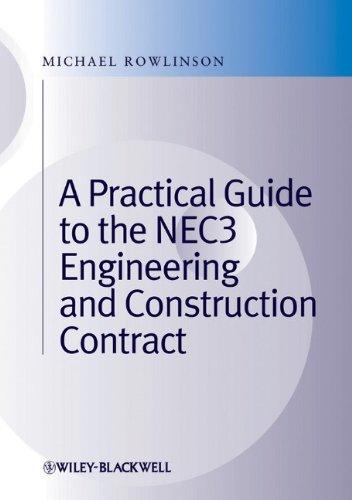
(Ebook PDF) A Practical Guide to the NEC3 Engineering and Construction Contract 1st Edition by Michael Rowlinson 1444336886 97814443368867 Full chapter


Original price was: $50.00.$35.00Current price is: $35.00.
A Practical Guide to the NEC3 Engineering and Construction Contract 1st Edition by Michael Rowlinson – Ebook PDF Instant Download/Delivery: 1444336886 , 978-14443368867
Full dowload A Practical Guide to the NEC3 Engineering and Construction Contract 1st Edition after payment
Product details:
ISBN 10: 1444336886
ISBN 13: 978-1444336887
Author: Michael Rowlinson
Launched in 1993, the New Engineering Contract (NEC) has become one of the UK’s leading standard forms of contract for major construction and civil engineering projects. The third edition, popularly known as NEC 3, is a process based contract embodying project management best practice, so the basic philosophy behind the contract differs from the more adversarial principles and approach of other standard construction contracts.
Written as a practical guide to the application of the procedures contained in NEC 3 and issues that arise as a result of that application, this book will aid users in the transition from their use and understanding of the other standard construction contracts to the collaborative project management based approach of the ECC.
Practical Guide to the NEC3 Engineering and Construction Contract will be useful to everyone in the construction industry working on a project under the ECC. It will be of interest to the complete construction supply chain, including employers, construction professions, contractors and sub-contractors, as well as consultants and lawyers advising any of these parties, either in the preparation of contract documentation or the resolution of problem situations which may arise.
A Practical Guide to the NEC3 Engineering and Construction Contract 1st Table of contents:
1 Introduction
1.1 General
1.2 Mechanics not law
1.3 A simple formula for understanding a contract
1.4 Mandatory or discretionary
1.5 Conditions precedent
1.6 Note on use of upper case in key words and phrases
2 Background to the NECECC
2.1 The background: First edition
2.2 The second edition
2.3 The third edition
2.4 The third edition (re-printed)
2.5 Endorsement of NEC3 by the Office of Government Commerce
2.6 General philosophy: Aims and objectives
2.7 Flexibility
2.8 Clarity and simplicity
2.9 Stimulus to good management
2.10 Other characteristics
3 The Options: An Overview
3.1 General arrangement of the ECC
3.2 Other documents referred to
3.3 Contract Data
3.4 The published documents
3.5 Main Options: General outline
4 ‘Spirit of Mutual Trust and Cooperation’
4.1 Introduction
4.2 Core clause 10.1
4.3 What does it mean?
4.4 Practical issues
5 The Cast of Characters
5.1 Introduction
5.2 The Employer
5.3 The Project Manager
5.4 The Supervisor
5.5 The Contractor
5.6 The Adjudicator
5.7 Subcontractors
5.8 ‘Others’
5.9 Named Suppliers
5.10 Designers
5.11 Principal Designer
5.12 Principal Contractor
5.13 Practical issues
6 Communications, Early Warnings and other General Matters
6.1 Introduction
6.2 Communications: The clause
6.3 Communications: Practical issues
6.4 Early warnings: The clause
6.5 Early warnings: Practical issues
6.6 Other matters: The clauses
6.7 Other matters: Practical issues
7 The Contractor’s Main Responsibilities
7.1 Introduction
7.2 Providing the Works
7.3 Contractor’s design
7.4 Other matters
7.5 Practical issues
8 Subcontracting
8.1 Introduction
8.2 Definition of a Subcontractor
8.3 The core clauses
8.4 Provisions in the Main Options
8.5 Practical issues
8.6 Options for forms of subcontract in the NEC3 family
9 Testing and Defects
9.1 Introduction
9.2 Tests and inspections
9.3 What is a Defect?
9.4 The Defect procedure
9.5 The Defects Certificate
9.6 Uncorrected Defects
9.7 Practical issues
10 Title
10.1 Introduction
10.2 The core clauses
10.3 Practical issues
11 Risks and Insurance
11.1 Introduction
11.2 The core clauses
11.3 Practical issues
12 Time
12.1 Introduction
12.2 The programme: Contents
12.3 The programme: Submitting, accepting and revising
12.4 The programme: Practical issues
12.5 Starting and finishing
12.6 Other matters
12.7 Secondary Options related to Time
12.8 Practical issues
13 Payment
13.1 Introduction
13.2 The payment process
13.3 Payments in multiple currencies
13.4 The amount due and the PWDD
13.5 Supporting documents and records
13.6 The Contractor’s share
13.7 The Contractor’s share: Practical issues
13.8 Special provisions for the UK
13.9 Related Secondary Options
13.10 Practical issues
14 The Schedules of Cost Components
14.1 Introduction
14.2 The Schedule of Cost Components
14.3 The Shorter Schedule of Cost Components
14.4 Application to Subcontractors
14.5 Practical issues
15 Compensation Events: Theory and Events
15.1 Introduction
15.2 The theory
15.3 The events
15.4 Practical issues
16 Compensation Events: Procedures
16.1 Introduction
16.2 Notification by the Project Manager
16.3 Notification by the Contractor and the Project Manager’s reply
16.4 Other matters associated with notifying compensation events
16.5 Quotations: Substance
16.6 Quotations: Submission and reply
16.7 Assessments by the Project Manager
16.8 Implementing compensation events
16.9 Practical issues
17 Compensation Events: Assessment
17.1 Introduction
17.2 Changes to the Prices
17.3 Changes to the Completion Date and any Key Dates
17.4 Project Manager’s assumptions
17.5 Other related matters
17.6 Practical issues
18 Termination
18.1 Introduction
18.2 Reasons for termination
18.3 Implementing termination
18.4 Procedures after termination
18.5 Assessing the amount due after termination
18.6 Practical issues
19 Dispute Resolution
19.1 Introduction
19.2 Option W1
19.3 Option W2
19.4 Practical issues
20 Secondary Options
20.1 Introduction
20.2 X2: Changes in the law
20.3 X4: Parent company guarantee
20.4 X12: Partnering
20.5 X13: Performance bond
20.6 X17: Low performance damages
20.7 X18: Limitation of liability
20.8 X20: Key Performance Indicators
20.9 Y(UK)3: The Contracts (Rights of Third Parties) Act 1999
20.10 Z: Additional conditions of contract
20.11 Practical issues
21 Completing the Contract Data
21.1 Introduction
21.2 Purpose and form of the Contract Data
21.3 Part One: Data for the core clauses
21.4 Part One: Data for the Main Option clauses
21.5 Part One: Data for the Secondary Option clauses
21.6 Part Two: Data for the core clauses
21.7 Part Two: Data for the optional statements
21.8 Part Two: Data for Main Option A or B
21.9 Part Two: Data for Main Option C, D or E
21.10 Practical issues
22 The Supporting Documents: Need and Content
22.1 Introduction
22.2 Works Information
22.3 Site Information
22.4 Practical issues
People also search for A Practical Guide to the NEC3 Engineering and Construction Contract 1st:
a practical guide to the nec3 engineering and construction contract
a practical guide to free energy devices
understanding the nec
4 best practices for engineering notebook
what are the 9 chapters of the nec
Tags:
Michael Rowlinson,Practical Guide,NEC3 Engineering,Construction,Contract 1st