
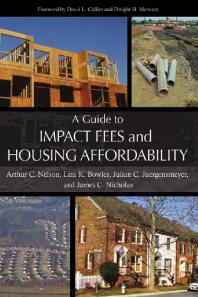
A Guide to Impact Fees and Housing Affordability 1st Edition by Arthur Nelson, Dwight Merriam, James Nicholas, Julian Juergensmeyer, Liza Bowles ISBN 978-1597264143 1597264148


Original price was: $50.00.$35.00Current price is: $35.00.
A Guide to Impact Fees and Housing Affordability 1st Edition by Arthur C. Nelson, Dwight Merriam, James C. Nicholas, Julian C. Juergensmeyer, Liza K. Bowles – Ebook PDF Instant Download/Delivery: 978-1597264143, 1597264148
Full download A Guide to Impact Fees and Housing Affordability 1st Edition after payment
Product details:
ISBN 10: 1597264148
ISBN 13: 978-1597264143
Author: Arthur C. Nelson, Dwight Merriam, James C. Nicholas, Julian C. Juergensmeyer, Liza K. Bowles
Impact fees are one-time charges that are applied to new residential developments by local governments that are seeking funds to pay for the construction or expansion of public facilities, such as water and sewer systems, schools, libraries, and parks and recreation facilities. In the face of taxpayer revolts against increases in property taxes, impact fees are used increasingly by local governments throughout the U.S. to finance construction or improvement of their infrastructure. Recent estimates suggest that 60 percent of all American cities with over 25,000 residents use some form of impact fees. In California, it is estimated that 90 percent of such cities impose impact fees.
For more than thirty years, impact fees have been calculated based on proportionate share of the cost of the infrastructure improvements that are to be funded by the fees. However, neither laws nor courts have ensured that fees charged to new homes are themselves proportionate. For example, the impact fee may be the same for every home in a new development, even when homes vary widely in size and selling price. Data show, however, that smaller and less costly homes have fewer people living in them and thus less impact on facilities than larger homes. This use of a flat impact fee for all residential units disproportionately affects lower-income residents.
The purpose of this guidebook is to help practitioners design impact fees that are equitable. It demonstrates exactly how a fair impact fee program can be designed and implemented. In addition, it includes information on the history of impact fees, discusses alternatives to impact fees, and summarizes state legislation that can infl uence the design of local fee programs. Case studies provide useful illustrations of successful programs.
This book should be the first place that planning professionals, public officials, land use lawyers, developers, homebuilders, and citizen activists turn for help in crafting (or recrafting) proportionate-share impact fee programs.
Table of contents:
Chapter 1: Impact Fees – Past, Present, and Future
Chapter 2: Basic Elements of Impact Fees
Chapter 3: Legal Foundations
Chapter 4: Impact Fees in Relation to Housing Prices and Affordable Housing Supply
Chapter 5: The Relationship among Impact Fees, Planning, and Exactions
Chapter 6: Equity and Proportionate-Share Principles Applied to Impact Fees
Chapter 7: Capital Facility and Infrastructure Financing Options
Chapter 8: The Role of the State
Chapter 9: Designing Impact Fees to Address Housing Affordability
Chapter 10: Case Studies of Proportionate-Share Residential Impact Fees
Chapter 11: Affordable Housing Impact Fee Relief Programs
Chapter 12: Expanding the Base to Advance Housing Affordability
Chapter 13: Impact Fees and Housing Affordability in the Next Generation
People also search for:
accounting for impact fees
vanguard impact of fees
purpose of impact fees
pa impact fee schedule
impact fee in pa
Tags: Arthur Nelson, Dwight Merriam, James Nicholas, Julian Juergensmeyer, Liza Bowles, A Guide, Impact Fees, Housing Affordability