
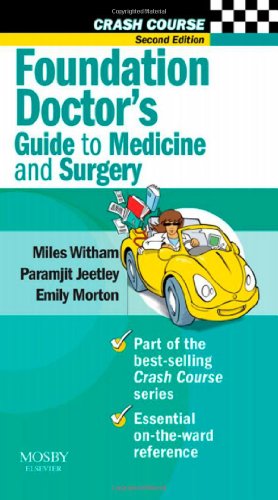
Foundation doctor s guide to medicine and surgery 2nd Edition by Miles Witham, Paramjit Jeetley, Emily Morton ISBN 978-0723434405 0723434409

Original price was: $50.00.$35.00Current price is: $35.00.
Foundation doctor s guide to medicine and surgery 2nd Edition by Miles Witham, Paramjit Jeetley, Emily Morton – Ebook PDF Instant Download/Delivery: 978-0723434405, 0723434409
Full download Foundation doctor s guide to medicine and surgery 2nd Edition after payment
Product details:
ISBN 10: 0723434409
ISBN 13: 978-0723434405
Author: Miles Witham, Paramjit Jeetley, Emily Morton
The world of medical training moves on and, to reflect these changes, a new edition of this Crash Course has been developed. The traditional House Officer year is now a two-year Foundation programme with an expanded syllabus and exposure to many more specialties. Fundamentally, however, the challenges remain the same – working in new environments, collaborating with new colleagues and facing up to new clinical responsibilities. This new edition of the ‘survival guide’ continues to provide the support and advice of its predecessor. To reflect the recent changes, there is a new chapter on the Foundation years as well as updated chapters on medical and surgical emergencies to incorporate current guidelines, and an enhanced chapter on ECG interpretation. This book should help you survive the occasional stormy voyage through the Foundation years and enable you to keep things in perspective.
Table of contents:
FOUNDATION PROGRAMME
-
Your first day
-
What to write
-
What to say
-
Managing your work
-
Preparing patients for theatre
-
What to do when things go wrong
-
Asking for and getting help
-
Introduction
-
Why has the training of doctors changed?
-
People to know
-
Job selection
-
Competencies
-
Teaching
-
E-portfolio
-
Significant event analysis (SEA)
-
Work experience and study leave
-
Specialty exams
-
Feedback
-
Careers advice
-
What to do if you are having problems
-
And after the foundation years?
-
Specialist and GP training (run-through training)
-
Fixed-term specialist training appointments (FTSTA)
-
Career posts
-
Further information
PRACTICAL PROCEDURES
26. Preparing a patient for a procedure
27. Venipuncture
28. Cannulation
29. Arterial blood gas (ABG) measurement
30. Urinary catheterization – male
31. Urinary catheterization – female
32. SC and IM injections
33. ECGs and cardiac monitors
34. Lumbar puncture
35. Nasogastric (NG) tubes
36. Pleural tap
37. Giving IV drugs and fluids
38. Ascitic tap and/or drainage (Paracentesis)
39. Chest drain insertion
40. Chest drain removal
41. Central line placement
DRUG ISSUES
42. Pain control
43. Constipation
44. Nausea and vomiting
45. Anticoagulation
46. Steroids
47. Sedation
MEDICAL EMERGENCIES
48. Cardiac arrest
49. Acute MI
50. Acute coronary syndromes
51. Acute left ventricular failure
52. Arrhythmias
53. Diabetic ketoacidosis (DKA)
54. Hyperosmolar non-ketotic state (HONK)
55. Status epilepticus
56. Meningococcal sepsis/meningitis
57. Liver failure
58. Upper GI bleed
59. Acute renal failure
60. Acute asthma
61. Acute exacerbation of COPD
62. Pulmonary embolism
63. Pneumonia
64. Pneumothorax
SURGICAL EMERGENCIES
65. The acute abdomen
66. Acute appendicitis
67. Ruptured abdominal aortic aneurysm (AAA)
68. Acute pancreatitis
69. Bowel obstruction
70. Diverticulitis
71. Perforation
72. Ischaemic gut
73. Lower GI bleed
74. Strangulated hernia
75. Biliary colic and cholecystitis
76. Acute limb ischaemia
77. Testicular torsion
78. Acute urinary retention
79. Renal colic
MEDICAL PRESENTATIONS
80. The sick patient
81. Chest pain
82. Acute breathlessness
83. Hypotension
84. Hypertension
85. Tachycardias
86. Bradycardias
87. Nausea and vomiting
88. Diarrhoea
89. The unconscious patient
90. ‘Off the legs’
91. The patient with a fever
92. Fits
93. Overdoses
94. The swollen leg
95. Confusion
96. Collapses and falls
97. Stroke
98. Headache
SURGICAL PRESENTATIONS
99. Trauma
100. Head injury
101. Claudication
102. Prostatism and chronic retention
103. Groin and scrotal lumps
104. Ulcers
105. Varicose veins
INTERPRETING BLOOD RESULTS
106. Full blood count
107. Biochemistry
ECG INTERPRETATION
108. Patient and ECG details
109. Heart rate
110. Heart rhythm
111. Cardiac axis
112. P waves
113. PR interval
114. QRS complex
115. ST segments
116. QT interval
117. Arrhythmias
118. T waves
CLINICAL EXAMINATION
119. Cardiovascular examination
120. Respiratory examination
121. Abdominal examination
122. Neurological examination
APPENDICES
123. Prescribing hints
124. Glossary of abbreviations
125. Index
People also search for:
b foundation
guide doctor
doctor guide book
foundation doctor tips
foundation medicine cpt codes
Tags: Miles Witham, Paramjit Jeetley, Emily Morton, Foundation doctor, medicine and surgery