
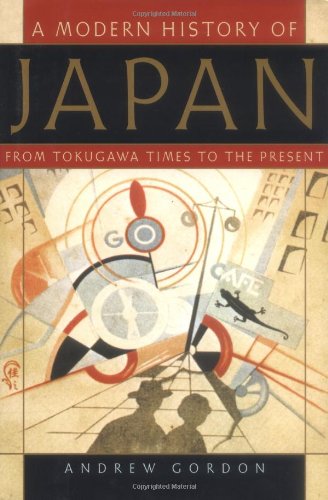
A Modern History of Japan From Tokugawa Times to the Present 1st Edition by Andrew Gordon ISBN 978-0195110616 0195110617


Original price was: $50.00.$35.00Current price is: $35.00.
A Modern History of Japan From Tokugawa Times to the Present 1st Edition by Andrew Gordon – Ebook PDF Instant Download/Delivery: 978-0195110616, 0195110617
Full download A Modern History of Japan From Tokugawa Times to the Present 1st Edition after payment
Product details:
ISBN 10: 0195110617
ISBN 13: 978-0195110616
Author: Andrew Gordon
In The Modern History of Japan: From Tokugawa Times to the Present, Andrew Gordon paints a richly nuanced and strikingly original portrait of the last two centuries of Japanese history. He takes students from the days of the shogunate–the feudal overlordship of the Tokugawa family–through the modernizing revolution launched by midlevel samurai in the late nineteenth century; the adoption of Western hairstyles, clothing, and military organization; and the nation’s first experiments with mass democracy after World War I. Gordon offers the finest synthesis to date of Japan’s passage through militarism, World War II, the American occupation, and the subsequent economic rollercoaster. But the true ingenuity and value of Gordon’s approach lies in his close attention to the non-elite layers of society. Here students will see the influence of outside ideas, products, and culture on home life, labor unions, political parties, gender relations, and popular entertainment. The book examines Japan’s struggles to define the meaning of its modernization, from villages and urban neighborhoods, to factory floors and middle managers’ offices, to the imperial court. Most importantly, it illuminates the interconnectedness of Japanese developments with world history, demonstrating how Japan’s historical passage represents a variation of a process experienced by many nations and showing how the Japanese narrative forms one part of the interwoven fabric of modern history.
Table of contents:
PART I: CRISIS OF THE TOKUGAWA REGIME
Chapter 1: The Tokugawa Polity
-
Unification
-
The Tokugawa Political Settlements
-
The Daimyo
-
The Imperial Institution
-
The Samurai
-
Villagers and City-Dwellers
-
The Margins of the Japanese and Japan
Chapter 2: Economic and Social Change
-
The Seventeenth-Century Boom
-
The Peasant and the Land
-
Rural Industry
-
Transport and Communications
-
Urban Society
-
Status Groups and Social Change
Chapter 3: Intellectual Change
-
The Heritage of Medieval Times
-
Neo-Confucianism
-
Education and Literacy
-
Popular Culture
-
The Late Tokugawa Enlightenment
-
The Political Implications of Cultural Change
Chapter 4: The Fall of the Tokugawa
-
Crisis and Response
-
Foreign Relations and Domestic Politics
-
The Meiji Restoration
PART II: MODERN NATION-BUILDING
Chapter 5: The Pursuit of National Wealth and Power
-
The New Central Government
-
Political Unification
-
Land Tax Reform
-
Building a Modern Economy
-
Military Modernization
-
Popular Rights and Political Parties
Chapter 6: Social and Cultural Transformations
-
Social Hierarchy and Social Change
-
Education
-
Religion and Ideology
-
Changing Lifestyles and New Forms of Entertainment
Chapter 7: Empire and Domestic Order
-
Expansion in Asia
-
The Sino-Japanese War
-
The Russo-Japanese War
-
Colonial Rule
-
Political Developments and Social Control
PART III: IMPERIAL JAPAN AND THE WORLD
Chapter 8: Economy and Society
-
Industrialization and Urban Growth
-
Rural Society and Agriculture
-
Labor and the Working Class
-
Women and Work
-
Social Protest and Control
Chapter 9: City Life: Middle and Working Classes
-
Cultural Responses to Social Change
Chapter 10: Democracy and Empire between the World Wars
-
The Emergence of Party Cabinets
-
The Structure of Parliamentary Government
-
Ideological Challenges
-
Strategies of Imperial Democratic Rule
-
Japan, Asia, and the Western Powers
Chapter 11: The Depression Crisis and Responses
-
Economic and Social Crisis
-
Breaking the Impasse: New Departures Abroad
-
Toward a New Social and Economic Order
-
Toward a New Political Order
Chapter 12: Japan in Wartime
-
Wider War in China
-
Toward Pearl Harbor
-
The Pacific War
-
Mobilizing for Total War
-
Living in the Shadow of War
-
Ending the War
-
Burdens and Legacies of War
Chapter 13: Occupied Japan – New Departures and Durable Structures
-
Bearing the Unbearable
-
The American Agenda: Demilitarize and Democratize
-
Japanese Responses
-
The Reverse Course
-
Toward Recovery and Independence: Another Unequal Treaty?
PART IV: POSTWAR AND CONTEMPORARY JAPAN, 1952–2000
Chapter 14: Economic and Social Transformations
-
The Postwar “Economic Miracle”
-
Transwar Patterns of Community, Family, School, and Work
-
Shared Experiences and Standardized Lifeways of the Postwar Era
-
Differences Enduring and Realigned
-
Managing Social Stability and Change
-
Images and Ideologies of Social Stability and Change
Chapter 15: Political Struggles and Settlements of the High-Growth Era
-
Political Struggles
-
The Politics of Accommodation
-
Global Connections: Oil Crisis and the End of High Growth
Chapter 16: Global Power in a Polarized World – Japan in the 1980s
-
New Roles in the World and New Tensions
-
Economy: Thriving through the Oil Crises
-
Politics: The Conservative Heyday
-
Society and Culture in the Exuberant Eighties
Chapter 17: Beyond the Postwar Era
-
The End of Showa and the Transformation of the Symbol Monarchy
-
The End of LDP Hegemony
-
The Economic Bubble Bursts
-
The Japanese Disease at Century’s End?
-
Issues for the Future
Appendix A: Prime Ministers of Japan, 1885–2000
Appendix B: Vote Totals and Seats by Party, 1945–2000 Lower House Elections
Notes
Select Bibliography
Index
People also search for:
a modern history of japan pdf
a modern history of japan 4th edition
how is history taught in japan
basic history of japan
modern history japan
Tags: Andrew Gordon, A Modern History, From Tokugawa, the Present