
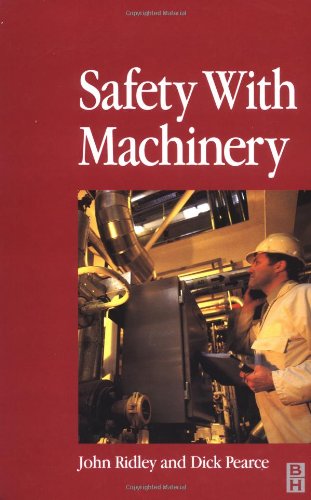
Safety With Machinery 1st Edition by John Ridley, Dick Pearce ISBN 978-0750648301 0750648301


Original price was: $50.00.$35.00Current price is: $35.00.
Safety With Machinery 1st Edition by John Ridley, Dick Pearce – Ebook PDF Instant Download/Delivery:978-0750648301, 0750648301
Full download Safety With Machinery 1st Edition after payment
Product details:
ISBN 10: 978-0750648301
ISBN 13: 978-0750648301
Author: John Ridley, Dick Pearce
Safety with Machinery has been written by John Ridley and Dick Pearce, both recognized specialists in their particular fields of safeguarding machinery. It reflects their knowledge of the current standards on the subject and draws on their many years of experience in dealing with the practical aspects of ensuring machinery is safe when put to use.
The need to protect workpeople from the dangers posed by machinery has long been recognized. Safeguarding of machines can range from simple fixed guards to the highly complex systems of monitored electronic controls. This book sets out to cover the whole field and endeavours to explain various techniques that can be used, from basic safety concepts to the philosophy of ‘safety integrity levels’. It deals extensively with the mechanical, electrical and electronic aspects of guarding and safeguarding systems. Reference is made to the requirements of the latest European and international standards and some of the ways in which conformity with them can be achieved are discussed.
A section has been included on the safe use of specific types of machinery that have a known history of injury and damage, such as pressure systems and lifting equipment. Other chapters deal with ergonomics, safe working practices, plant layout and the working environments.
An up-to-date list of European and international machinery safety standards is contained in an Appendix.
Provides practical guidance on guarding techniques
An invaluale reference for engineers faced with the task of providing guards.
Table of contents:
Part I Safeguarding philosophy and strategy
1 Safeguarding of work equipment
1.1 Introduction
1.2 Design considerations
1.3 ‘Cradle to the grave’ concept
1.4 Designer’s responsibility
1.5 Safeguarding principles
1.6 Guarding strategy
1.7 Standard-making bodies
1.8 European an approach to machine guarding
1.9 Unit vs holistic approach to safeguarding
2 Factors affecting the selection and effectiveness of machine safeguards
2.1 Introduction
2.2 Basic factors
2.3 Quality assurance
2.4 Reliability
2.5 Integrity
2.6 Validation
2.7 Summary
3 Typical hazards of machinery
3.1 Identification
3.2 Agents of hazards
3.3 Hazards from parts of machinery and work equipment
4 Risk assessment, risk reduction and selection of safeguards
4.1 Introduction
4.2 What is a risk assessment
4.3 Risk reduction strategy
4.4 Determining a Safety Integrity Level for machinery hazards
4.5 Selecting a safeguarding system
4.6 Summary
Part II Guarding techniques
5 Mechanical guarding
5.1 Introduction
5.2 Guard selection
5.3 Guard types
5.4 Other factors to consider
5.5 Other techniques
6 Interlocking safeguards
6.1 Introduction
6.2 Interlocking devices
6.3 Guard locking
6.4 Interlocking systems
6.5 Levels of risk
6.6 Interlocking media
6.7 Two hand controls
6.8 Hold-to-run controls
6.9 Limited movement control
6.10 Person sensing devices
6.11 Lasers
6.12 Pressure sensitive mats
6.13 Pressure sensitive edges and wires
6.14 Grab wires
6.15 Emergency stop switches
6.16 Telescopic trip switches
6.17 Proximity switches
6.18 Key exchange systems
6.19 Key interlock switches
6.20 Delayed start
6.21 Other interlocking devices
7 Ergonomic aspects of machinery safeguarding
7.1 Introduction
7.2 Physiology
7.3 Controls
7.4 Machine layout
7.5 Colours
7.6 Lighting
7.7 Noise
7.8 Vibrations
7.9 Rate of working
7.10 Temperature and humidity
7.11 Ventilation
7.12 Repetitive actions
7.13 Warnings
7.14 Vision
7.15 Radiations
7.16 Indicators and instruments
7.17 Coda
Contents
Part III Safeguarding systems
8 Mechanical safety arrangements
8.1 Introduction
8.2 Guards
8.3 Distance fencing
8.4 Safety gaps
8.5 Feed and take-off stations
8.6 Work-holding devices
8.7 Counterweights
8.8 Safety catches
8.9 Braking systems
8.10 Clutches
8.11 Summary
9 Electrical safety circuits
9.1 Introduction
9.2 Effect on safety
9.3 Basic safety requirements
9.4 Selection of interlocking switches
9.5 Switching contact requirements
9.6 Factors influencing the selection of interlocks
9.7 Circuit fault protection
9.8 Safety control circuits
10 Hydraulic safety circuits
10.1 Introduction
10.2 Hydraulic systems for safety circuits
10.3 Hydraulic safety circuits
11 Pneumatic safety circuits
11.1 Introduction
11.2 Pneumatic installations
11.3 Pneumatic safety circuits
11.4 Summary
Part IV
Other safety-related arrangements
12 Safety in the use of lifting equipment
12.1 Introduction
12.2 Common safety features of lifting equipment
12.3 Additional features for particular lifting equipment
12.4 Lifting accessories
12.5 Circumstances requiring special precautions
12.6 Precautions when handling lifting equipment
13 Safety with pressure systems
13.1 Introduction
13.2 Compressed air
13.3 Hydraulic installations
13.4 Steam
14 Safe working with equipment
14.1 Introduction
14.2 Systems of work
14.3 Protection from electric shock
14.4 Locking off
14.5 Ergonomics
14.6 Anthropometrics
14.7 Openings in guards
14.8 Operating instructions and manuals
14.9 Labels on equipment
14.10 Supervision
14.11 Use of jigs and fixtures
14.12 Safety clothing
14.13 Stored energy
14.14 Signs and signals
15 Plant layout and the working environment
15.1 Introduction
15.2 Space
15.3 Buildings
15.4 Services
15.5 Ventilation
15.6 Lighting
15.7 Temperature
15.8 Machine layout
15.9 Noise
15.10 Vibrations
15.11 Materials handling
15.12 Maintenance
15.13 Waste
15.14 Access
15.15 Lubrication
15.16 Dust and fumes
15.17 Floors and foundations
15.18 Hygiene
15.19 Notices and signs
Part V Appendices
1. Published standards
2. Glossary of terms
3. Abbreviations
4. Smooth shaft pick-up
5. Pipeline colour codes
6. Permit-to-work
7. Protection of enclosures
People also search for:
discuss safety with respect to plant and machinery
safety precautions when working with wood machinery
machine safety examples
safe use of machinery
safety with machine