
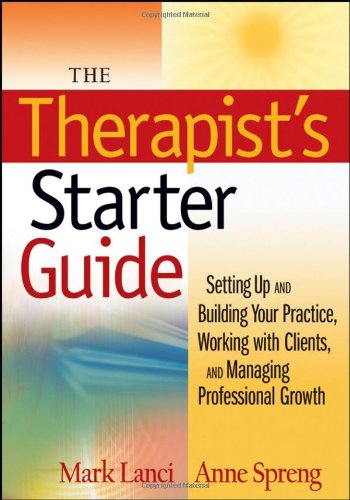
The Therapist s Starter Guide Setting Up and Building Your Practice Working with Clients and Managing Professional Growth 1st Edition by Mark Lanci, Anne Spreng ISBN 978-0470228920 047022892X


Original price was: $50.00.$35.00Current price is: $35.00.
The Therapist s Starter Guide Setting Up and Building Your Practice Working with Clients and Managing Professional Growth 1st Edition by Mark Lanci, Anne Spreng – Ebook PDF Instant Download/Delivery: 978-0470228920, 047022892X
Full download The Therapist s Starter Guide Setting Up and Building Your Practice Working with Clients and Managing Professional Growth 1st Edition after payment
Product details:
ISBN 10: 047022892X
ISBN 13: 978-0470228920
Author: Mark Lanci, Anne Spreng
Understand all the aspects of beginning and sustaining a therapeutic practice with The Therapist’s Starter Guide: Setting Up and Building Your Practice, Working with Clients, and Managing Professional Growth, a practical, hands-on guide to professional fulfillment and business success. If you’re a new practitioner or seek to grow your practice, this book will provide you with the skills you need to succeed, thrive and grow professionally and personally. Equip yourself with the knowledge you need to transition to a new job or to begin your own practice.
Table of contents:
SECTION I SETTING UP AND BUILDING YOUR PRACTICE 1
1 DEFINING YOUR PURPOSE
What Is the Purpose of Therapy?
The Goals of Psychotherapy
Relationship-Oriented versus Evidence-Based Therapy
What Kind of Practitioner Are You?
A Trip to the Therapist’s Couch…
Summing Up
Exercises
2 ETHICAL ISSUES
Why Study Ethics?
Ethical Codes
Practitioner Behavior
Practicing Outside Your Scope of Practice
Client Rights
Summing Up
Exercises
Resources
3 LEGAL ISSUES
Confidentiality
Tarasoff v. Regents of the University of California
Duty to Warn
Duty to Report
Confidentiality and Working with a Minor
Record Keeping
Dealing with Licensing Boards
What Is Malpractice?
The Difference between Supervision and Consultation
Receiving a Subpoena
Summing Up
Exercises
Resources
4 THE IMPORTANCE OF DOCUMENTATION: USING CLIENT CHARTS TO KEEP CARE FOCUSED
Who Will See Your Charts?
Before the Client Arrives: Getting Your Files Ready
Summing Up
Exercises
Resources
5 ESTABLISHING YOUR PRACTICE
Creating a Professional Identity
Developing Specialties
What Will You Charge?
Developing Peer Consultation
Generating Referrals
Working with Insurance Companies
Time Management
Your Physical Space
Trends on the Horizon
The Use of Technology
Summing Up
Exercises
Resources
SECTION II WORKING WITH CLIENTS
6 THE THERAPEUTIC RELATIONSHIP
What Makes the Counseling Relationship Different?
Establishing Rapport
Carl Rogers and the Therapeutic Relationship
John Norcross and the Division 29 Task Force
Summing Up
Exercises
7 HOW WILL YOU INTERACT WITH THE CLIENT
Motivational Interviewing
Client Satisfaction
Creating a Sense of Hope
Eliciting the Client’s Concerns
Developing Collaboration with the Client
The Quest for Why: Insight versus Behavior Change
Setting Realistic Treatment Expectations
Summing Up
Exercises
Resources
8 UNDERSTANDING THE CHANGE PROCESS
Prochaska’s Model of Change
The Processes of Change Model
Assessing Stages of Change and Matching Interventions
The Stages of Change Model
Understanding Clients’ Learning Styles
Locus of Control
Learned Helplessness and Learned Optimism
Secondary Gains
Unconscious Motivations
Mental Wellness-What Is It?
Summing Up
Exercises
9 BEGINNING TREATMENT
Determining What the Client Wants
Recognizing Pathology
Taking a Comprehensive History:
The Structured Interview
Setting the Stage for Treatment: Accurate Diagnosis
Assessing Functional Impairments and Functional Goals
Case Conceptualization
Setting the Stage for Treatment: Focused
Treatment Planning
Summing Up
Exercises
Resources
10 THE MIDDLE PHASE OF TREATMENT
Frequency of Sessions
Modality
Setting Up Time Frames
Working with Client Strengths and Exceptions
Identifying Intervention Points
Client Behaviors That Interfere with Therapy
Practitioner Behaviors That Interfere with Therapy
The Two Sides of Catharsis
Transference and Countertransference
Reexamining Goals
What to Do When Therapy Isn’t Working
latrogenic Effects of Therapy
Working Toward Termination
Summing Up
Exercises
Resources
11 ENDING TREATMENT
Helping Clients Live Life between Sessions
Positive Termination Strategies: How to
Know When You Are Done
Setting Up a Relapse-Prevention Plan
The Importance of the Final Session
Incomplete Endings
Summing Up
Exercises
12 WORKING WITH COMMON THEMES
Self-Esteem
Core Beliefs
Working with Resistance and Avoidance Behaviors
Forgiveness and Acceptance
The Role of Laughter and Humor
Summing Up
Exercises
13 WORKING WITH CHALLENGING CASES: CHEMICAL DEPENDENCY AND PERSONALITY DISORDERS
Treating Clients with Active Chemical
Dependency Problems
Axis II: Personality Disorders
Introduction to Dialectical Behavior Therapy
Summing Up
Exercises
14 MANAGING ADVERSE EVENTS
Crisis Intervention
Hospitalization
Suicidal Ideation and Intent
Postsuicide Review
Summing Up
Exercises
Resources
15 UNDERSTANDING MEDICATIONS AND THE ROLE OF MEDICAL CONDITIONS
Understanding Medications
Neurotransmitters
Types of Medications
Working Effectively with Prescribers
Medication Emergencies
Mind-Body Interactions
Summing Up
Exercises
Resources
SECTION III
MANAGING PROFESSIONAL GROWTH 325
16 PROFESSIONAL GROWTH THROUGH PERSONAL MANAGEMENT
Creating a Professional Identity
Mentorship
Dealing with Burnout and Vicarious Trauma
Developing Core Characteristics
Clients’ Influence on Your Development
Finding Your Niche: Generalist or Specialist?
Summing Up
Exercises
Resources
People also search for:
therapist starter pack
the therapist’s guide to psychopharmacology
the teacher’s guide to self care
the counselors steps for progress notes pdf
new therapist guide
Tags: Mark Lanci, Anne Spreng, The Therapist, Starter Guide, Building Your Practice