
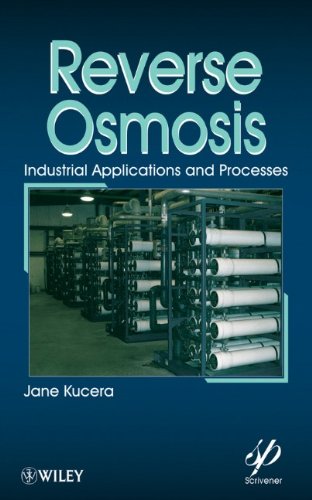
Reverse Osmosis Design Processes and Applications for Engineers 1st Edition by Jane Kucera 0470618434 9780470618431


Original price was: $50.00.$35.00Current price is: $35.00.
Reverse Osmosis Design Processes and Applications for Engineers 1st Edition by Jane Kucera – Ebook PDF Instant Download/DeliveryISBN: 0470618434, 9780470618431
Full download Reverse Osmosis Design Processes and Applications for Engineers 1st Edition after payment
Product details:
ISBN 10 : 0470618434
ISBN 13 : 9780470618431
Author: Jane Kucera
The most comprehensive and up-to-date coverage of reverse osmosis in industrial applications.
Reverse osmosis is rapidly growing as a water treatment technology used for many applications, such as boiler feed water and recovering wastwater for reuse. This “green” technology is becoming more and more widely used in many settings, especially in industry. Even as the technology becomes more widespread, the understanding of the technology is lagging behind. Reverse Osmosis provides an essential reference for any process or chemical engineer working with this emergent technology.
Reverse Osmosis Design Processes and Applications for Engineers 1st Table of contents:
PART 1: FUNDAMENTALS
1. Introduction and History of Development
1.1 Introduction
1.1.1 Uses of Reverse Osmosis
1.1.2 History of Reverse Osmosis Development
1.1.3 Recent Advances in RO Membrane Technology
1.1.4 Future Advancements
References
2. Reverse Osmosis Principles
2.1 Osmosis
2.2 Reverse Osmosis
2.3 Dead-End Filtration
2.4 Cross-Flow Filtration
3. Basic Terms and Definitions
3.1 Reverse Osmosis System Flow Rating
3.2 Recovery
3.3 Rejection
3.4 Flux
3.5 Concentration Polarization
3.6 Beta
3.7 Fouling
3.8 Scaling
3.9 Silt Density Index (SDI)
3.10 Langelier Saturation Index (LSI)
References
4. Membranes
4.1 Transport Models
4.1.1 Solution-Diffusion Model
4.1.2 Solution-Diffusion Imperfection Model
4.1.3 Finely-Porous Model
4.2 Membrane Materials
4.2.1 Cellulose Acetate Membranes
4.2.2 Polyamide and Composite Membranes
4.2.2.1 Linear Aromatic Polyamide Membranes
4.2.2.2 Composite Polyamide Membranes
4.2.3 Improvements to Polyamide, Composite Membranes
4.2.4 Other Membrane Materials
4.3 Membrane Modules
4.3.1 Plate and Frame Modules
4.3.2 Tubular Modules
4.3.3 Spiral Wound Modules
4.3.4 Hollow Fine Fiber Membrane Modules
4.3.5 Other Module Configurations
4.4 Commercially-Available Membranes
4.4.1 Seawater Membranes
4.4.2 Brackish Water Membranes
4.4.2.1 Low-Energy Membranes
4.4.2.2 High-Rejection Membranes
4.4.2.3 Low-Fouling Membranes
4.4.2.4 Low-Differential-Pressure Membrane Modules
4.4.2.5 High-Productivity Membrane Modules
4.4.2.6 Other Membrane/Module Types
References
5. Basic Flow Patterns
5.1 Arrays
5.2 Recycle
5.3 Double Pass
5.4 Multiple Trains
6. Reverse Osmosis Skids
6.1 Cartridge Filters
6.2 Reverse Osmosis Feed Pumps
6.3 Pressure Vessels
6.4 Manifolding – Materials of Construction
6.5 Instrumentation
6.6 Controls
6.7 Data Acquisition and Management
6.8 Reverse Osmosis Skid
6.9 Auxiliary Equipment
6.10 Other Design Considerations
6.10.1 Access to Profile and Probe RO Membranes
6.10.2 Interstage Performance Monitoring Instrumentation
6.10.3 Stage-by-Stage Membrane Cleaning
References
PART 2: PRETREATMENT
7. Water Quality Guidelines
7.1 Suspended Solids
7.2 Microbes
7.3 Organics
7.4 Color
7.5 Metals
7.6 Hydrogen Sulfide
7.7 Silica
7.8 Calcium Carbonate
7.9 Trace Metals – Barium and Strontium
7.10 Chlorine
7.11 Calcium
7.12 Exposure to Other Chemicals
References
8. Techniques and Technologies
8.1 Mechanical Pretreatment
8.1.1 Clarifiers
8.1.1.1 Solids-Contact Clarifiers
8.1.1.2 Inclined-Plate Clarifiers
8.1.1.3 Sedimentation Clarifiers
8.1.1.4 Chemical Treatment for Clarifiers
8.1.2 Multimedia Pressure Filters
8.1.3 High-Efficiency Filters
8.1.4 Carbon Filters
8.1.5 Iron Filters
8.1.5.1 Manganese Greensand Filters
8.1.5.2 BIRM® Filters
8.1.5.4 Other Iron Removal Media
8.1.6 Sodium Softeners
8.1.7 Spent Resin Filters
8.1.8 Ultraviolet Irradiation
8.2 Chemical Pretreatment
8.2.1 Chemical Oxidizers for Disinfection of RO Systems
8.2.1.1 Chlorine
8.2.1.2 Ozone
8.2.1.3 Hydrogen Peroxide
8.2.2 Antiscalants
8.2.3 Sodium Metabisulfite
8.2.4 Non-Oxidizing Biocides
8.2.4.1 Sodium Bisulfite
8.2.4.2 DBNPA
8.2.4.3 Other Non-Oxidizing Biocides
8.3 Combination Mechanical + Chemical Pretreatment – Lime Softening
8.3.1 Cold Lime Softening
8.3.2 Warm Lime Softening
8.3.3 Hot Process Softening
8.4 Sequencing of Pretreatment Technologies
References
PART 3: SYSTEM DESIGN
9. Design Considerations
9.1 Feed Water Quality
9.2 Temperature
9.3 Pressure
9.4 Feed Water Flow
9.5 Concentrate Flow
9.6 Beta
9.7 Recovery
9.8 pH
9.9 Flux
References
10. RO Design and Design Software
10.1 ROSA Version 6.1
10.2 TorayDS Version 1.1.44
10.3 Hydranautics IMS Design Version 2008
10.4 Koch Membranes ROPRO Version 7.0
Reference
PART 4: OPERATIONS
11. On-Line Operations
11.1 Reverse Osmosis Performance Monitoring
11.2 Data Collection
11.3 Data Analysis and Normalization
11.3.1 Normalized Product Flow
11.3.2 Normalized Salt Passage
11.3.3 Normalized Pressure Drop
11.3.4 Normalization Software
11.4 Preventive Maintenance
References
12. Performance Degradation
12.1 Normalized Permeate Flow
12.1.1 Loss of Normalized Permeate Flow
12.1.1.1 Membrane Fouling
12.1.1.2 Membrane Scaling
12.1.1.3 Membrane Compaction
12.1.2 Increase in Normalized Permeate Flow
12.1.2.1 Membrane Degradation
12.1.2.2 Hardware Issues
12.2 Normalized Salt Rejection
12.2.1 Loss of Salt Rejection
12.2.1.1 Membrane Scaling
12.2.1.2 Membrane Degradation
References
13. Off-Line Operations
13.1 System Flush
13.2 Membrane Cleaning
13.3 Membrane Lay-Up
References
PART 5: TROUBLESHOOTING
14. Troubleshooting
14.1 Mechanical Evaluation
14.2 General Performance Issues
14.3 System Design and Performance Projections
14.4 Data Assessment
14.5 Water Sampling
14.6 Profiling and Probing
14.7 Membrane Autopsy
14.7.1 Visual Inspection
14.7.3 Methylene Blue Test
14.7.5 Spectroscopy
14.7.6 Other Tests
References
PART 6: SYSTEM ENGINEERING
15. System Engineering
15.1 Pretreatment Sequencing and Antiscalant Use
15.1.1 Sequencing of the Sodium Softeners and RO
15.1.2 Sodium Softening and Antiscalants
Case 1: High Hardness Well Water
15.2 Reverse Osmosis Sizing and Capacity
15.3 Membrane Cleaning (On-Site vs Off-Site)
15.4 Reverse Osmosis Reject Disposal Options
References
16. Impact of Other Membrane Technologies
16.1 Microfiltration and Ultrafiltration
16.1.1 Microfiltration
16.1.2 Ultrafiltration
16.2 Nanofiltration
16.3 Continuous Electrodeionization
16.4 HERO Process
References
People also search for Reverse Osmosis Design Processes and Applications for Engineers 1st:
what is reverse osmosis process
reverse osmosis design
reverse osmosis system design
reverse osmosis process flow diagram
reverse osmosis demonstration
Tags: Reverse Osmosis, Design Processes, Applications, Jane Kucera