
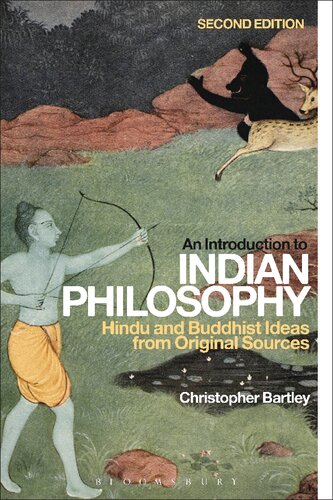
An Introduction to Indian Philosophy Hindu and Buddhist Ideas from Original Sources 2nd Edition by Christopher Bartley ISBN 978-1472524768 1472524764


Original price was: $50.00.$35.00Current price is: $35.00.
An Introduction to Indian Philosophy Hindu and Buddhist Ideas from Original Sources 2nd Edition by Christopher Bartley – Ebook PDF Instant Download/Delivery: 978-1472524768, 1472524764
Full download An Introduction to Indian Philosophy Hindu and Buddhist Ideas from Original Sources 2nd Edition after payment
Product details:
ISBN 10: 1472524764
ISBN 13: 978-1472524768
Author: Christopher Bartley
Introducing the topics, themes and arguments of the most influential Hindu and Buddhist Indian philosophers, An Introduction to Indian Philosophy leads the reader through the main schools of Indian thought from the origins of Buddhism to the Saiva Philosophies of Kashmir.
By covering Buddhist philosophies before the Brahmanical schools, this engaging introduction shows how philosophers from the Brahmanical schools-including Samkhya, Yoga, Nyaya, Vaisheshika, and Mimamsa, as well as Vedanta-were to some extent responding to Buddhist viewpoints. Together with clear translations of primary texts, this fully-updated edition features:
• A glossary of Sanskrit terms
• A guide to pronunciation
• Chronological list of philosophers & works
With study tools and constant reference to original texts, An Introduction to Indian Philosophy provides students with deeper understanding of the foundations of Indian philosophy.
Table of contents:
Chapter 1. Foundations of Brahmanism: Vedas and Upaniṣads
-
The Primacy of Substance
-
Some Illustrative Passages from the Brhadaranyaka Upanisad
-
Selections from Chandogya Upaniṣad, Chapter 6
-
Selections from the Taittiriya Upanisad
-
Selections from the Aitareya Upanisad (Atman as Primary Substrate)
-
Selections from the Katha Upanisad
-
Notes
Part I. Buddhist Traditions
Chapter 2. The Buddhist Ethos
-
What Buddhists Believe
-
The Four Noble Truths
-
Anattā: No Substance, No Soul; No Self That Really Matters
-
Notes
Chapter 3. Abhidharma Buddhism
-
The Monastic Context
-
Ontology
-
Mind and World
-
Ethical Consequentiality and Moral Values
-
The Personalists (Pudgalavada)
-
Notes
Chapter 4. Sautrāntika Buddhism
-
Ontology
-
Ethical Consequentiality
-
Dignaga
-
Apoha: The ‘Exclusion’ Theory of Linguistic Functioning
-
Self-Awareness of Mental Events
-
The Alambana-Paris
-
Dharmakirti
-
Dharmakirti’s Metaphysics
-
The Impossibility of Permanence
-
Logic
-
The Authority of the Buddha’s Teachings
-
Notes
Chapter 5. Madhyamaka Buddhism
-
Nagarjuna
-
Emptiness
-
Verses from Nagarjuna’s Ratnavali
-
The Refutation of Objections
-
Notes
Chapter 6. Yogācāra Buddhism
-
Buddhist Idealism: Mind-Only
-
Extracts from Vasubandhu’s “Twenty Verses Proving that Only Mental Phenomena Are Real (Vijñapti-dandruff-siddhi)”
-
An Interpretation of the Thirty Verses on Consciousness
-
Meditation
-
Notes
Part II. Hindu Traditions
Chapter 7. Nyāya and Vaiśeşika
-
The World at Our Fingertips
-
Metaphysics: The System of Categories (padārtha)
-
The Category of Substance: Dravya
-
Subjects of Experience (Atman)
-
The Category Guna (Qualities)
-
The Category Samanya (Common Properties)
-
Samavaya (The Inherence Relation)
-
The Category Višesa (Ultimate Particularity)
-
The Category Karman (Motions)
-
The Category Abhava (Absences)
-
Epistemology: The Pramanas – Perception, Reasoning and Testimony
-
Knowledge by Perception (Pratyaksa)
-
Anumana: Knowledge by Reasoning or Inference
-
Sabda: Testimony and the Transmission of True Information
-
Words and Sentences
-
-
Notes
Chapter 8. Samkhya and Yoga
-
The Samkhya Vision
-
Causal Processes
-
The Human Condition: Bondage to Material Causality
-
The Yoga Vision
-
Note
Chapter 9. The Mīmāmsā Vision
-
The Authority of the Vedas (Veda-pramānyam)
-
Words and Sentences
-
Kumārīlabhatta’s Realism
-
The Perceptual Process and Our Experience of the World
-
Šlokavārttika IV, 111–120
-
The Nature of Ritual Agents
-
Notes
Chapter 10. Vedanta
-
The Interpretation of the Upanisads
-
The Bhedābheda Tradition of Upanisadic Interpretation
-
Proto-Vedanta from a Buddhist Perspective: The Description of Vedanta in Bhāviveka’s Madhyamakahṛdaya
-
Note
Chapter 11. Advaita Vedanta
-
Liberating Gnosis and Disengagement from the World
-
Śankara’s Via Negativa
-
Māṇḍana Miśra
-
Padmapada, Prakāśātman, Vimuktātman and Sarvajñātman
-
Śrī Harśa and His Khandanakhandakhadya
-
Scriptural Exegesis and the Significance of Coreferential Constructions
-
Illustrative Extracts from Śankara’s Works
-
The Ineffability of the Brahman
-
Śankara and the Buddhists
-
Notes
Chapter 12. Viśiśţādvaita Vedānta
-
The Religious Context
-
The Formation of the Śrī Vaiṣṇava Tradition
-
Knowing God Only from Scripture
-
Response to Advaita
-
The Individual Self: Agency
-
Individual Selves: Consciousness
-
The Soul-Body Model
-
The Soul-Body Model and the Interpretation of Scripture
-
Notes
Chapter 13. Dvaita Vedanta and Madhva
-
The Examination of Viṣṇu’s Nature
-
Difference
-
Direct Epistemological Realism
-
The Trouble with Avidya
-
Note
Chapter 14. Tantra and Some Śaiva Thinkers
-
Śaiva Siddhānta Dualism
-
Three Categories: Pati, Pashu, and Pasha
-
Ramakantha on the Enduring Individual Soul and Its Experiences
-
Personal Agency
-
Śākta Śaiva Traditions
-
Utpaladeva and Abhinavagupta
-
Absolute Idealism
-
The Intrinsic Dynamism of Consciousness: Prakāśa and Vimarśa
-
Reinterpretation of Śaiva Siddhānta Concepts
-
The Krama Cult and the Pratyabhijñā Philosophy
-
Krama Practice
-
Illustrative Extracts from Iśvarapratyabhijñā Karika and Commentaries
-
Fifteen Verses on Consciousness
-
Notes
People also search for:
what is the main philosophy of hinduism
ancient hindu philosophy
indian philosophy a very short introduction
an introduction to hinduism
ancient india philosophy
Tags: Christopher Bartley, An Introduction, Indian Philosophy, Hindu and Buddhist