
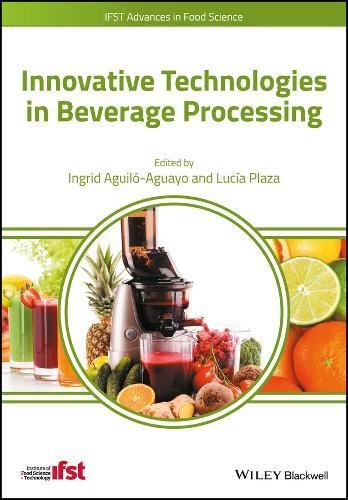
Innovative Technologies in Beverage Processing 1st Edition by Ingrid Aguilo-Aguayo, Lucia Plaza ISBN 1118929377 978-1118929377


Original price was: $50.00.$35.00Current price is: $35.00.
Innovative Technologies in Beverage Processing 1st Edition by Ingrid Aguilo-Aguayo, Lucia Plaza – Ebook PDF Instant Download/Delivery: 1118929377, 978-1118929377
Full download Innovative Technologies in Beverage Processing 1st Edition after payment
Product details:
ISBN 10: 1118929377
ISBN 13: 978-1118929377
Author: Ingrid Aguilo-Aguayo, Lucia Plaza
An in-depth look at new and emerging technologies for non-alcoholic beverage manufacturing
The non-alcoholic beverage market is the fastest growing segment of the functional food industry worldwide. Consistent with beverage consumption trends generally, the demand among consumers of these products is for high-nutrient drinks made from natural, healthy ingredients, free of synthetic preservatives and artificial flavor and color enhancers. Such drinks require specialized knowledge of exotic ingredients, novel processing techniques, and various functional ingredients.
The latest addition to the critically acclaimed IFST Advances in Food Science series this book brings together edited contributions from internationally recognized experts in their fields who offer insights and analysis of the latest developments in non-alcoholic beverage manufacture. Topics covered include juices made from pome fruits, citrus fruits, prunus fruits, vegetables, exotic fruits, berries, juice blends and non-alcoholic beverages, including grain-based beverages, soups and functional beverages. Waste and by-products generated in juice and non-alcoholic beverage sector are also addressed.
Offers fresh insight and analysis of the latest developments in non-alcoholic beverage manufacture from leading international experts
Covers all product segments of the non-alcoholic beverage market, including juices, vegetable blends, grain-based drinks, and alternative beverages
Details novel thermal and non-thermal technologies that ensure high-quality nutrient retention while extending product shelf life
Written with the full support of The Institute of Food Science and Technology (IFST), the leading qualifying body for food professionals in Europe
Innovative Technologies in Beverage Processing is a valuable reference/working resource for food scientists and engineers working in the non-alcoholic beverage industry, as well as academic researchers in industrial food processing and nutrition.
Table of contents:
Part 1: Juice Processing
1 Pome Fruit Juices
Ingrid Aguiló-Aguayo, Lucía Plaza, Gloria Bobo, Maribel Abadias, and Inmaculada Viñas
1.1 Introduction
1.2 Conventional Processing Techniques
1.2.1 Influence on Microbial Quality
1.2.2 Influence on Nutritional Attributes
1.2.3 Influence on Organoleptic Attributes
1.3 Novel Processing Techniques
1.3.1 Improvement in Juice Extraction
1.3.2 Improvement in Juice Clarification
1.3.3 Preservation of Pome Fruit Juices by Innovative Technologies
1.4 Conclusion and Future Trends
Acknowledgments
References
2 Citrus Fruit Juices
Maria Consuelo Pina-Pérez, Alejandro Rivas, Antonio Martínez, and Dolores Rodrigo
2.1 Introduction
2.2 Conventional Preservation Processing Techniques
2.2.1 Effect on Microbial Quality
2.2.2 Effect on Quality-Related Enzymes
2.2.3 Effect on Nutritional Quality
2.2.4 Effect on Organoleptic Quality
2.3 Novel Processing Techniques
2.3.1 Changes in Conventional Methods
2.3.2 Ohmic Heating
2.3.3 Microwave Heating
2.4 Processing Citrus by Innovative Methods
2.4.1 High-Pressure Processing
2.4.2 Pulsed Electric Fields
2.5 Conclusions and Future Trends
References
3 Prunus Fruit Juices
Gamze Toydemir, Dilek Boyacioglu, Robert D. Hall, Jules Beekwilder, and Esra Capanoglu
3.1 Introduction
3.2 Conventional Processing Techniques
3.2.1 Cherry and Sour Cherry
3.2.2 Apricot, Peach, and Nectarine
3.2.3 Plum
3.3 Influence of Conventional Processing Techniques on Juice Quality
3.4 Novel Processing Techniques
3.4.1 Pulsed Electric Fields
3.4.2 High-Pressure Processing
3.4.3 Other Innovative Technologies
3.5 Conclusion and Future Trends
References
4 Vegetable Juices
Rogelio Sánchez-Vega, David Sepúlveda-Ahumada, and Ma. Janeth Rodríguez-Roque
4.1 Introduction
4.2 Conventional Processing Technologies
4.2.1 Influence of Conventional Processing on Microbial Quality
4.2.2 Influence of Conventional Processing on Nutritional Attributes
4.2.3 Influence of Conventional Processing on Organoleptic Attributes
4.3 Nonthermal Processing Technologies
4.3.1 Influence of Nonthermal Processing on Microbial Quality
4.3.2 Influence of Nonthermal Processing on Nutritional Attributes
4.3.3 Influence of Nonthermal Processing on Organoleptic Attributes
4.4 Conclusion and Future Trends
References
5 Exotic Fruit Juices
Zamantha Escobedo-Avellaneda, Rebeca García-García, and Jorge Welti-Chanes
5.1 Introduction
5.2 Exotic Fruits: Relevance in Human Nutrition and Health
5.3 Deterioration of Exotic Fruit Juices
5.4 Thermal and Nonthermal Technologies Used to Preserve Juices
5.4.1 Thermal Processing
5.4.2 Nonthermal Processing
5.5 Conclusions and Future Trends
References
6 Berry Juices
Sze Ying Leong and Indrawati Oey
6.1 Introduction
6.2 Conventional Processing Techniques
6.2.1 Influence on Microbial Quality
6.2.2 Influence on Nutritional Attributes
6.2.3 Influence on Organoleptic Attributes
6.3 Novel Processing Techniques
6.3.1 Changes in Conventional Methods
6.3.2 Processing Berry Juice by Innovative Technologies
6.3.3 Preservation of Berry Juice by Innovative Technologies
6.4 Relevance for Human Health
6.5 Conclusions and Future Trends
References
7 Juice Blends
Francisco J. Barba, Elena Roselló-Soto, Francisco Quilez, and Nabil Grimi
7.1 Introduction
7.2 Pulsed Electric Fields
7.2.1 Food Safety
7.2.2 Nutritionally Valuable Compounds
7.3 High-Pressure Processing
7.3.1 Food Safety
7.3.2 Nutritionally Valuable Compounds
7.4 Conclusion
Part 2: Non-alcoholic Beverages
8 Grain-Based Beverages
Aastha Deswal, Navneet S. Deora, and Hari N. Mishra
8.1 Introduction
8.1.1 Soy-Based Beverages
8.1.2 Rice-Based Beverages
8.1.3 Oat-Based Beverages
8.2 Conventional Processing Techniques
8.2.1 Heating Methods
8.2.2 Fermentation
8.2.3 Influence on Microbial Quality
8.2.4 Influence on Nutritional Attributes
8.2.5 Influence on Organoleptic Attributes
8.3 Novel Processing Techniques
8.3.1 High and Ultra-High-Pressure Homogenisation
8.3.2 High-Pressure Processing
8.3.3 Pulsed Electric Field
8.3.4 Enzymatic Techniques
8.3.5 Changes in Conventional Methods
8.4 Processing Grain-Based Beverages by Innovative Techniques
8.4.1 Enzymatic Techniques
8.4.2 Fermentation
8.4.3 Ultra-High-Pressure Homogenisation
8.5 Preservation of Grain-Based Beverages by Innovative Technologies
8.5.1 High-Pressure Processing
8.5.2 Pulsed Electric Field
8.6 Relevance for Human Nutrition
8.7 Conclusion and Future Trends
References
9 Soups
Begoña de Ancos and Concepción Sánchez-Moreno
9.1 Introduction
9.1.1 Processed Foods
9.1.2 Ready-to-Eat Meals: Soups
9.2 Non-Thermal Technologies for Food Processing
9.2.1 High-Pressure Processing
9.2.2 Pulsed Electric Fields
9.3 Novel Thermal Technologies for Food Processing
9.3.1 Ohmic Heating
9.3.2 Microwave and Radiofrequency Heating
Acknowledgments
References
10 Functional Beverages
Francesc Puiggròs, Begoña Muguerza, Anna Arola-Arnal, Gerard Aragonès, Susana Suárez-Garcia, Cinta Bladé, Lluís Arola, and Manuel Suárez
10.1 Introduction
10.2 Functional Food Regulation
10.3 Natural Ingredients in the Formulation of Functional Beverages
10.4 New Trends in the Formulation of Functional Beverages
10.4.1 Tendencies in Fruit Ingredients
10.4.2 Green Botanicals in Beverages
10.4.3 By-Products in Beverage Formulation
10.5 Novel Infusions (Tea and Tea Alternatives)
10.6 Fortified Beverages
10.7 Cocoa-Based Beverages
10.8 Energy Drinks
10.9 Beverage Emulsions
10.10 Conclusions and Future Trends
References
Part 3: Waste in the Juice and Non-alcoholic Beverage Sector
11 Waste/By-Product Utilisations
Ciaran Fitzgerald, Mohammad Hossain, and Dilip K. Rai
11.1 Introduction
11.2 Major Waste and By-Products Generated from the Juice and Non-Alcoholic Beverage Sector
11.3 Utilisation of By-Products from the Non-Alcoholic Beverage Sector
11.3.1 Animal Feed
11.3.2 Pectin
11.3.3 Biofuel
11.3.4 Flavour and Aroma
11.3.5 Food Additives
11.4 Potential Sources of Bioactive Compounds
11.4.1 Phenolic Compounds
11.4.2 Bioactive Peptides
11.5 Novel Technologies Involved in the Processing of Fruit Beverage Waste
11.5.1 Pulsed Electric Field
11.5.2 Ultrasonication
People also search for:
innovative food technology ideas
innovative beverage solutions
innovation beverage
innovative beverage marketing
innovative beverage group
Tags:
Ingrid Aguilo-Aguayo,Lucia Plaza,Innovative Technologies,Beverage Processing