
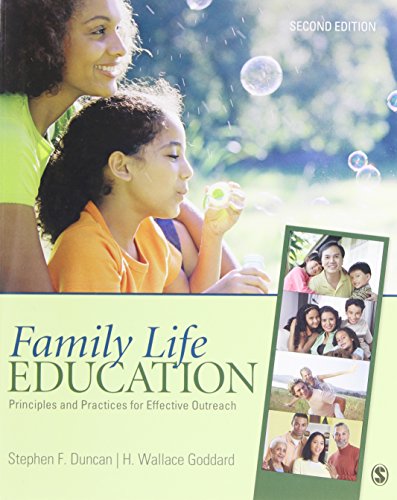
Family Life Education Principles and Practices for Effective Outreach Second Edition by Stephen Duncan, Harold Wallace Goddard ISBN 978-1412979085 1412979080


Original price was: $50.00.$35.00Current price is: $35.00.
Family Life Education Principles and Practices for Effective Outreach Second Edition by Stephen F. Duncan, H. (Harold) Wallace Goddard – Ebook PDF Instant Download/Delivery: 978-1412979085, 1412979080
Full download Family Life Education Principles and Practices for Effective Outreach Second Edition after payment
Product details:
ISBN 10: 1412979080
ISBN 13: 978-1412979085
Author: Stephen F. Duncan, H. (Harold) Wallace Goddard
Drawing on the best scholarship and their own years of professional experience, the authors of this thoroughly updated edition begin by discussing the foundations of family life education and encourage readers to develop their own outreach philosophies. The book then helps readers learn principles and methods for reaching out to the public and how to form and use community collaborations and use principles of social marketing to promote programs. The Second Edition contains five new chapters on education for personal well-being, marriage and relationship education, parenting education, sexuality education, and narratives of family life educators. The authors′ practical, hands-on experience is used to demonstrate how readers can put principles from the latest and best scholarship into action and reinforced with the Interactive Explorations sections throughout.
Table of contents:
PART I. FOUNDATIONS OF FAMILY LIFE EDUCATION
1. Historical and Philosophical Perspectives
Defining Family Life Education
A Brief History of Outreach Family Life Education
Early Roots
The American Land Grant University System
Cooperative Extension
Other University-Based Outreach Efforts
Community Movements
Reaching Diverse Audiences
Professional Associations and Professionalization of Family Life Education
Web-Based Family Life Education
Evolution in the Dissemination of
Scientific Knowledge About Families
Varied Approaches or “Roles” in Family Life Education
The Expert Approach
The Facilitator Approach
The Critical Inquirer Approach
The Collaborator Approach
The Interventionist Approach
The Eclectic Approach
Developing a Working Philosophy for Outreach
Family Life Education
Beliefs About the Family and the Nature and
Quality of Family Life
Beliefs About the Purpose of Family Life Education
Beliefs About the Content of Family Life Education
Beliefs About the Process of Learning for Families and Individuals Within Families
PART II. DEVELOPMENT OF FAMILY LIFE EDUCATION PROGRAMS
2. Designing Comprehensive Family Life Education Prevention Programs
The Science and Profession of Prevention Prevention Education Models in FLE
A Comprehensive Model for the Design of
Family Life Prevention Programs
Stage 1: Problem Analysis
Stage 2: Program Design
Stage 3: Pilot Testing
Stage 4: Advanced Testing
Stage 5: Dissemination
Assessing Elements of Program Quality in Existing Programs
Characteristics of Strong, Sustainable Family
Life Education Programs
Conclusion
Explorations
3. Principles of Program Evaluation
Evaluation as Friend and Foe: Stereotypes and Opportunities
Establishing the Target: Vision and Goals
Developing a Vision
Getting Specific: Program Goals and Objectives
An Example of an Evaluation Framework in
Parenting Education
Matching the Parts
Defining the Kind of Information Needed:
The Evaluation Questions
The Five-Tiered Approach to Program Evaluation
The Logic Model Approach to Evaluation
Innovations in Evaluation
Transformative Learning
Results Mapping
Posttest First Methods
Using Evaluation Data
Conclusion
Explorations
PART III. IMPLEMENTING FAMILY LIFE
EDUCATION PROGRAMS
4. Designing Effective Instruction
Component Display Theory
Using Stories That Teach the Principle
Helping Learners Take the Principles Home
Finding Instructional Balance
Instruction Outside a Classroom
Mixing the Elements of Instruction
First Principles of Instruction
Instruction Addresses Real Problems
Activating Existing Knowledge
The Power of Demonstration
Applying New Knowledge
New Knowledge Integrated Into the Learner’s World
Conclusion
Explorations
5. Engaging an Audience
The Art of Teaching
A Formula for Engaging an Audience
Engaging the Adult Learner With Family Life Education
What Changes People? Challenging Ideas From
Personality Theories
Comparing the Personality Theories
Relationships as the Basis for Helping
Prelude to Effective Education
The Boundary Between Therapy and Family Life Education
A Specific Method for Capitalizing on
Emotion in Family Life Education
Practical Applications
Drawing the Best Out of Your Participants:
Some Practical Tips
Application to Print
Conclusion
Explorations
6. Teaching Skills and Tools in Family Life Education
Select Methods for Family Life Education
Leading Group Discussions
Fish Bowl
Buzz Groups
Personal Narrative: Stories of Life
Skill Training
Family Councils/Meetings
Role-Playing
Movie and Television Clips
Educational Videos
Music and Pictures
Books, Plays, and Short Stories
Comic Strips and Cartoons
Games
Object Lessons
Homework Assignments and Learning Contracts
Idea Reinforcers
Myth Versus Reality
Conclusion
Explorations
7. Working With Diverse Audiences
Sensitizing to Differences
Diversity of Learning Styles
Ethnicity and Values
The Individual
Communication Standards
Action Orientation
Time Orientation
Work Etbic
Family Structure
Skilled Dialogue
Group FLE Examples
Programming for Diversity
Know Your Audience
Know Yourself
Explore Your Limits
Evaluate Program Material for Diversity
Be Flexible
Conclusion
Explorations
PART IV. CONTENT AND CONTEXTS FOR FAMILY
LIFE EDUCATION
8. Education for Personal Well-Being: Flourishing People
Make Better Family Members
Models of Well-Being
The Self-Esteem Era
The New Positive Psychology
Limits of Human Objectivity
The Practical Messages of Positive Psychology
Understanding Well-Being
Savoring
Using Your Strengths
Serving
Educational Frameworks
Conclusion
Explorations
9. Marriage and Relationship Education
Stepben F. Duncan, Alan J. Hawkins, and H. Wallace Goddard
Early Beginnings of Marriage and Relationship Education
Current Theoretical and Empirical Foundations and
Models for Practice
Examples of the Three Emphases: Foundational Processes for
Enduring Marriages
Educational Frameworks
Programs and Approaches
Effectiveness of Marriage and Relationship Education
Extension Service Programs and Results
Creating Your Own Marriage and Relationship Education Program
Challenges for the Future and Future Directions
Target
Timing
Setting
Content
Methods
Dosage
Bright Prospects and Real Challenges
Conclusion
Explorations
10. Parenting Education
Heidi E. Stolz
History and Current State of Parenting Education
Understanding Effective Parenting
Positive Parenting Dimensions and Behaviors: The Scholarship of Parenting
Priority Practices for Parents: The National Extension
Parent Education Model (NEPEM)
Understanding Effective Parenting Education
Theoretical Models of Parenting Education
Qualities and Competencies of an Effective Parent Educator
Effective Delivery Formats
Populations Served by Parenting Education
Overall Effectiveness of Parenting Programs
Evaluating Parenting Education Resources and Curricula
Conclusion
Explorations
11. Sexuality Education
Susan Calaban
Sexuality Education Historical Overview
Why Is Sexuality Education Important?
Contemporary Theoretical Perspectives Used in
Programming
Sexuality Education Programs
Adolescent Pregnancy Prevention
Reach for Health Community Youth Service
Teen Outreach Program (TOP)
STDs and HIV/AIDS Prevention
Sistas Informing, Healing, Living, Empowering (SIHLE)
All4You!
Responsible, Empowered, Aware, Living Men (REAL Men)
Youth Development Programs
Children’s Aid Society Carrera Program
Seattle Social Development Project (Full Intervention)
Child Sexual Abuse Prevention
Who Do You Tell?
Project Teaching Reaching Using Students and Theater (TRUST)
Safe Child Program
ASAP (A Safety Awareness Program)
Parent-Based Sexuality Education
Saving Sex for Later
There’s No Place Like Home… For Sex Education
Best Practices in Sexuality Education
Conclusion
Explorations
12. Family Life Education on the Technological Frontier
Aaron T. Ebata and Steven A. Dennis
The Technological Landscape
Computer Usage and Internet Access
Learning and Information Delivery in a High-Tech World
Assessing the Credibility of Online Programs for Family Life Education
Developing Online Programs for Family Life Education
Why Should Family Life Educators Consider
Online Programming?
Models and Methods for Web-Based Delivery
Program Planning and Development for the Web
The Web Development Process
Designing Effective Resources
Practical Considerations for Managing Content
Disseminating and Marketing
Evaluating Web-Based Family Life Programs
Conclusion
Explorations
13. Working With the Media in Family Life Education
Tonya Whistle
Mass Media and Outreach Family Life Education
Understanding Traditional Media: Walk a Mile in Their Shoes
Deadlines! Deadlines! Deadlines!
Information Flood
Newsworthy Guidelines
Working With the Media: Playing on the Same Team
Mutually Beneficial Relationships
Information Tools
Writing Guidelines
Media Interviews
Research
Preparation
Interview Control
Conclusion
Explorations
14. Writing for the Lay Audience
Purposes of Written Material
Evaluating the Course
Tips on Writing
Read Widely to Develop Your Own Style
Know Your Audience
Clearly Define Your Purpose
Write Simply and Clearly
Examples of Effective Writing
Conclusion
Explorations
PART V. PROMOTING, MARKETING, AND SUSTAINING FLE PROGRAMS
15. Creating Effective Collaborative Partnerships
Defining the Collaborative Process
Advantages of Collaboration
Opportunity to Bring Together a Wide Range of Expertise on Behalf of Clientele
Decisions at Every Level of the Program Are Better
Can Harness and Combine Financial and Human Resources
Enhance Likelihood of Community Buy-In
Increase Likelihood of Institutional Change
Increase Likelihood of Program Dissemination
Improves the Quality of Programs and Is Worth
the Effort
Challenges to Collaboration
Turf Issues
Reaching Consensus
Limited Resources
Divergent Views
Member Difficulties
A Community Linkages Framework
Networking
Cooperation
Coordination
Coalition
Collaboration
Assessing the Effectiveness of Your Collaboration
Getting Started: Steps for Creating Effective Collaborative
Partnerships
Visit With Parties Who Share Goals and Interest
Agree On Desired Outcomes
Have a Shared Vision, Mission, and Strategic Plan for Achieving Outcomes
Pool Resources (Human and Financial) and
Jointly Plan, Implement, and Evaluate Programs
Involve Participants in the Collaboration
Focus On Participant Needs and Outcomes
Build Ownership at All Levels (Local, County, State, Etc.)
Recognize and Respect Strengths of Members
Examples of Effective Family Life Education Collaborations
Alabama’s Begin Education Early and Healthy (BEE) Program
Educating Families to Achieve Independence in Montana (EDUFAIM) Program
Conclusion
Explorations
16. Marketing Family Life Principles, Practices, and Programs
The Social Marketing Mix
Product
Price
Place
Promotion
Publics
Partnership
Policy
Purse Strings
Crafting Marketing Messages to Foster Change
Characteristic 1: Believe That They Are at Risk for the Problem and That the Consequences Are Severe
Characteristic 2: Believe That the Proposed Bebavior Will Lower Its Risk or Prevent the Problem
Characteristic 3: Believe That the Advantages of
Performing the Bebavior (Benefits) Outweigh the Disadvantages (Costs)
Characteristic 4: Intend to Perform Behavior
Characteristic 5: Believe That They Have the Ability and Skills to Perform the Behavior (Self-Efficacy)
Characteristic 6: Believe That the Performance of the Behavior Is Consistent With Its Value System and Self-Image
Characteristic 7: Perceive Greater Social Pressure to
Perform the Bebavior Than Not to Perform It (Social Norms)
Characteristic 8: Experience Fewer Barriers to Perform a Bebavior Than Not to Perform It
Conclusion
Explorations
17. Narratives of Family Life Educators
Where Do Family Life Educators Work? Venues, Settings, and Profiles
Community-Based Social Services-Denise Dunn
Entrepreneur, Government, and Public
Policy-Aaron Larson
Family Interventions-Melissa Vogel
Education Stephanie Jones
Not-for-Profit Organizations, Writing, and Communication-Julie Baumgardner
Health Care and Family Wellness-Melissa NewMyer
Military Family Support David Jones
Pathways Into the Profession of FLE-The Authors
Conclusion
Explorations
18. Improving the Practice of Family Life Education
Professionalization of Family Life Education
Promote and Support Standards of Practice
Educate Employers and the Public
Partner Family Life Education With Other Intervention Services
Family Life Educators as Providers in Response to Legislation
People also search for:
family life education program examples
what are the principles of family life education
what is the purpose of family life education
family life education 4th edition
family life education curriculum
Tags: Stephen Duncan, Harold Wallace Goddard, Family Life, Education Principles