
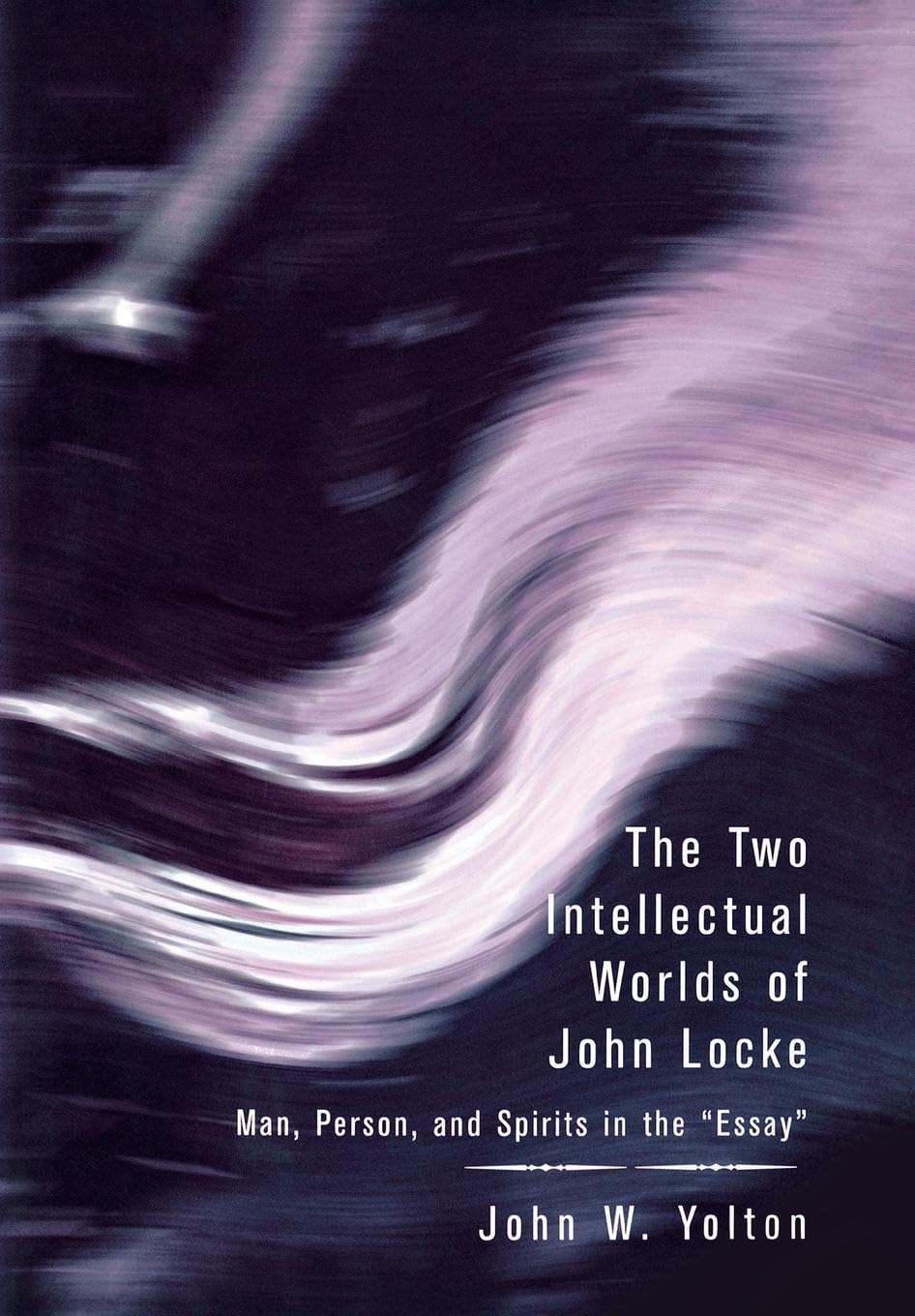
The Two Intellectual Worlds of John Locke First Edition by John Yolton ISBN 978-0801442902 0801442907

Original price was: $50.00.$35.00Current price is: $35.00.
The Two Intellectual Worlds of John Locke First Edition by John W. Yolton – Ebook PDF Instant Download/Delivery: 978-0801442902, 0801442907
Full download The Two Intellectual Worlds of John Locke First Edition after payment
Product details:
ISBN 10: 0801442907
ISBN 13: 978-0801442902
Author: John W. Yolton
Using his intimate knowledge of John Locke’s writings, John W. Yolton shows that Locke comprehends “human understanding” as a subset of a larger understanding of other intelligent Beings―angels, spirits, and an omniscient God. Locke’s books on Christianity (The Reasonableness of Christianity and Paraphrases of St. Paul’s Epistles) have received extensive analysis and commentary, but little attention has been given to the place of his Essay Concerning Human Understanding in his religious and theological beliefs. Yolton shows that Locke’s account of what it is to be human in that work is profoundly religious.
Yolton’s book opens with an attempt to sort out several important terms basic to Locke’s account of identity: man, self, person, and soul. A number of rarely examined components of Locke’s thought emerge: the nature of man, the nature of a human being, and the place of man in the universe among the other creatures. Some will be surprised to learn that the domain of God, angels, and spirits is a part of Locke’s universe, where it is considered the hoped-for destination of the just.
The Two Intellectual Worlds of John Locke also includes Yolton’s exploration of Locke’s commitment to immaterial principles for understanding the world; his obsession with happiness; the dialectical tensions between man, person, and soul; several interesting conjectures about spirits; and the notion of natural philosophy that includes speculation about spirits as well as bodies.
Table of contents:
CHAPTER I. LOCKE’S MAN
1. Body-Mind, Man-Person
2. Action and Agency
3. Secular Self, Moral Self
3.1 On Being Self to Self
3.2 Person and Self
3.3 Self-Concern
4. Physical Man, Rational Man, Moral Man
5. Definitions of Man
6. The Fundamental Constitution of Man
6.1 The Constitution of Children
6.2 Rational Creatures
6.3 Definition and Theory
7. Man as Proprietor
Conclusion
CHAPTER 2. THE UNIVERSE AND OUR WORLD
1. The Universe
2. The Intellectual World as our World
2.1 Natural Philosophy as Speculation
2.2 Conjecture as Method
2.3 Examples of Natural Philosophy
2.4 Immaterial Principles and Immaterial Powers
3. A Second Intellectual World
Conclusion
CHAPTER 3. THE WORLD OF GOD, ANGELS, AND SPIRITS
1. Creatures, Beings and Spirits
1.1 Creatures
1.2 Beings
1.3 Spirits and Angels
2. Locke’s Extravagant Conjecture
3. Two Properties of that World
3.1 Perfection
3.3.1 Happiness: The Happy God
3.3.2 Happiness: The Chief End of Man
Conclusion
CHAPTER 4. SPIRITS AND OUR IDEAS OF THEM
1. Ideas of Spirits
1.1 The Operation of Enlarging Ideas
1.2 Some Limitations
2. Conceivable, Intelligible
2.1 The Impossible
2.2 The Cannot
2.3 The Hard to Conceive
3. Two Other Accounts of Spirits
3.1 Burthogge
3.2 Bekker
Conclusion
CHAPTER 5. SOULS THAT BECOME SPIRITS
1. Soul as Spirit
2. The Relation of Man, Soul, and Body
2.1 Sameness of Man
2.2 Sameness of Spirit
3. Immortality and Bodily Shape
Conclusion
CHAPTER 6. GENERAL CONCLUSION
Notes
Bibliography
Index
People also search for:
the two intellectual worlds
the intellectual we deserve
what are the two theories of intelligence
w two worlds in the illusion
multiple world interpretation
Tags: John Yolton, The Two Intellectual, Worlds of John Locke