
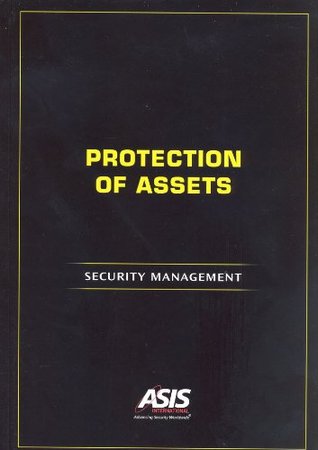
Protection of Assets Security Management 1st Edition by Michael Knoke, Managing Editor, CPP ISBN 978-1934904251 1934904252


Original price was: $50.00.$35.00Current price is: $35.00.
Protection of Assets Security Management 1st Edition by Michael E. Knoke, Managing Editor, CPP – Ebook PDF Instant Download/Delivery: 978-1934904251, 1934904252
Full download Protection of Assets Security Management 1st Edition after payment
Product details:
ISBN 10: 1934904252
ISBN 13: 978-1934904251
Author: Michael E. Knoke, Managing Editor, CPP
Security managers are both security specialists and business managers. To serve their organizations effectively, security managers must also understand business principles. With that knowledge, they can organize their efforts in a way that best supports the overall vision and mission of their organization. Security managers who understand business are best positioned to collaborate with top management and to turn their departments into valuable corporate resources that support organizational success. All security managers with an assets protection responsibility will find the information in this book invaluable Protection of Assets: Security Management was written, edited, and updated by veteran security subject matter experts. This comprehensive source covers all aspects of Security Management including Financial Management, Theft and Fraud Prevention in the Workplace, Private Policing, Consultants as a Protection Resource, Cost Effectiveness and Loss Reporting, and much more.Of particular significance are the various forms, matrices, and checklists that help give the reader a practical start toward application of the security theory.
Table of contents:
Chapter 1. ADMINISTRATIVE MANAGEMENT PRINCIPLES
1.1 Overview.
1.2 Organizational Strategy
1.2.1 Developing the Strategy.
1.2.2 Communicating the Strategy
1.3 Principles of Business Administration
1.3.1 Human Resource Management
1.3.2 Knowledge Management
1.3.3 Corporate Structure
1.4 Conclusion.
Chapter 2. FINANCIAL MANAGEMENT.
2.1 Financial Strategy..
2.2 Financial Statements.
2.2.1 Income Statement
Balance Sheet.
2.2.3 Cash Flow Statement
2.3 Financial Analysis.
2.3.1 Profitability Ratios
2.3.2 Risk Ratios.
2.4 Limitations of Financial Statement Analysis.
2.5 Budgets.
2.5.1 Return on Investment
2.5.2 Creating a Budget
2.6 Implementing Financial Strategy and Financial Controls
Chapter 3. STANDARDS IN SECURITY
3.1 Introduction to Standards.
3.1.1 Characteristics of Standards
3.1.2 Benefits of Standards
3.1.3 Standards Development Issues.
3.2 Development of International Standards: ISO Example
3.2.1 Characteristics of ISO Standards
3.2.2 ISO Standards Development Process
3.3 Development of National Standards: U.S. Example
3.3.1 Characteristics of ANSI Standards
3.2.2 ANSI Standards Development Process
3.4 Management Systems Standards.
3.4.1 Characteristics of Management Systems Standards
3.4.2 Benefits of Management Systems Standards
3.4.3 Plan-Do-Check-Act Cycle.
3.4.4 Well-Known Management Systems Standards.
3.5 ASIS Global Standards Initiative
3.5.1 Process
3.5.2 Product Status
3.5.3 Organizational Resilience Standard
References
Chapter 4. INTRODUCTION TO ASSETS PROTECTION
4.1 Basis for Enterprise Assets Protection
4.1.1 Defining Assets Protection
4.1.2 Relation to Security and Other Disciplines
4.1.3 Historical Perspectives.
4.2 Current Practice of Assets Protection.
4.2.1 Underlying Principles
4.2.2 Assets Protection in Various Settings
4.3 Forces Shaping Assets Protection.
4.3.1 Technology and Touch
4.3.2 Globalization in Business
4.3.3 Standards and Regulation.
4.3.4 Convergence of Security Solutions.
4.3.5 Homeland Security and the International Security Environment
4.4 Management of Assets Protection
4.4.1 Concepts in Organizational Management.
4.4.2 Management Applications in Assets Protection
4.4.3 Security Organization within the Enterprise
4.5 Behavioral Issues in Assets Protection
4.5.1 Behavioral Science Theories in Management.
4.5.2 Applications of Behavioral Studies in Assets Protection.
Appendix A: Insurance as a Risk Management Tool.
References
Chapter 5. COST-EFFECTIVENESS AND LOSS REPORTING
5.1 Understanding the Problem.
5.2 What Cost-Effectiveness Means.
5.3 Elements of Cost-Effectiveness
5.3.1 Return on Investment
5.3.2 Security Metrics
5.4 Boosting Cost-Effectiveness.
5.4.1 Budget Process.
5.4.2 Cost Reduction.
5.4.3 Cost Avoidance.
5.5 Data Capture
5.6 Data Analysis and Display
5.6.1 Claims Avoided.
5.6.2 Proofs of Loss.
5.6.3 Recovered Physical Assets.
5.6.4 Uninsured Claims or Causes of Action.
5.6.5 Other Actions.
5.7 Systematic Incident Reporting
5.7.1 Creating an Incident Database
5.7.2 Functions of an Incident Report
5.7.3 Benefits of Incident Reporting
5.7.4 Policy on Submission of Incident Reports.
5.7.5 Incident Database
5.7.6 Management Reporting from the Database.
5.8 Predictive Modeling by the Security Organization
5.9 Protection Planning without an Incident Database
5.9.1 Pilot Verifications of the Model.
5.9.2 Modifications of a Growing Database
Appendix A: Incident Reporting Form.
Appendix B: Loss Reporting Policy.
References
Chapter 6. THEFT AND FRAUD PREVENTION IN THE WORKPLACE
6.1 Understanding the Problem.
6.1.1 Common Myths
6.1.2 Motivation to Commit Theft and Fraud.
6.2 Employee Theft.
6.2.1 Prevalence of Employee Theft
6.2.2 External Economic Pressure and Opportunity
6.2.3 Youth and Theft Nexus
6.2.4 Job Dissatisfaction and Effects of Social Controls
6.2.5 Summary and Recommendations of Study.
6.3 Fraud and Related Crimes.
6.3.1 Common Elements of Fraud
6.3.2 Sarbanes-Oxley Act
6.4 Scope of the Problem.
6.4.1 Establishing a Model Prevention Program
6.5 Dangers of Undetected Theft and Fraud.
Appendix A: Flowcharts.
Appendix B: 50 Honest Truths About Employee Dishonesty
References/Additional Reading
Chapter 7. PRIVATE POLICING IN PUBLIC ENVIRONMENTS.
7.1 Introduction.
7.1.1 Historical Perspectives.
7.1.2 Conceptual Perspectives
7.1.3 Public/Private Partnerships and Statistics
7.2 Contemporary Circumstances
7.2.1 Economic and Operational Issues
7.2.2 Order Maintenance
7.2.3 Crime (Fear of Crime) and Terrorism
7.3 Principles of Private Policing
7.3.1 Policing Role and Functional Distinctions
7.4 Private Policing Environments
7.4.1 Private Environment: Supplement.
7.4.2 Public Environment: Replacement.
7.4.3 Public Environment: Supplement
7.5 The Future of Private Policing.
7.5.1 New Policing Model
7.5.2 Structural/Operational Components
7.5.3 Legal/Licensing Standards
References/Additional Reading
Chapter 8. CONSULTANTS AS A PROTECTION RESOURCE
8.1 The Value of Consultants
8.2 Types of Security Consultants.
8.2.1 Security Management Consultants
8.2.2 Technical Security Consultants.
8.2.3 Forensic Security Consultants
8.2.4 Advisory Security Committee.
8.3 How to Use a Consultant.
8.4 How to Find a Security Consultant
8.5 Selecting a Security Consultant
8.6 Consulting Fees and Expenses
8.7 Working with Consultants
8.7.1 Coordinating the Project
8.7.2 Organizational Orientation
8.7.3 Levels of Assistance
8.7.4 Scope of Work
8.7.5 Work Plans
8.7.6 Progress Reports
8.7.5 Final Reports
8.8 The Future of Consulting
Appendix A: Alphabetical Soup of Consulting
Appendix B: Application for Consulting Assignment
Appendix C: Curriculum Vitae
Appendix D: Professional Consulting Services Agreement
Appendix E: Consulting Security Agreement-Joint Certification
Appendix F: Conflict of Interest Statement
Appendix G: Professional Services Log
Appendix H: Statement of Professional Services.
Appendix I: Policy on Consultant’s Expenses.
Appendix J: Consultant Travel Policy
References
Chapter 9. EXECUTIVE PROTECTION IN THE CORPORATE ENVIRONMENT
9.1 History of Executive Protection
9.2 Research on Executive Protection.
9.3 Basics of Executive Protection.
9.4 Financial Implications of Executive Protection
9.5 Philosophy of Protection.
9.6 EP Risk Assessment.
9.7 The Power of Information
9.8 Office and Home
9.9 The Advance.
9.10 Working the Principal
9.11 Protection Resources.
9.12 Future of Executive Protection
References
Chapter 10. SECURITY AWARENESS.
10.1 Levels of Awareness.
10.1.1 Executive Management
10.1.2 Middle Management.
10.1.3 First-Line Supervision.
10.1.4 Individual Employees
10.1.5 Non-Employees
10.2 Purposes of Security Awareness
10.3 Developing and Delivering a Security Awareness Program
10.3.1 Techniques, Materials, and Resources.
10.3.2 Obstacles to an Effective Awareness Program
10.3.3 Measuring the Program
10.4 Engaging Employees to Prevent Losses
10.4.1 Positive Security Contacts.
10.4.2 Policies and Procedures
References
Chapter 11. WORKPLACE SUBSTANCE ABUSE: PREVENTION AND INTERVENTION.
11.1 Historical Perspective
11.1.1 A Change of Mood
11.1.2 Legal Controls
11.1.3 War on Drugs.
11.2 Human Cost of Substance Abuse.
11.3 Role of the Employer.
11.4 Why the Workplace?
11.4.1 Rationalization.
11.4.2 Opportunity.
11.5 Path of Workplace Substance Abuse
11.6 Drugs of Abuse
11.6.1 Controlled Substance Act
11.6.2 Depressants.
11.6.3 Narcotics
. 11.6.4 Stimulants
11.6.5 Hallucinogens
11.6.6 Marijuana.
11.6.7 Analogue or Designer Drugs
11.6.8 Prescription Drugs.
11.7 Addiction and Chemical Dependency
11.7.1 Addiction
11.7.2 Chemical Dependency
11.7.3 Functional Abusers.
11.7.4 Denial
11.7.5 Enabling.
11.7.6 Codependency
11.8 Role of Supervisors and Managers
11.8.1 Drug-Free Workplace Policy
11.8.2 Investigation and Documentation.
11.8.3 Employee Hot Lines
11.8.4 Intervention.
11.8.5 When Intervention Fails.
11.8.6 Employee Assistance Programs.
11.8.7 Behavior Modification through Role Modeling.
11.8.8 Reintegration of the Recovering Employee.
11.8.9 Employee Education and Supervisor Training
11.9 Drug Testing.
11.9.1 Methods.
11.9.2 Accuracy.
11.9.3 Strategy
11.9.4 Employer Incentives.
11.9.5 Liability
Appendix A: Drug Glossary.
Appendix B: Common Questions About Drug Testing.
Appendix C: Supervisor’s Checklist
Appendix D: Intervention Checklist.
Appendix E: U.S. Federal Legislation
Appendix F: Sample Substance Abuse Policy.
References
Chapter 12. ADDRESSING WORKPLACE VIOLENCE THROUGH VIOLENCE RISK ASSESSMENT AND MANAGEMENT
12.1 Introduction.
12.2 Conceptual Framework
12.3 Focus Areas
12.4 Liability and Legal Considerations
12.5 Behavioral Dynamic of Workplace Violence.
12.6 Incident Management Team (IMT) and Resources.
12.7 Violence Risk Assessment Process
12.7.1 Notification
12.7.2 Assessment
12.7.3 Intervention and Non-Emergency Situational Resolution
12.7.4 Monitoring
12.7.5 Review and Debriefing.
12.8 Future of Workplace Violence.
Appendix A: Model Policy for Workplace Violence.
References/Additional Reading
People also search for:
protection of assets manual pdf
security protection asset
asset management and protection
asset protection business
security protection assets
Tags: Michael Knoke, Managing Editor, CPP, Protection of Assets, Security Management