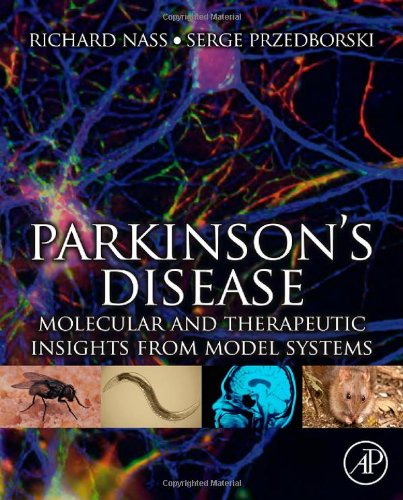
Parkinson s Disease Pathogenic and Therapeutic Insights from Toxin and Genetic Models 1st Edition by Richard Nass, Serge Przedborski – Ebook PDF Instant Download/Delivery: 0080559581, 9780123740281
Full download Parkinson s Disease Pathogenic and Therapeutic Insights from Toxin and Genetic Models 1st Edition after payment

Product details:
ISBN 10: 0080559581
ISBN 13: 9780123740281
Author: Richard Nass, Serge Przedborski
Parkinson’s disease is the second most prevalent neurodegenerative disease and is characterized by the irreversible loss of dopamine neurons. Despite its high prevalence in society and many decades of research, the origin of the pathogenesis and the molecular determinants involved in the disorder has remained elusive. Confounding this issue is the lack of experimental models that completely recapitulate the disease state. The identification of a number of genes thought to play a role in the cell death, and development of both toxin and genetic models to explore the function of the genes both in unaffected and diseased cells are now providing new insights into the molecular basis of the neurodegeneration, as well as therapeutic approaches. In this reference, we will describe the advances and the advantages that various invertebrates, cell culture, rodents, and mammals provide in the identification of the molecular components and mechanisms involved in the cell death, and outline the opportunities that these systems provide in drug discovery.
* Comprehensive and critical assessment of the utility of various model systems to identify the molecular components and pathways involved in Parkinson’s disease
* Describes the power of toxin and genetic models to identify novel therapeutic targets and compounds that can be used in PD
* Current overviews of current status of PD research and discovery from bench-to-bedside
* Provides novel insights and views on where the future of PD research may lead
* Provides a powerful teaching tool and template to explore the utility of model systems to identify molecular pathways, molecular targets, and therapeutics that are applicable to a variety of neurological diseases
Parkinson s Disease Pathogenic and Therapeutic Insights from Toxin and Genetic Models 1st Table of contents:
Part I: Introduction to Parkinson’s Disease and Modeling
- Chapter 1: The Clinical and Pathological Features of Parkinson’s Disease
- (Overview of symptoms, diagnosis, disease progression, neuropathology including Lewy bodies and alpha-synuclein)
- Chapter 2: Why Do We Need Models for Parkinson’s Disease?
- (Challenges in studying human PD, advantages and limitations of different model systems)
- Chapter 3: Genetic Basis of Parkinson’s Disease
- (Review of monogenic forms of PD and risk genes, e.g., SNCA, LRRK2, Parkin, PINK1, DJ-1)
Part II: In Vitro and Cellular Models
- Chapter 4: Primary Neuronal Cultures as PD Models
- (Dopaminergic neuron cultures, neurotoxin-induced models, e.g., MPP+, rotenone)
- Chapter 5: Immortalized Cell Lines in PD Research
- (PC12 cells, SH-SY5Y cells, their use in screening and pathway analysis)
- Chapter 6: Yeast and Invertebrate Models of Parkinson’s Disease
- (Saccharomyces cerevisiae, Caenorhabditis elegans, Drosophila melanogaster models for genetic and toxicant-induced PD)
- (Focus on alpha-synuclein toxicity, mitochondrial dysfunction, lysosomal pathways)
- Chapter 7: Induced Pluripotent Stem Cells (iPSCs) for Modeling Parkinson’s Disease
- (Patient-specific iPSC-derived neurons, organoids, drug screening)
Part III: Vertebrate Animal Models
- Chapter 8: Rodent Models of Parkinson’s Disease: Neurotoxin-Induced Lesions
- (6-OHDA, MPTP, rotenone, paraquat models; characterization of motor and non-motor deficits)
- Chapter 9: Rodent Models of Parkinson’s Disease: Genetic Manipulations
- (Transgenic models expressing alpha-synuclein, LRRK2, Parkin knockouts/knock-ins; viral vector delivery)
- Chapter 10: Non-Human Primate Models of Parkinson’s Disease
- (MPTP-induced parkinsonism in monkeys; advantages and relevance for drug testing)
- Chapter 11: Other Vertebrate Models (e.g., Zebrafish)
- (Zebrafish models for high-throughput screening and developmental studies)
Part IV: Molecular Mechanisms and Pathways from Model Systems
- Chapter 12: Alpha-Synuclein Biology and Pathology in Models
- (Aggregation, propagation, strain hypotheses, role in neurodegeneration)
- Chapter 13: Mitochondrial Dysfunction in PD Models
- (Mitochondrial complex I inhibition, PINK1/Parkin pathways, oxidative stress)
- Chapter 14: Protein Degradation Systems: Ubiquitin-Proteasome and Lysosome-Autophagy Pathways
- (Dysfunction in PD models, role of Parkin, DJ-1, LRRK2)
- Chapter 15: Neuroinflammation in PD Models
- (Role of microglia, astrocytes, cytokines in neurodegeneration)
- Chapter 16: Oxidative Stress and Dopamine Metabolism
- (Role of reactive oxygen species, iron, and dopamine oxidation products)
- Chapter 17: Endoplasmic Reticulum Stress and Unfolded Protein Response
- (Contribution to neuronal death in PD models)
Part V: Therapeutic Insights from Model Systems
- Chapter 18: Neuroprotection Strategies in PD Models
- (Testing of antioxidants, anti-inflammatory agents, mitochondrial modulators)
- Chapter 19: Gene Therapy Approaches in PD Models
- (Delivery of neurotrophic factors, enzymes; viral vector design and targeting)
- Chapter 20: Cell Replacement Therapies in PD Models
- (Transplantation of dopaminergic neurons, iPSC-derived cells, ethical considerations)
- Chapter 21: Deep Brain Stimulation (DBS) and Other Device-Based Therapies in Models
- (Mechanisms of action, optimization in animal models)
- Chapter 22: Drug Repurposing and High-Throughput Screening Using Models
- (Examples of compounds identified and validated in model systems)
- Chapter 23: Future Directions and Challenges in PD Modeling
- (Improving model validity, developing humanized models, bridging the gap to clinical trials)
People also search for Parkinson s Disease Pathogenic and Therapeutic Insights from Toxin and Genetic Models 1st:
parkinson s disease pathogenic and therapeutic
parkinson’s disease pathogen
parkinson’s disease pathogenesis
parkinson’s pathogenesis
parkinson’s disease therapeutic area
Tags: Richard Nass, Serge Przedborski, Parkinson, Disease