
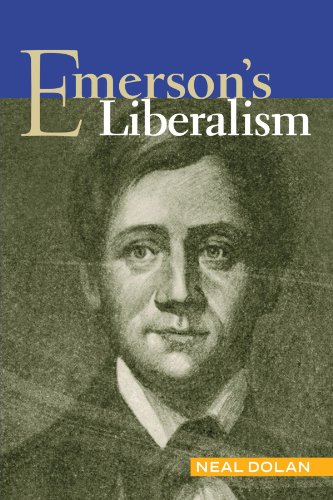
Emerson s Liberalism Studies in American Thought and Culture 1st Edition by Neal Dolan ISBN 978-0299228040 0299228045


Original price was: $50.00.$35.00Current price is: $35.00.
Emerson s Liberalism Studies in American Thought and Culture 1st Edition by Neal Dolan – Ebook PDF Instant Download/Delivery: 978-0299228040, 0299228045
Full download Emerson s Liberalism Studies in American Thought and Culture 1st Edition after payment
Product details:
ISBN 10: 0299228045
ISBN 13: 978-0299228040
Author: Neal Dolan
Emerson’s Liberalism explains why Ralph Waldo Emerson has been and remains the central literary voice of American culture: he gave ever-fresh and lasting expression to its most fundamental and widely shared liberal values. Liberalism, after all, is more than a political philosophy: it is a form of civilization, a set of values, a culture, a way of representing and living in the world. This book makes explicit what has long been implicit in America’s embrace of Emerson.
Neal Dolan offers the first comprehensive and historically informed exposition of all of Ralph Waldo Emerson’s writings as a contribution to the theory and practice of liberal culture. Rather than projecting twentieth-century viewpoints onto the past, he restores Emerson’s great body of work to the classical liberal contexts that most decisively shaped its general political-cultural outlook—the libertarian-liberalism of John Locke, the Scottish Enlightenment, the American founders, and the American Whigs.
In addition to in-depth consideration of Emerson’s journals and lectures, Dolan provides original commentary on many of Emerson’s most celebrated published works, including Nature, the “Divinity School Address,” “History,” “Compensation,” “Experience,” the political addresses of the early 1840s, “An Address . . . on . . . The Emancipation of the Negroes in the British West Indies,” Representative Men, English Traits, and The Conduct of Life. He considers Emerson’s distinctive elaborations of foundational liberal values—progress, reason, work, property, limited government, rights, civil society, liberty, commerce, and empiricism. And he argues that Emerson’s ideas are a morally bracing and spiritually inspiring resource for the ongoing sustenance of American culture and civilization, reminding us of the depth, breadth, and strength of our common liberal inheritance.
Table of contents:
I he Political Reception of Emerson
1 Progress
Journals (1820-1824); “Self-Reliance” (1841)
2 Reason I, Science
Journals (1826-1832)
3 Reason II, Virtue
Nature (1836)
4 Property, Culture
The Philosophy of History (1836-1837); Human Culture (1837-1838); Human Life (1838-1839); The Present Age (1839-1840); “The Divinity School Address” (1838); “History” (1841); “Compensation” (1841)
5 Reason III, Skepticism
“Experience” (1844)
6 Limited Government
“Man the Reformer” (1841); “Lecture on the Times” (1841); “The Conservative” (1841); “The Transcendentalist” (1842); “The Young American” (1844); “Politics” (1844); “New England Reformers” (1844)
7 Natural Rights, Civil Society
“An Address… on… the Emancipation of the Negroes in the British West Indies” (1844)
8 Empiricism
Representative Men (1850)
9 Liberty, Commerce
Biography (1835); English Literature (1835-1836); English Traits (1856)
People also search for:
emerson liberal arts
emerson’s life
emerson library of america
emerson college liberal
emerson college liberal arts