
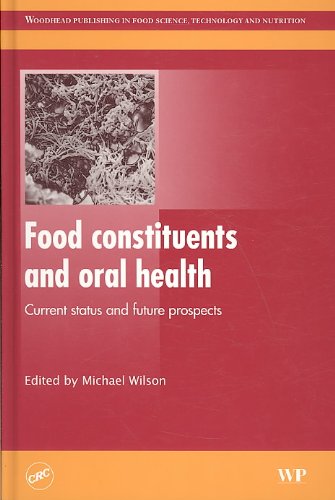
Food Constituents and Oral Health Current Status and Future Prospects 1st Edition by Wilson ISBN 978-9812383440 184569418X
Original price was: $50.00.$35.00Current price is: $35.00.
Food Constituents and Oral Health Current Status and Future Prospects 1st Edition by M. Wilson – Ebook PDF Instant Download/Delivery: 978-9812383440, 184569418X
Full download Food Constituents and Oral Health Current Status and Future Prospects 1st Edition after payment
Product details:
ISBN 10: 184569418X
ISBN 13: 978-9812383440
Author: M. Wilson
Oral diseases can have a significant impact on self esteem and quality of life, are widespread and may be expensive to treat. New methods to reduce their incidence are therefore needed and the protective effect of food constituents is an important area of study. This essential collection reviews the latest research into the effects of food constituents on diseases and conditions of the mouth.
Part one introduces oral conditions and diseases, with chapters on topics such as diseases caused by oral bacteria, viral and fungal infections of the oral cavity and dental erosion. Part two focuses on the effects of specific foods and food components, including sugar alcohols, casein phosphopeptides and antioxidants. The final part of the book covers the technology and development of foods and supplements for oral health and oral healthcare products containing food-derived bioactives.
With its distinguished editor and international team of contributors, Food constituents and oral health is an indispensable reference for dentists, professionals in the oral health product, dietary supplement and functional foods industries and academics with an interest in oral health or functional foods.
Essential collection reviews the latest research into the food constituents on diseases and conditions of the mouth
Examines oral conditions and diseases with specific chapters assessing bacterial, viral and fungal infections
Reviews the effects of specific foods and food components including sugar alcohols and antioxidants
Table of contents:
Part I The nature of the problem – oral diseases and the impact of nutrition
1 Diseases caused by oral bacteria
P. D. Marsh, HPA CEPR & Leeds Dental Institute, UK
1.1 The mouth as a microbial habitat
1.2 The resident oral microbiota
1.3 Development of the oral microbiota
1.4 Distribution of the oral microbiota
1.5 Benefits of the resident oral microbiota
1.6 The oral microbiota and disease
1.7 Conclusions
1.8 References
2 Viral and fungal infections of the oral cavity.
S. Porter, UCL Eastman Dental Institute, UK
2.1 Introduction to viral infections
2.2 Herpes virus infection
2.3 Human papilloma virus.
2.4 Hepatitis viruses
2.5 Human immunodeficiency virus (HIV)
2.6 Fungal infections
2.7 Paracoccidioidomycosis.
2.8 Aspergillosis
2.9 Mucormycosis
2.10 References
3 Non-infectious diseases of the oral mucosa
P. M. Speight and P. M. Farthing, University of Sheffield, UK
3.1 Introduction
3.2 White patches of the oral mucosa.
3.3 Oral cancer
3.4 Swellings of the oral mucosa
3.5 Oral ulceration
3.6 Disorders of the salivary glands.
3.7 Oral lesions associated with systemic disease
3.8 References
4 Dental erosion
A. Lussi, University of Bern, Switzerland
4.1 Introduction
4.2 Diagnosis
4.3 Risk factors
4.4 Biological factors.
4.5 Chemical factors
4.6 Behavioural factors
4.7 Summary.
4.8 Acknowledgement
4.9 References
Part II Food components and oral health
5 Nutrition and its effect on oral health and disease
P. Moynihan, Newcastle University, UK
5.1 Introduction
5.2 Enamel developmental defects
5.3 The role of diet in dental caries
5.4 Diet and dental erosion
5.5 The impact of nutrition on oral mucosal conditions.
5.6 The impact of nutrition on periodontal health and disease
5.7 Diet and general health
5.8 Conclusion
5.9 References
6 Relating breath malodour to food constituents and oral health
J. Greenman and S. Benkara Mostafa Saad, University of the West Indies, UK
6.1 Breath malodour and its measurement
Contain
6.2 The central paradigm for intra-oral generation by microbes
6.3 Diet, oral health and malodour.
6.4 Salivary flow, substrate and product clearance from the mouth
6.5 More complex model (quasi-steady states with perturbations)
6.6 Interventions and management.
6.7 Future trends
6.8 References.
7 Sugar alcohols and dental health
K. A. Ly and P. Milgrom, University of Washington, USA
7.1 Introduction to sugars and sugar-free sweeteners.
7.2 Sugar alcohols and cariogenicity
7.3 Xylitol efficacy in the prevention of tooth decay
7.4 Xylitol clinical applications.
7.5 Deciphering xylitol-containing products for potential efficacy
7.6 Key points and conclusions…
7.7 References.
8 Dairy products and oral health
T. Dietrich, Boston University Goldman School of Dental Medicine, USA and University of Birmingham, UK;
A. Sheshah, Riyadh Security Forces Hospital, Saudi Arabia; and M. Nunn, Boston University Goldman School of Dental Medicine, USA
8.1 Introduction
8.2 Intake of dairy products and risk of dental caries
8.3 Intake of dairy products and risk of periodontitis
8.4 Future trends….
8.5 Acknowledgement..
8.6 References
9 Impact of food sugars and polysaccharides on dental caries.
P. Lingström, University of Gothenburg, Sweden
9.1 Fermentable carbohydrates: a key factor in the caries process
9.2 The different carbohydrates in the diet
9.3 Relative cariogenicity of different sugars
9.4 Starches and dental caries.
9.5 Impact on caries from a historical perspective
9.6 Impact in the modern era
9.7 Cariogenic risks of foods and beverages.
9.8 Consumption frequency versus amount consumed
9.9 Influence of fluoride on the sugars-caries relationship
9.10 Individuals at increased risk
9.11 Impact in the 21st century
9.12 References.
10 Casein phosphopeptides in oral health.
N. J. Cochrane and E. C. Reynolds, The University of Melbourne, Australia
10.1 Introduction
10.2 Casein phosphopeptide stabilised amorphous calcium phosphate nanocomplexes (CPP-ACP) structure
10.3 Scientific evidence for casein phosphopeptide-amorphous calcium phosphate activity in preventing demineralisation and promoting remineralisation
10.4 Mechanism of action
10.5 Recommendations for clinical use
10.6 Future trends
10.7 Conclusions
10.8 References.
11 Antioxidants and periodontal disease
M. M. Grant and I. L. C. Chapple, University of Birmingham, UK
11.1 The nature of antioxidants
11.2 Antioxidants and periodontitis
11.3 Micronutrients in future therapeutic approaches to periodontitis
11.4 Sources of further information and advice
11.5 Future trends
11.6 References
12 Anticaries and antiadhesive properties of food constituents and plant extracts and implications for oral health…
C. Signoretto and P. Canepari, University of Verona, Italy;
C. Pruzzo, University of Genoa, Italy; and G. Gazzani, University of Pavia, Italy
12.1 Introduction
12.2 Plaque-dependent oral pathologies
12.3 Classic approaches for the prevention of tooth and gum pathologies
12.4 Phenolic content of food and plant extracts
12.5 Main foods and plant extracts with anticaries and antiplaque activity
Cont
12.6 Effects of bacterial target inhibition by food and beverage components
12.7 Mode of delivery of polyphenols to the oral cavity
12.8 Implications of using natural food components for oral health
12.9 Future trends
12.10 Acknowledgements.
12.11 References.
13 Food preservatives and dental caries
W. H. Bowen, University of Rochester, USA
13.1 Introduction
13.2 Spices
13.3 Clove
13.4 Antibiotics
13.5 Chelation agents
13.6 Weak acids
13.7 Sulfites
13.8 Hypersensitivity
13.9 Conclusions
13.10 References.
14 Food, nutrition and oral cancer
S. Warnakulasuriya, King’s College London Dental Institute, UK
14.1 Introduction
14.2 The causes of cancer
14.3 Food and the risk of cancer.
14.4 Vegetarian diet and oral cancer.
14.5 Animal studies
14.6 Anti-cancer agents in plant foods: mechanisms of action
14.7 Carcinogens in foods: additives and preparation.
14.8 Drinks and the risk of cancer
14.9 Chemoprevention.
14.10 Prevention of second primary tumours
14.11 Summary and conclusions
14.12 References.
15 Vitamin supplements and oral health
C. O. Enwonwu, University of Maryland, USA
15.1 Introduction
15.2 Classification of vitamins
15.3 Recommended dietary intakes.
15.4 Nutritional supplements.
15.5 Use of vitamin supplements
15.6 Brief review of the biological functions of vitamins
15.7 Oral manifestations of vitamin deficiencies
15.8 Conclusions
15.9 Assessment of vitamin status.
15.10 References
16 Trace elements and oral health
M. Faber, Medical Research Council, South Africa;
F. A. M. Wenhold, University of Pretoria, South Africa
16.1 Introduction
16.2 Trace element content of teeth
16.3 Fluoride
16.4 Iron
16.5 Copper
16.6 Zinc
16.7 Selenium
16.8 Lead
16.9 Conclusions
16.10 References.
17 Alcohol and oral health
S. Petti, ‘Sapienza University, Italy; and C. Scully, UCL
Eastman Dental Institute, UK
17.1 Introduction
17.2 Overall effect of alcohol on general health…
17.3 Systemic effects of alcohol, influencing orofacial health
17.4 Direct effects of alcohol influencing orofacial health
17.5 References
18 Malnutrition as an etiological factor in dental caries disparity
P. Milgrom, P. Weinstein and S. E. Coldwell, University of Washington, USA
18.1 Introduction
18.2 Stress and depression
18.3 Counseling caregiver about diet
18.4 Impact of poor diet.
18.5 Model of caries disparity.
18.6 Ecological model of what people eat: tooth decay is part of a larger problem
18.7 Family influences on taste preferences
18.8 Food access
Cont
18.9 Food marketing
18.10 Conclusions
18.11 References
19 Tea as a functional food for oral health
C. D. Wu and G. Wei, University of Illinois at Chicago, USA
19.1
Introduction
19.2 Anticariogenic potential of tea
19.3 Tea and periodontal diseases.
19.4 Tea and halitosis
19.5 Tea and oral cancer
19.6 Antimicrobial activity against fungi associated with oral infections
19.7 Antimicrobial activity against viruses associated with oral infections
19.8 Conclusion
19.9 References
Part III Technology and product development
20 Probiotics and oral health
J.H. Meurman, University of Helsinki, Finland
20.1 Probiotics: the concept
20.2 Probiotic species.
20.3 Putative mechanisms of probiotic action
20.4 Probiotics as support therapy for systemic diseases…
20.5 Probiotic strains and oral microbiology
20.6 Experimental and clinical studies of the effect of probiotics on oral and dental diseases
20.7
Safety aspects
20.8 Future trends
20.9 Conclusion
20.10 References.
21 Oral care gum products.
K. K. Mäkinen, University of Turku, Finland
21.1 Introduction: notes on early history; rationale for the use of oral care gums.
21.2 Oral care gums in relation to other oral care adjuvants; advantages and disadvantages.
21.3 ‘In sputo veritas’ – gum-chewing stimulates salivation and the chemical defence of saliva
21.4 Target groups for the administration of oral care gums
21.5 Examples of special oral care gum products.
21.6 Clinical caries trials: school programmes.
21.7 Effect after ‘sugar challenge’
21.8 Biochemical effects in short-term polyol gum use
21.9 Gum products and remineralisation.
21.10 Public endorsement of oral care gum products.
21.11 Practical instructions for studies on oral care gums; incompatibilities among gum ingredients
21.12 References
22 Novel drug delivery systems for therapeutic intervention in the oral environment
S. Kalachandra, H. R. Howell, O. M. Patel, J. Li and
D. A. Barrow, University of North Carolina, USA
22.1 Polymeric systems appropriate for oral drug delivery: history and background.
22.2 Oral diseases that are potential candidates for local drug delivery
22.3 Design goals for modern oral drug delivery systems
22.4 Actual devices based on biocompatible materials
22.5 Use of additives to accelerate release and solubility of problematic (water-insoluble) drugs.
22.6 Maintaining and assuring stability of drugs during device manufacturing.
22.7 Future trends: multi-drug devices
22.8 Dedication
22.9 Acknowledgements.
22.10 References
23 Formulating tooth-friendly beverages, confectionery and oral care products
M. E. Barbour, University of Bristol, UK
23.1 Introduction
23.2 Properties of beverages which may compromise dental health
23.3 Properties of confectionery which may compromise dental health
23.4 Properties of oral care products which may compromise dental health.
23.5 Acids and dental erosion: approaches to, and mechanisms of, reducing acid-mediated tooth dissolution
Conte
23.6 Sugars and dental caries: approaches to, and mechanisms of, reducing carious tooth loss.
23.7 Formulating tooth-friendly beverages.
23.8 Formulating tooth-friendly confectionery.
23.9 Formulating tooth-friendly oral care products
23.10 Future trends
23.11 References.
24 Functional foods and oral health
H. Whelton, University College Cork, Ireland
24.1 Introduction
24.2 Foods associated with oral diseases and disorders
24.3 Foods which can be used to prevent and treat oral disease.
24.4 Minerals and caries
24.5 Minerals and periodontal disease
24.6 Minerals and tooth surface loss
24.7 Animal products and caries.
24.8 Animal products and other oral diseases
24.9 Plant products and caries
24.10 Plant products and periodontal disease
24.11 Plant products and oral cancer.
24.12 Regulation of functional foods for oral health
24.13 References
People also search for:
food constituents and oral health
constituents in food
what are the essential constituents of food
the constituents of food that sustain humans physiologically
oral health and nutrition
Tags: Wilson, Food Constituents, Oral Health