
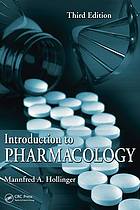
Introduction to pharmacology 3rd Edition by Mannfred Hollinger ISBN 978-1138457171 1138457175
Original price was: $50.00.$35.00Current price is: $35.00.
Introduction to pharmacology 3rd Edition by Mannfred A. Hollinger – Ebook PDF Instant Download/Delivery: 978-1138457171, 1138457175
Full download Introduction to pharmacology 3rd Edition after payment
Product details:
ISBN 10: 1138457175
ISBN 13: 978-1138457171
Author: Mannfred Hollinger
Advances in pharmacogenomics and proteomics, along with the introduction of recombinant DNA technology, have expanded the applications of pharmacology to encompass a range of disciplines. Biomedical researchers, protein specialists, and molecular biologists are all involved in the development and delivery of novel drugs. Therefore, students in a variety of life sciences now require grounding in pharmacology.
Adding much new material, Introduction to Pharmacology, Third Edition familiarizes students with the curative action of specific drugs, along with current research and the multifaceted role of pharmacology in society.
New to the third edition
Chapters on smooth muscle pharmacology covering gastrointestinal and pulmonary pharmacology
Pharmacology advances at the molecular level
The historical background of the Watson Crick model of DNA
Cutting edge topics such as RNA interference and dopamine signaling
The text begins with a discussion on the absorption, distribution, metabolism, and elimination of drugs. Much emphasis is placed on pharmacokinetic aspects: how drugs produce an effect and the quantification of these effects for comparative purposes. Also the text describes substance abuse pharmacology and the evolution of drug laws. Several chapters deal with the development of drugs and challenges faced in drug discovery.
Identifying both the therapeutic and toxicological aspects of drug use, Introduction to Pharmacology employs contemporary examples to help students become familiar with drug development and treatment, as well as possible adverse affects, and the impact of drug research and use on society today and into the future.
Table of contents:
Part I Fundamentals of Pharmacokinetics.
Chapter 1
Introduction.
History
Definitions
Background
History-Role of Plants.
Contemporary Issues Regarding Plants.
Microorganisms.
Marine Sources
Animal Sources
Development of Formularies
Pharmacopoeias.
Sources of Drug Information in America.
Alternative Sources
Classification
The Placebo Effect
Zombies.
Selected Bibliography.
Sample Questions.
Chapter 2 Absorption and Distribution
Absorption
Background.
The Oral Route.
Transmembrane Processes
Partition Coefficient
Additional Major Factors Affecting Absorption
The Effect of pH.
Injection
Topical Absorption.
Bioavailability
Gene Therapy
Vectors
The Future
Distribution
Chirality
Blood-Brain Barrier
Placental Transfer
Ethanol.
Tobacco.
Cocaine.
Selected Bibliography.
Questions
Chapter 3 Metabolism and Elimination
General Principles.
Phase 1 Reactions.
P450 Enzymes
P450 Induction.
Genetics of P450
P450 Oxidation.
Phase 2 Reactions.
Glutathione.
Bioactivation and Biotoxification
Enzyme Induction
Enzyme Inhibition
Renal Elimination.
Glomerular Filtration.
Tubular Secretion.
Reabsorption
Clearance, Elimination Rate Constant, and Half-Life.
Blood Alcohol Level.
Extrarenal Clearance of Drugs
Selected Bibliography.
Questions
Chapter 4 Drug Interactions
Interactions with Herbal Medications.
Interactions during Distribution and Metabolism.
Interaction in the Gastrointestinal Tract
Interactions during Excretion.
Drug-Food Interactions.
Summation and Potentiation
Drug Interactions with Natural (Herbal) Products
Over-the-Counter (OTC) Drug Interactions with Prescription Drugs
Selected Bibliography.
Questions
Part II Fundamentals of Pharmacodynamics and Toxicodynamics…
Chapter 5 Drug Receptors
Introduction.
History
Nature of Receptors.
Importance of Membrane-Protein Drug Targets
Chemical Bonds.
Ionic Bonds.
Hydrogen Bonds
van der Waals Forces.
Covalent Bond
Receptor Classes
Ligand-Gated lon Channel Receptors
Voltage-Dependent Ion Channel Receptors
G-Protein-Coupled Second Messenger Receptors
Receptors with Tyrosine Kinase Activity
Receptor Dynamism
Opiate and Tetrahydrocannabinol Receptors
Selected Bibliography.
Questions
Chapter 6 Dose-Response Relationship.
Background.
Measurement
Graphical Representation-Graded Response
Quantal Response.
Agonists.
Antagonists
Noncompetitive and Allosteric Inhibitors.
Inverse Agonism
Selected Bibliography.
Questions
Chapter 7 Drug Toxicity
Background
Dose..
Genetics.
Malaria
Age
Allergy
Identification of Antigens.
Antihistamines
Decongestants.
Immune-Related Drug Injury
Primary Mechanisms of Direct Drug-Induced Cell Injury
Covalent Binding
Lipid Peroxidation
Oxidative Stress.
Apoptosis
Teratogenesis
Recent Teratogens.
The Bendectin Story
Pregnancy Category.
Selected Bibliography.
Questions
Chapter 8 Treating Drug Toxicity
Background
Aspirin
Iron Supplements
Age-Related Drug Poisoning
Management Trends.
Initial Decontamination.
Enhanced Elimination.
Antidotal Therapy.
Decline in the Use of Ancient Antidotes
Modern Antidotes.
Toxicological Testing
Role of the Poison Control Center
Selected Bibliography.
Questions
Part III Drugs That Replace, Cure, or Treat Symptoms
Chapter 9
Hormones
Background
Diabetes Mellitus
Oral Hypoglycemic Agents.
Blood Glucose Meters, Inhaled Insulin, and Insulin Pumps
History of Insulin
The Thyroid Gland
Hypothyroidism
Hyperthyroidism
The Adrenal Cortex
Cushing’s Disease.
Birth Control Hormones
Estrogen Receptor.
Parkinson’s Disease.
Selected Bibliography.
Questions
Chapter 10 Chemotherapeutic Agents: Antibiotics and Anticancer Drugs
Antibiotics.
History
Penicillin
Mechanism of Action of Antibiotics
Resistance to Antimicrobial Agents.
Genetics of Bacterial Resistance
Selection of Appropriate Antibiotic.
Bioterrorism.
Anticancer Drugs
Alkylating Agents.
Antimetabolites
Selected Bibliography.
Questions
Chapter 11
Drug Treatment of Symptoms: Neuropharmacology and Substance Abuse.
Neuropharmacology
Background.
A Brief History of Neuropharmacology
Basic Anatomy of the Nervous System
Neurons.
Glial Cells
Morphological Considerations.
Nutritional and Biochemical Aspects
Role of Myelin.
The Synapse
Specific Neurotransmitter Systems.
Acetylcholine.
Glutamate
Gamma-Aminobutyric Acid
Glycine.
Mechanism of Action of Selected Neuropharmacological Agents
Designer Drugs
Alcohol
Barbiturates
Benzodiazepines
Cannabinoids
Cocaine
Anesthetics and Analgesics.
How Do Gaseous Anesthetics Produce Their Effects?
The GABA Receptor.
Intravenous Anesthetics.
Local Anesthetics.
Analgesics.
Botulinum Toxin
Nicotine.
Cholinesterase Inhibitors
Schizophrenia and Antipsychotic Drugs (Neuroleptics)
Antidepressant Drugs.
Mania
Methylphenidate (Ritalin)
Cure.
Substance Abuse
Background.
Reward Pathway
Tolerance.
Drug Dependence
Caffeine
Methadone Maintenance.
Addiction Liability.
War on Drugs.
Decriminalization
Drugs in Sports
Background.
History
Stimulants
Narcotics
Anabolic Agents
Diuretics
Miscellaneous Drugs.
Blood Doping
Herbal and Nutritional Supplements
Selected Bibliography.
Questions
Chapter 12 Cardiovascular Drugs.
Coronary Heart Disease.
Beta-Adrenergic Blockers.
Calcium Channel Blockers.
Nitrites and Nitrates
Aspirin
Plavix.
Lipid-Lowering Agents.
Antihypertensives
Diuretics.
Organomercurials.
Carbonic Anhydrase Inhibitors
Thiazide Diuretics.
Beta-Adrenergic Receptor Blockers
Alpha-Adrenergic Receptor Antagonists.
Alpha-Adrenergic Receptor Agonists (Centrally-Acting Drugs)
Direct Vasodilators
Calcium Channel Blockers
The Renin-Angiotensin System.
Angiotensin II-Receptor Antagonists.
Congestive Heart Failure
Digitalis Glycosides
Diuretics
Vasodilators
Antiarrhythmic Agents.
Selected Bibliography.
Questions
Chapter 13 Pulmonary Pharmacology
Nasopharyngeal Region.
Tracheobronchial Region
Mucolytics
Pulmonary Region
Capillary Endothelial Cells
Innervation
Pulmonary Drugs.
Anti-Inflammatory Drugs.
Beta, Agonists.
Muscarinic Antagonists.
Theophylline
Cromolyn Sodium.
Leukotriene Antagonists
Treatment Devices
Selected Bibliography.
Questions
Chapter 14 Gastrointestinal Pharmacology
Gastric Acid.
Proton Pump Inhibitors
Histamine H₂-Receptor Antagonists
Prostaglandin Analogs
Antacids.
Miscellaneous Drugs
Gastroesophageal Reflux Disease.
Peptic Ulcer Disease
Antidiarrheal Agents
Treatment of Constipation
General Mechanism of Action
Osmotically Active Agents.
Selected Bibliography.
Questions
Part IV Drug Development.
Chapter 15 Drug Discovery by the Pharmaceutical Industry.
Introduction.
Drug Screening.
Biological Approaches to Drug Design.
Stroke.
Antisense Deoxynucleotides, Ribozymes, and RNA Interference.
RNA Interference (RNAi).
Membrane Fusion.
Structural Approaches to Drug Design
Background.
Inhibitors of Purine Nucleoside Phosphorylase
X-Ray Crystallography.
Three-Dimensional Databases and Recombinant Protein Engineering
Combinatorial Chemistry
Antibody-Directed Drug Design.
Molecular Pharmacology, Recombinant DNA Technology, and Biotechnology
Molecular Pharmacology.
Recombinant DNA.
Transgenic Animals
Chirality
Pharmafoods
Selected Bibliography.
Questions
Chapter 16 Pharmaceutical Development of Drugs and the FDA
Introduction.
Drug Labeling.
Drug Safety.
Drug Efficacy
Evaluation of 1938-1962 Drugs
Preclinical Testing.
Clinical Trials.
Phase I
Phase II.
Phase III
The Scientific Evaluation of Drugs in Humans.
Placebo-Controlled Trials.
Observer Bias.
Use of Statistical Analysis
Effect of Efficacy Requirements on Drug Development
Time and Cost of Drug Development.
New FDA Programs.
Institutional Review Boards.
Selected Bibliography.
Questions
Chapter 17 Animals in Research
Introduction.
History
300 BC to AD 1800
1800-1900
Opposition to Animal Use in Research.
Animal Rights Movement.
Contemporary Status
Biomedical Research
Benefits of Animal Research
Scientific Criticisms of Animal Research.
Alternative Methodologies in Animal Research
Regulation of Research Animals
Human Experimentation in Medicine.
Selected Bibliography.
Questions
Chapter 18 Alternative Medicine
Introduction.
History
Europe and Herbal Medicine
National Center for Complementary and Alternative Medicine (NCCAM)
Vitamins.
Selected Bibliography.
Questions
Part V Appendices, Glossary, and Calculations
Appendix I: The History of Drug Abuse Laws in the United States.
Introduction
Opium (Nineteenth Century).
Morphine (Nineteenth Century)
Cocaine (Latter-Half Nineteenth Century)
Pure Food and Drug Act (1906).
Shanghai Opium Commission (1909)
International Opium Conference (1911)
Harrison Narcotic Act (1914).
Prohibition (1919-1933)
Post-Harrison Act (1920-1929).
Federal Marijuana Tax Act (1930-1937)
Post-World War II (1945-1969)
The Controlled Substances ACT (CSA-1970)
The 1970s
The 1980s and 1990s
The Next Millennium.
Sales to Minors
Selected Bibliography.
Questions
People also search for:
introduction to pharmacology pdf
introduction to pharmacology and clinical calculations
introduction to pharmacology edapt
introduction to pharmacology ucf
introduction to pharmacology ati quizlet
introduction to pharmacology administration of drugs
Tags: Mannfred Hollinger, Introduction to pharmacology