
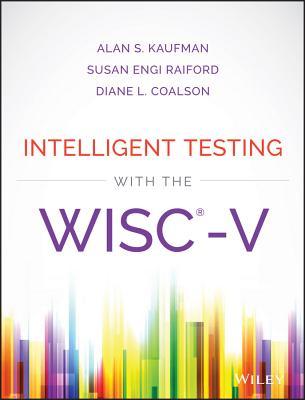
Intelligent Testing with the Wisc 1st Edition by V Alan Kaufman, Susan Engi Raiford ISBN 978-1118589236 1118589238

Original price was: $50.00.$35.00Current price is: $35.00.
Intelligent Testing with the Wisc 1st Edition by V Alan S. Kaufman, Susan Engi Raiford- Ebook PDF Instant Download/Delivery: 978-1118589236, 1118589238
Full download Intelligent Testing with the Wisc 1st Edition after payment
Product details:
ISBN 10:1118589238
ISBN 13: 978-1118589236
Author: V Alan S. Kaufman, Susan Engi Raiford
Interpret the WISC–V to help diagnose learning disabilities and to translate profiles of test scores to educational action
The Wechsler Intelligence Scale for Children―Fifth Edition (WISC–V) is a valuable tool for assessing children and adolescents with learning disorders―and Intelligent Testing with the WISC–V offers the comprehensive guidance you need to administer, score, and interpret WISC–V profiles for informing diagnoses and making meaningful educational recommendations. This essential resource provides you with cutting-edge expertise on how to interpret the WISC–V, which has an expanded test structure, additional subtests, and an array of new composites. Intelligent Testing offers valuable advice from experienced professionals with regard to clinically applying the WISC–V in an effort to understand a child’s strengths and weaknesses―and to create a targeted, appropriate intervention plan. Ultimately, this book equips you with the information you need to identify the best theory-based methods for interpreting each child’s profile of test scores within the context of his or her background and behaviors. Intelligent Testing provides a strong theoretical basis for interpreting the WISC–V from several vantage points, such as neuropsychological processing theory and the Cattell-Horn-Carroll (CHC) model, yet it permits you to interpret children’s profiles using simple, straightforward steps.
The most frequently used IQ test in the world, the WISC–V (like previous versions of the WISC) plays an integral role in evaluating children for learning and intellectual disabilities, developmental and language delays, and gifted and talented classifications. As such, understanding how to use the latest version of WISC is extremely important when assessing children and adolescents ages 6 to 16 years.
- Explore all aspects of both the conventional WISC–V and WISC–V Digital
- Read objective, independent test reviews of the WISC–V from independent, highly-respected expert sources
- Review 17 clinical case reports that spotlight experiences of children and adolescents referred to psychologists for diverse reasons such as reading problems, specific learning disabilities, ADHD, intellectual giftedness, and autistic spectrum disorders
- Learn how a broad-based, multi-faceted approach to interpretation that calls upon several scientific concepts from the fields of cognitive neuroscience, clinical and school neuropsychology, neuropsychological processing, and the CHC model, can benefit children by providing meaningful recommendations to parents, teachers, and often to the children and adolescents themselves
- Use the results of WISC–V as a helping agent to assist in creating the best intervention plan, rather than allowing test results to dictate placement or labeling
Intelligent Testing with the WISC–V is an indispensable resource for professionals who work with the WISC–V, including school psychologists, clinical psychologists, educational diagnosticians, and more.
Table of contents:
Part I. Introduction To Intelligent Testing and The WISC–V
1.Intelligent Testing
Part II. Administration And Scoring
2. Intelligent WISC–V Administration: Test Kit Version
3. WISC–V Scoring: Test Kit Version
4. WISC–V Digital Administration and Scoring
Part III. Basic WISC–V Test Interpretation
5. WISC–V Sex, Ethnic, and Socioeconomic Status (SES) Differences
6. The Creation of New Risk Scales for School Failure and Juvenile Delinquency: The Child and Adolescent Academic and Behavior Questionnaires
- Jennie Kaufman Singer, Alan S. Kaufman, Susan Engi Raiford, and Diane L. Coalson
- Does WISC–V Scatter Matter?
- Troy Courville, Diane L. Coalson, Alan S. Kaufman, and Susan Engi Raiford
- Basic Steps for WISC–V Interpretation
Part IV. Theoretical Frameworks For WISC–V Interpretation
9. Interpreting the WISC–V from the Perspective of Cattell-Horn-Carroll Theory
-
Case 1—Liam, Age 9
-
Case 2—Alicia, Age 13
-
Case 3—Luke, Age 9
-
Interpreting the WISC–V from a Cognitive Neuroscience Perspective
-
Case 4—Josh, Age 8
-
Case 5—Tawna, Age 13
-
Case 6—Tom, Age 8 (Digital Administration)
-
Interpreting the WISC–V from a Neuropsychological Perspective
-
Case 7—Jaime, Age 10
-
Case 8—Christopher, Age 11
-
Case 9—Isabella, Age 13
-
Interpreting the WISC–V from Dan Miller’s Integrated School Neuropsychological/CHC Model
-
Case 10—John, Age 12
-
Interpreting the WISC–V Using George McCloskey’s Neuropsychologically Oriented Process Approach to Psychoeducational Evaluations
-
Case 11—Colin, Age 8
-
Case 12—Derek, Age 13
-
Interpreting the WISC–V for Children with Reading or Language Problems: Five Illustrative Case Reports
-
Introduction to the Five Case Reports on Children with Reading or Language Problems
-
Conceptual and Clinical Integration of All 17 Case Reports in the Book
-
Case 13—Ellie, Age 10
-
Case 14—Jordan, Age 15
-
Case 15—Jane, Age 8
-
Case 16—Lizzie, Age 8
-
Case 17—Patrick, Age 9
Part V. Independent WISC–V Test Reviews
15. Our WISC–V Review
16. Review of the WISC–V (Ron Dumont and John O. Willis)
17. Review of the WISC–V (Daniel C. Miller and Ryan J. McGill)
18. Independent WISC–V Test Review: Theoretical and Practical Considerations
19. Some Impressions of, and Questions About, the WISC–V
20. Review of the Wechsler Intelligence Scale for Children–Fifth Edition: Critique, Commentary, and Independent Analyses
21. Overview and Integration of the Independent Reviews of WISC–V
Part VI. Afterword: Alan Kaufman Reflects On David Wechsler and His Legacy
People also search for:
when did intelligence testing start
when did iq testing begin
how did intelligence testing come to be
what does intelligence testing tell us
what does intelligence testing best predict
Tags: V Alan Kaufman, Susan Engi Raiford, Intelligent Testing, the Wisc