
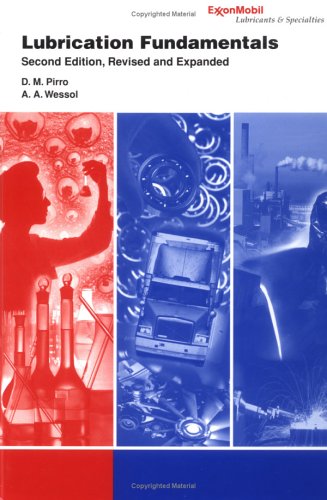
Lubrication Fundamentals Second Edition by Don Pirro, Ekkehard Daschner, Wessol ISBN 978-0824705749 0824705742


Original price was: $50.00.$35.00Current price is: $35.00.
Lubrication Fundamentals Second Edition by Don M. Pirro, Ekkehard Daschner, A.A. Wessol – Ebook PDF Instant Download/Delivery: 978-0824705749, 0824705742
Full download Lubrication Fundamentals Second Edition after payment
Product details:
ISBN 10: 0824705742
ISBN 13: 978-0824705749
Author: Don M. Pirro, Ekkehard Daschner, A.A. Wessol
Building on the cornerstone of the first edition, Lubrication Fundamentals Second Edition outlines the emergence of higher performance-specialty application oils and greases and emphasizes the need for lubrication and careful lubricant selection. Thoroughly updated and rewritten since the previous edition reached its 10th printing, the book discusses product basics, machine elements that require lubrication, methods of application, lubricant storage and handling, and lubricant conservation. Keeping the characteristics that made the first edition a classic reference, this second edition provides current information in the format readers have come to trust.
About the authors . . .
D. M. PIRRO is the Equipment Builder and OEM Manager, ExxonMobil Corporation, Fairfax, Virginia. The author or contributing editor of several scholarly articles on synthetic lubes, environmental awareness applications, grease technology, lubricant interchangeability, and oil analysis, Mr. Pirro is a Certified Lubrication Specialist and a member of the Society of Tribologists and Lubrication Engineers and the Association of Manufacturing Technology. He received the B.S. degree (1978) in mechanical engineering and the B.A. degree (1978) in business administration from Rutgers University, New Brunswick, New Jersey.
A. A. WESSOL is a part-time Lubrication Consultant for the ExxonMobil Corporation in Manassas, Virginia. Mr. Wessol retired from the Mobil Corporation after 24 years in various advanced technical positions. The author or coauthor of numerous professional papers on the environmental aspects of lubrication, plant engineering, hydraulics, and pneumatics, he received the B.S. degree (1972) in mathematics, physics, and chemistry from the University of Pittsburgh, Pennsylvania.
Table of contents:
1 Introduction
1. Premodern History of Petroleum
II. Petroleum in North America
III. Development of Lubricants
IV. Future Prospects
2 Refining Processes and Lubricant Base Stocks
1. Crude Oil
II. Refining
III. Lubricant Base Stocks
IV. Lube Refining Processes
V. Lubricating Base Stock Processing
3 Lubricating Oils
1. Additives
II. Physical and Chemical Characteristics
III. Evaluation and Performance Tests
IV. Engine Tests for Oil Performance
V. Automotive Gear Lubricants
VI. Automatic Transmission Fluids
4 Lubricating Greases
1. Why Greases Are Used
II. Composition of Grease
III. Manufacture of Grease
IV. Grease Characteristics
V. Evaluation and Performance Tests
5 Synthetic Lubricants
I. Synthesized Hydrocarbon Fluids
II. Organic Esters
III. Polyglycols.
IV. Phosphate Esters
V. Other Synthetic Lubricating Fluids
6 Environmental Lubricants
I. Environmental Considerations
II. Definitions and Test Procedures
III. Base Materials
IV. Product Selection Process
V. Converting to EA Lubricants
7 Hydraulics
I. Principles
II. System Components
Controlling Pressure and Flow
IV. Actuators
V. Hydraulic Drives
VI. Oil Reservoirs
VII. Oil Qualities Required by Hydraulic Systems
VIII. Special Characteristics in Hydraulic Fluids
IX. Hydraulic System Maintenance
8 Lubricating Films and Machine Elements: Bearings, Slides, Ways, Gears, Couplings, Chains, Wire Rope
I. Types of Lubricating Film
II. Plain Bearings
III. Rolling Element Bearings
IV. Slides, Guides, and Ways
V. Gears
VI. Lubricant Characteristics for Enclosed Gears
VII. AGMA Specifications for Lubricants for Open Gearing
VIII. Cylinders
IX. Flexible Couplings
X. Drive Chains
XI. Cams and Cam Followers
XII. Wire Ropes
9 Lubricant Application
I. All-Loss Methods
II. Reuse Methods
II. Other Reuse Methods
IV. Centralized Application Systems
10 Internal Combustion Engines
1. Design and Construction Considerations
II. Fuel and Combustion Const
III. Operating Considerations
IV. Maintenance Considerations
V. Engine Oil Characteridics
VI. Oil Recommendations by Field of Engine Use
11 Stationary Gas Turbines
1. Principles of Gas Turbines
II. Jet Engines for Industrial Use
III. Gas Turbine Applications
IV. Labrication of Gas Turbines
12 Steam Turbines
1. Steam Turbine Operation
II. Turbine Control Systems
III. Lubricated Components
13 Hydraulic Turbines
1. Turbine Types
II. Lubricated Parts
III. Lubricant Recommendations
14 Nuclear Reactors and Power Generation
1. Reactor Types
II. Radiation Effects on Petroleum Products
III. Lubrication Recommendation
15 Automotive Chassis Components
1. Suspension and Steering Linkages
II. Steering Gear
III. Wheel Bearings
IV. Brake Systems
V. Miscellaneous Components
16 Automotive Transmissions and Drive Trains
1. Clutches
II. Transmissions
III. Drive Shafts and Universe Joints
IV. Transasles
V. Other Gear Cases
VI. Automotive Gear Labricans
VII. Torque Converter and Automatic Transmission Fluids
VIII. Multipurpose Tractor Fluids
17 Compressors
I. Reciprocating Air and Gas Compressors
II. Rotary Compressors
III. Dynamic Compressors
IV. Refrigeration and Air Conditioning Compressors
18 Handling, Storing, and Dispensing Lubricants
1. Handling
II. Storing
III. Dispensing
19 In-Plant Handling and Purification for Lubricant Conservation
L. Overview of In-Plant Handling
II. Product Selection
In-Service Handling
IV. In-Service Purification
V. Purification Methods
VI. Reclamation and Re-Refining of Lubricating Oils
VII. Waste Collection and Routing
VIII. Final Disposal
People also search for:
solid lubrication fundamentals and applications
lubrication fundamentals revised and expanded pdf
lubrication fundamentals ppt
lubrication fundamentals revised and expanded
lubrication fundamentals third edition
Tags: Don Pirro, Ekkehard Daschner, Wessol, Lubrication Fundamentals