
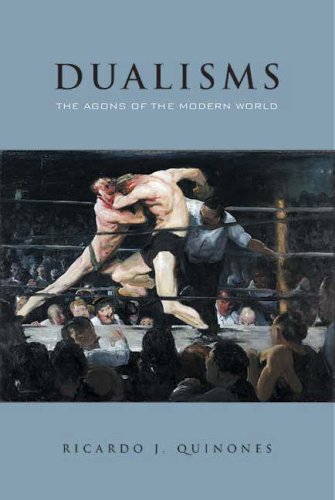
Dualisms The Agons of the Modern World 1st Edition by Ricardo Quinones ISBN 0802097634 978-0802097637


Original price was: $50.00.$35.00Current price is: $35.00.
Dualisms The Agons of the Modern World 1st Edition by Ricardo J. Quinones – Ebook PDF Instant Download/Delivery: 0802097634, 978-0802097637
Full download Dualisms The Agons of the Modern World 1st Edition after payment
Product details:
ISBN 10: 0802097634
ISBN 13: 978-0802097637
Author: Ricardo J. Quinones
Dualism is a motif that runs through literature of all genres and historical contexts, inspiring argumentation at the highest level and showing the formation of ideas in association as a creative exchange. It arises with special pertinence in western literature since the Renaissance and Reformation. In Dualisms, noted scholar Ricardo J. Quinones considers four major intellectual encounters: Erasmus and Luther, Voltaire and Rousseau, Turgenev and Dostoevsky, and Sartre and Camus. These four instances, Quinones argues, are important for what they are and what they represent: major intellectual contests that created the modern era and remain the ‘agons’ of our time.
Through in-depth analysis, this study looks at the clarifications that emerged from four famous polemics. Discerning an ‘itinerary of their encounters,’ Quinones suggests a shared paradigm of development that is true for each of the examples of dualism. In all four cases, the two participants represented the vanguard of their time, and all of the debates started from shared intellectual positions until subsequent events revealed substantially different temperaments. It is the inescapable tension and connection between prior affinities and the discord of debate that continue to intrigue us.
Dualisms is a tour-de-force, encompassing intellectual history, philosophy, theology, and literary criticism. It provides fresh perspectives on some of the most famous intellectual debates in all of literature, and considers the implications that they continue to have for the study of the humanities in the modern world.
Table of contents:
Chapter 1: Erasmus and Luther: First and Foremost, a Pattern Established
1. Public Intellectuals and Reform
2. The Gifts of History
3. Two ‘Moments’: Erasmus
4. Arguments, Stylistic Tropes, and the Carousel of Erasmus’s Mind
5. Acclaim and Controversy
6. Luther’s Calling
7. The Great Year
8. The Gathering Heat of Argument
9. The Unending Debate
Chapter 2: Voltaire and Rousseau: Never a Peace
1. Three Phases
2. Original Affinities
3. The Agonist of the Age
4. Voltaire: From Mundanity to Cultural Greatness
5. Rousseau’s Break Through: The First Discours
6. A Dualism Determined
7. Rousseau’s Religious Genius: ‘Un novateur contre les novateurs’
8. Candide: The Necessary Response
9. Rousseau Out on a Limb
10. Émile: A Reconstructed Rousseau
11. Voltaire on Attack
12. The Wages of Persecution: The Confessions
Chapter 3: Passages of History: From Mundanity to Philosophy
Chapter 4: Turgenev and Dostoevsky: ‘What Is There in Common?’
1. Separate Account
2. Displacement, New Intellectual Plateaus, and Recurrence
3. Success and Its Consequences
4. Turgenev Between Hamlet and Quixote
5. Turgenev’s Major Novels: Culture and Criticism
6. The Enlarged Scope of Ideas
7. Dissension and Its Causes
8. The Great Emergence
9. Thought Transformed
Chapter 5: Sartre and Camus: ‘Revolt Changes Camps’
1. Preamble to the Review
2. Cameos in Triage
3. Readjustments
4. Camus in Triplicate
5. Worlds in Common
6. Second Generation Modernists: Emergence and Paradox
7. The Sartrean Moment
8. Sartre, a Major Novelist
9. Camus: A ‘Cabeza clara’
10. Sartre of the Antinomies
11. The reat Debate
12. Final Words: The Fall and Words
13. Hybridity Prevails
Epilogue
Dualisms and the Humanities
People also search for:
dualism/monism
dualism of god
dualism theology
dualism in john
modern dualism
Tags:
Ricardo Quinones,Dualisms The Agons,the Modern World