
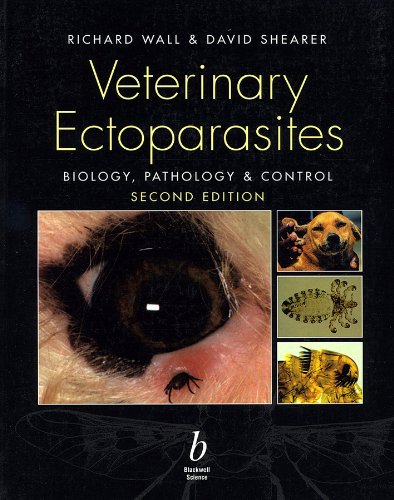
Veterinary Ectoparasites Biology Pathology and Control 2nd Edition by Richard Wall, David Shearer ISBN 978-0632056187 0632056187


Original price was: $50.00.$35.00Current price is: $35.00.
Veterinary Ectoparasites Biology Pathology and Control 2nd Edition by Richard Wall, David Shearer – Ebook PDF Instant Download/Delivery: 978-0632056187, 0632056187
Full download Veterinary Ectoparasites Biology Pathology and Control 2nd Edition after payment
Product details:
ISBN 10: 0632056187
ISBN 13: 978-0632056187
Author: Richard Wall, David Shearer
Ectoparasites are of growing significance in modern veterinary medicine and a detailed understanding of the biology of these parasites is fundamental to their appropriate treatment and control. The authors of this book have therefore provided a complete overview of the biology, and behaviour of arthropod ectoparasites along with the pathology and treatment of diseases in livestock and companion animals of temperate habitats.
This is the only up-to-date book available written specifically for practitioners and students of veterinary medicine, animal husbandry and applied animal sciences. Such a unique volume is essential because in veterinary parasitology, ectoparasites such as the lice, mites, ticks, fleas or dipteran agents of myiasis assume far greater prominence than in other parasitological disciplines. Ectoparasite infestation of domestic and companion animals, therefore, has overt clinical features requiring a distinct approach to diagnosis and control. This book has been written with this in mind. The text takes a unique integrated approach combining both ectoparasite biology and veterinary dermatology.
In the second edition of this successful book (previously, entitled Veterinary Parasitology), the detailed coverage of individual ectoparasite species has been expanded. Up-to-date information of new veterinary drugs and modes of application has been included and the practical clinical relevance of the information has been strengthened.
Table of contents:
Chapter 1: The Importance and Diversity of Arthropod Ectoparasites
1.1 Introduction
1.2 Ectoparasite–Host Relationships
1.3 Ectoparasite Damage
1.4 The Evolution of Ectoparasite–Host Relationships
1.5 A Modern and Growing Problem?
1.6 An Introduction to Arthropod Structure and Function
1.6.1 Arthropod Segmentation
1.6.2 The Arthropod Exoskeleton
1.6.3 Jointed Legs
1.6.4 Spiracles and Gas Exchange
1.6.5 The Arthropod Circulatory System
1.6.6 The Arthropod Nervous System
1.6.7 Digestion and Absorption
1.6.8 Arthropod Sense Organs
1.6.9 Arthropod Reproduction
1.6.10 Arthropod Size
1.7 Patterns of Arthropod Development
1.7.1 Moulting
1.7.2 Simple and Complex Life-Cycles
1.8 The Classification of Diversity
1.9 The Origins of Arthropods
1.10 Living Arthropod Groups
1.10.1 Arachnids
1.10.2 Insects
1.10.3 Other Living Arthropod Classes
1.11 Arthropod Distributions
Further Reading and References
Chapter 2: Mites (Acari)
2.1 Introduction
2.2 Morphology
2.3 Life History
2.4 Pathology
2.5 Classification
2.5.1 Astigmata
2.5.2 Prostigmata
2.5.3 Mesostigmata
2.6 Recognition of Mites of Veterinary Importance
2.7 Astigmata (Sacroptiformes)
2.7.1 Sarcoptidae
Guide to the Suborders of Acari
Guide to Species and Families of Veterinary Importance
2.7.2 Psoroptidae
Guide to the Identification of Life-Cycle Stages of Psoroptes Mites
2.7.3 Knemidocoptidae
2.7.4 Listrophoridae
2.7.5 Astigmatid Mites of Minor Veterinary Interest
2.8 Prostigmata (Trombidiformes)
2.8.1 Demodicidae
2.8.2 Cheyletiellidae
2.8.3 Trombiculidae
2.8.4 Psorergatidae
2.8.5 Prostigmatid Mites of Minor Veterinary Interest
2.9 Mesostigmata (Gamesid Mites)
2.9.1 Macronyssidae
2.9.2 Dermanyssidae
2.9.3 Mesostigmatid Mites of Minor Veterinary Interest
Further Reading and References
Chapter 3: Ticks (Acari)
3.1 Introduction
3.2 Morphology
3.2.1 Ixodidae
3.2.2 Argasidae
3.3 Life History
3.3.1 Ixodidae
3.3.2 Argasidae
3.4 Pathology
3.4.1 Cutaneous Effects of Tick Feeding
3.4.2 Systemic Effect: Vectors of Disease
3.4.3 Systemic Effects: Tick Paralysis
3.4.4 Other Systemic Effects
3.5 Classification
3.6 Recognition of Ticks of Veterinary Importance
Guide to Tick Identification
3.7 Ixodidae
3.7.1 Ixodes
3.7.2 Dermacentor
3.7.3 Haemaphysalis
3.7.4 Rhipicephalus
3.7.5 Boophilus
3.7.6 Amblyomma
3.7.7 Hyalomma
3.8 Argasidae
3.8.1 Argas
3.8.2 Otobius
3.8.3 Ornithodoros
Further Reading and References
Chapter 4: Adult Flies (Diptera)
4.1 Introduction
4.2 Morphology
4.3 Life History
4.4 Pathology
4.5 Classification
4.5.1 Cyclorrhapha
4.5.2 Brachycera
4.5.3 Nematocera
4.6 Recognition of Flies of Veterinary Importance
4.7 Cyclorrhapha
Guide to Families of Adult Diptera of Veterinary Importance
4.7.1 Muscidae
4.7.2 Fanniidae
4.7.3 Hippoboscidae (Keds and Forest Flies)
4.7.4 Glossinidae (Tsetse Flies)
4.7.5 Cyclorrhaphous Flies of Minor Veterinary Interest
4.8 Brachycera
4.8.1 Tabanidae (Horse Flies, Deer Flies and Clegs)
4.9 Nematocera
4.9.1 Simuliidae (Black Flies)
4.9.2 Ceratopogonidae (Biting Midges)
4.9.3 Culicidae (Mosquitoes)
4.9.4 Psychodidae (Sand Flies)
4.10 Other Diptera of Veterinary Interest
4.10.1 Eye Gnats
Further Reading and References
Chapter 5: Myiasis
5.1 Introduction
5.2 Morphology
5.3 Life History
5.4 Pathology
5.5 Classification
5.6 Recognition of Dipterous Agents of Myiasis
Guide to Third-Stage Larvae Causing Myiasis in Domestic Animals
Guide to Genera of Adult Diptera Causing Myiasis in Domestic Animals
5.7 Oestridae
5.7.1 Oestrinae
5.7.2 Gasterophilinae
Guide to the Third-Stage Larvae of the Most Important Gasterophilus Species
5.7.3 Hypodermatinae
5.7.4 Cuterebrinae
5.8 Calliphoridae
5.8.1 Cochliomyia
5.8.2 Chrysomya
5.8.3 Lucilia
5.8.4 Phormia and Protophormia
5.8.5 Calliphora
5.8.6 Cordylobia
5.9 Sarcophagidae
5.9.1 Wohlfahrtia
Further Reading and References
Chapter 6: Fleas (Siphonaptera)
6.1 Introduction
6.2 Morphology
6.3 Life History
6.4 Pathology
6.5 Classification
6.6 Recognition of Fleas of Veterinary Importance
6.7 Pulicidae
6.7.1 Ctenocephalides
Guide to the Flea Species of Veterinary Importance
6.7.2 Spilopsyllus
6.7.3 Echidnophaga
6.7.4 Pulex
6.7.5 Xenopsylla
6.8 Ceratophyllidae
6.8.1 Ceratophyllus
6.8.2 Nosopsyllus
6.9 Flea Species of Minor Veterinary Interest
Further Reading and References
Chapter 7: Lice (Phthiraptera)
7.1 Introduction
7.2 Morphology
7.3 Life History
7.4 Pathology
7.5 Classification
7.6 Recognition of Lice of Veterinary Importance
Guide to the Genera of Lice of Veterinary Interest
7.7 Amblycera
7.7.1 Menoponidae
7.7.2 Boopidae
7.7.3 Gyropidae
7.8 Ischnocera
7.8.1 Philopteridae
7.8.2 Trichodectidae
7.9 Anoplura
7.9.1 Haematopinindae
7.9.2 Linognathidae
7.9.3 Polyplacidae
Further Reading and References
Chapter 8: The Diagnosis and Control of Ectoparasite Infestation
8.1 Introduction
8.2 Diagnosis of Ectoparasite Infestation
8.2.1 Hair Examination
8.2.2 Acetate Strip Examination
8.2.3 Superficial Skin Scraping (Epidermal Surface Examination)
8.2.4 Deep Skin Scraping (Deep Epidermal Examination)
8.2.5 Collection of Free-Living Ectoparasites
8.2.6 Biopsy and Histopathology
8.3 The Chemical Control of Ectoparasites – Ectoparasiticides
8.3.1 Ectoparasiticides: Early Compounds
8.3.2 Ectoparasiticides: Neurotoxins
8.3.3 Ectoparasiticides: Insect Growth Regulators
8.3.4 Repellents
8.3.5 Desiccants
8.4 Mode of Ectoparasiticide Application
8.4.1 Topical Preparations
8.4.2 Systemic Preparations
8.4.3 Environmental Preparations
8.5 Problems with Chemical Control
8.5.1 Poisoning and Environmental Contamination
8.5.2 Resistance
8.6 Non-Chemical Control of Ectoparasites
8.6.1 Physical Control
8.6.2 Barriers
8.6.3 Biological Control
8.6.4 Vaccination
8.6.5 Trapping
8.6.6 Sterile Insect Technique
8.6.7 Modelling and Forecasting
8.7 Cattle
8.7.1 Mites
8.7.2 Ticks
8.7.3 Flies
8.7.4 Myiasis
8.7.5 Fleas
8.7.6 Lice
8.8 Sheep
8.8.1 Mites
8.8.2 Ticks
8.8.3 Flies
8.8.4 Myiasis
8.8.5 Fleas
8.8.6 Lice
8.9 Horses
8.9.1 Mites
8.9.2 Ticks
8.9.3 Flies
8.9.4 Myiasis
8.9.5 Fleas
8.9.6 Lice
8.10 Pigs
8.10.1 Mites
8.10.2 Ticks
8.10.3 Flies
8.10.4 Myiasis
8.10.5 Fleas
8.10.6 Lice
8.11 Goats
8.11.1 Mites
8.11.2 Ticks
8.11.3 Flies
8.11.4 Myiasis
8.11.5 Fleas
8.11.6 Lice
8.12 Dogs
8.12.1 Mites
8.12.2 Ticks
8.12.3 Flies
8.12.4 Myiasis
8.12.5 Fleas
8.12.6 Lice
8.13 Cats
8.13.1 Mites
8.13.2 Ticks
8.13.3 Flies
8.13.4 Myiasis
8.13.5 Fleas
8.13.6 Lice
8.14 Rabbits
8.14.1 Mites
8.14.2 Flies
8.14.3 Myiasis
8.14.4 Fleas
8.14.5 Lice
8.15 Guinea-pigs
8.15.1 Mites
8.15.2 Flies
8.15.3 Myiasis
8.15.4 Fleas
8.15.5 Lice
8.16 Mice and Rats
8.16.1 Mites
8.16.2 Flies
8.16.3 Myiasis
8.16.4 Fleas
8.16.5 Lice
8.17 Hamsters and Gerbils
8.17.1 Mites
8.17.2 Flies
8.17.3 Myiasis
8.17.4 Fleas
8.18 Ferrets
8.18.1 Mites
8.18.2 Ticks
8.18.3 Myiasis
8.18.4 Fleas
8.19 Birds
8.19.1 Mites
8.19.2 Ticks
8.19.3 Flies
8.19.4 Myiasis
8.19.5 Fleas
8.19.6 Lice
8.20 Reptiles
8.20.1 Mites
8.20.2 Ticks
8.20.3 Flies
8.20.4 Treatment of Reptile Ectoparasites
Further Reading and References
People also search for:
veterinary ectoparasites biology pathology and control
veterinary ectoparasites manufacturers
veterinary ectoparasites pdf
ectoparasites veterinary definition
ectoparasites of veterinary importance
Tags: Richard Wall, David Shearer, Veterinary Ectoparasites, Biology Pathology