
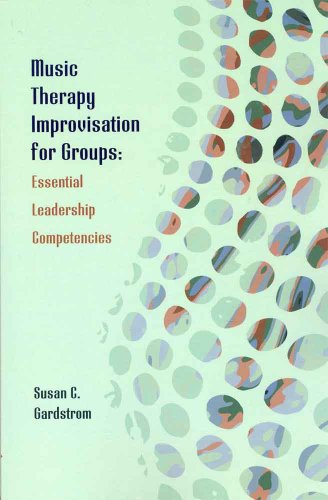
Music Therapy Improvisation for Groups Essential Leadership Competencies 1st Edition by Susan Gardstrom ISBN 978-1891278495 1891278495

Original price was: $50.00.$35.00Current price is: $35.00.
Music Therapy Improvisation for Groups Essential Leadership Competencies 1st Edition by Susan C. Gardstrom – Ebook PDF Instant Download/Delivery: 978-1891278495, 1891278495
Full download Music Therapy Improvisation for Groups Essential Leadership Competencies 1st Edition after payment
Product details:
ISBN 10: 1891278495
ISBN 13: 978-1891278495
Author: Susan C. Gardstrom
While more and more certified music therapists appear to be using improvisational methods, few published resources exist to guide training and development, especially at the undergraduate/entry level. This unprecedented book provides clinicians, educators, and trainers with knowledge-based and skill-based competencies in group improvisation leadership and a suggested sequence for instruction in these specific competencies. The focus is on the use of percussion instruments, which are employed more often by music therapists than other instruments in group improvisation. The overarching aim is to help the reader become a facilitator who uses music in an authentic, communicative, flexible, and intentional way. Authentic means with genuineness of expression, communicative refers to the desire and ability to make meaningful contact with the other players, flexible relates to playing a responsive and adaptable manner, and intentional means with a clear clinical purpose in mind. Altogether, the competencies pinpointed in this book fall into three categories: Preparatory Skills, Facilitative Skills, and Verbal Processing Skills. Preparatory Skills refer to those decisions and actions of the therapist that precede the actual music improvisation. They revolve around the ability of the therapist to comprehend terms and nomenclature germane to the method, manipulate tools and settings used for improvisation including musical instruments and musical elements, and determine suitable structures for improvisation. Facilitative Skills revolve around the ability of the therapist to employ nonmusical and musical techniques in order to engage clients, and being able to listen, comprehend, and describe what is heard. Verbal Processing Skills refer to those skills required to effectively sort out and discuss improvisation. These skills help the therapist to recognize and call attention to significant aspects of the experience with clients and may assist communication with co-therapists, and/or supervisors. The book contains clinical vignettes and 80 exercises designed to reinforce competency in the aforementioned areas
Table of contents:
CHAPTER ONE: Introduction
Essential Competencies
Suggestions for Using This Book
CHAPTER TWO: Terms and Nomenclature of Improvisation
Foundational Definitions
Methods, Procedures, Techniques
Referential and Nonreferential Improvisations
Givens
Improvisation Versus a Drum Circle
CHAPTER THREE: Instruments of Improvisation
Instrumentation
Mallets
Getting to Know Your Instruments
Ambidexterity
Selecting the Instruments
Quality
Number
Types
Client Age
Cautions
Needs and Objectives
The Therapist’s Instrument
Arranging the Environment
Presenting the Instruments
Sound Vocabulary
CHAPTER FOUR: Musical Elements of Improvisation
Rhythmic Elements
Language and Rhythm
Tonal Elements
Textural Elements
Dynamic Elements
Timbral Elements
CHAPTER FIVE: Structures for Improvisation
Session Structures
Selecting and Presenting Givens and Referents
Selection
Presentation
CHAPTER SIX: Nonmusical Facilitation Skills (Verbal & Gestural)
Starting and Stopping
Starting
Stopping
Communicating During Improvisation
Movement
Physical Assistance
CHAPTER SEVEN: Musical Facilitation Skills
Techniques of Empathy
Imitating
Synchronizing
Incorporating
Pacing
Reflecting
Structuring Techniques
Rhythmic Grounding
Tonal Centering
Elicitation Techniques
Repeating
Modeling
Making Spaces
Interjecting
Redirection Techniques
Introducing Change
Intensifying
Intimacy Techniques
Sharing Instruments
Bonding
Soliloquizing
Procedural Techniques
Receding
Referential Techniques
Free Associating
Emotional Exploration Techniques
Holding
Doubling
Contrasting
Splitting
Transferring
CHAPTER EIGHT: Making Sense of What We Hear: The IAPS
Improvisation Assessment Profiles (IAPs)
Intramusical Relationships
Intermusical Relationships
The Profiles
Salience
Integration
Variability
Tension
Congruence
Autonomy
Summary and Caveats
CHAPTER NINE: Verbal Skills
To Process or Not to Process
Focal Point of Verbal Processing
Role of the Therapist
Verbal Techniques
Probe
Reflection of Feeling
Clarification
Checking Out
Self-Disclosure
Summary
CHAPTER TEN: Closing
Appendix A-Essential Competencies for Clinical Improvisation
Appendix B-Exercises
Appendix C-Referents for Clinical Music Improvisation
Appendix D-Harmonic Progressions/Vamps
Appendix E-Givens/Parameters
Appendix F-IAP Profiles and Scales
References
People also search for:
improvisational models of music therapy
improvisational music therapy autism
free improvisation music therapy
improvisation music therapy examples
international conference on improvisation in music therapy
Tags: Susan Gardstrom, Music Therapy, Improvisation for Groups, Leadership Competencies