
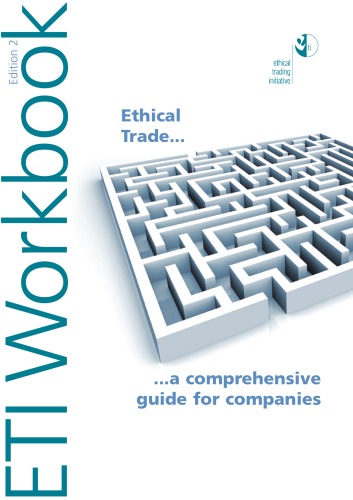
Ethical trade a comprehensive guide for companies Second Edition by Ethical Trading Initiative ISBN 9780954516949, 095451694X

Original price was: $50.00.$35.00Current price is: $35.00.
Ethical trade a comprehensive guide for companies Second Edition by Ethical Trading Initiative- Ebook PDF Instant Download/Delivery: 9780954516949, 095451694X
Full download Ethical trade a comprehensive guide for companies Second Edition after payment
Product details:
ISBN 10: 095451694X
ISBN 13: 9780954516949
Author: Ethical Trading Initiative
Ethical Trade: A Comprehensive Guide for Companies (Second Edition, 2006), published by the Ethical Trading Initiative, is a practical workbook designed to help businesses integrate ethical sourcing and labour standards into their operations. Structured as a hands-on guide, it includes actionable frameworks, real-world case studies, tools, and best practices to support companies in implementing the ETI Base Code—which aligns with International Labour Organization conventions. The guide emphasizes strategic use of audits, supplier engagement, worker-centred processes, business practice alignment, and multi-stakeholder collaboration to drive meaningful change in global supply chains
Table of contents:
Chapter 1: Agency Architecture
-
Agency Architecture: Getting It Right from the Beginning
-
The Pitch: Matching the Hatch and Deciding What Would Make the Client Bite Down on Your Lure
-
Creative Department: How Long Can It Survive as Idea Central?
-
Media Department: Can It Replace Creative as the Primary Source for Brand-Building?
-
Account Management: The Scary Squad
-
Strategy Department: At the Center or at the Margins of the Agency?
-
Research Department: Knowledge Is Not Insight
-
Digital Department: What Happened to the Digital Revolution?
-
Internal Communications: The Importance of Being Human
-
Managing the Work: From Briefs to Traffic
-
The Need for a New Model
-
Suggested Action Points
Chapter 2: The Role of Codes
-
What Is a Code of Labour Practice?
-
What Are Codes Based On?
-
How Codes Are Implemented
-
Key Challenges for Companies
-
Suggested Action Points
Chapter 3: Social Dialogue
-
What Is Social Dialogue?
-
Why Is Social Dialogue Important?
-
Different Forms of Social Dialogue
-
Barriers to Social Dialogue
-
Supporting Social Dialogue in Practice
-
Suggested Action Points
Chapter 4: Getting Information
-
What Kind of Information Do You Need?
-
Supply Chain Mapping
-
Monitoring and Verification
-
Talking and Listening to Workers
-
Suggested Action Points
Chapter 5: Assessing Compliance
-
What Is an Audit?
-
Different Kinds of Audits
-
Selecting Auditors
-
What Makes a Good Audit?
-
What Are the Limitations of Audits?
-
Suggested Action Points
Chapter 6: Working with Suppliers
-
Building Long-Term Relationships
-
Communicating Expectations
-
Capacity Building
-
Dealing with Subcontracting
-
Integrating Ethical Trade into Buying Practices
-
Suggested Action Points
Chapter 7: The Inspection Process
-
The Main Stages of the Inspection Process
-
Preparing for Your Visit
-
Briefing Management and Workers
-
Introducing Your Team
-
Ways of Getting Information During Inspections
-
Reviewing Documents
-
How to Tell If Records Have Been Falsified and How to Respond
-
Interviews with Workers and Managers
-
Topics for Interviews
-
Getting the Most Out of Interviews with Workers
-
Getting the Most Out of Group Discussions
-
Making Sure Workers Are Protected
-
How to Respond When Workers Have Been ‘Groomed’ for Interviews
-
Getting Information on ‘Hidden Workers’
-
Hidden Child Workers
-
Meetings with Trade Unions and Workers’ Representatives
-
Interviews with Organisations Outside the Workplace
-
Visual Inspection
-
Closing the Inspection
-
Recording Information
-
Reporting Back
-
Suggested Action Points
Chapter 8: Corrective Action
-
The Importance of Continual Improvement
-
Responding to Minor Breaches of Your Code
-
Responding to Major Breaches of Your Code
-
When to Stop Trading with Suppliers
-
Negotiating Action Plans with Suppliers
-
Who Should Be Consulted?
-
Who Pays for Corrective Actions?
-
Following Up Corrective Actions
-
Who Should Follow Up Corrective Actions?
-
Suggested Action Points
Chapter 9: Integrating Ethical Trade into Your Business
-
Why It Is Important to Integrate Ethical Trade into Your Business
-
Looking at Your Commercial Relationship with Suppliers
-
Using Ethical Trade Criteria When Screening New Suppliers
-
Using Ethical Trade Criteria in Contracts with Suppliers
-
Common Purchasing Practices and Their Impact on Working Conditions
-
Improving Scheduling and Critical Path Management
-
Changing Your Company’s Culture
-
Raising Buyers’ Awareness
-
Building a Business Case
-
Incentivising Buyers and Suppliers
-
Suggested Action Points
Chapter 10: Supporting Wider Change
-
Joining Forces with Other Companies
-
Helping Build Supplier Capacity
-
Training Suppliers
-
Giving Suppliers Practical Tools
-
Getting Suppliers to Share Experiences and Learn from Each Other
-
Helping Suppliers Build Management Systems
-
Building Capacity Among Local Organisations
-
Multi-Stakeholder Initiatives
-
Why Get Involved with a Multi-Stakeholder Initiative?
-
Engaging with Government
-
Suggested Action Points
Chapter 11: Public Reporting
-
The Benefits of Public Reporting
-
Deciding What to Report Against
-
Preparing Credible Public Reports
-
Suggested Action Points
Glossary and Abbreviations
-
Glossary
-
Abbreviations
People also search for:
an ethical company example
an ethical approach to noncurrent assets
an ethical concern would be created by
an ethical teacher quizlet
b. ethical behavior
Tags: Ethical Trading Initiative, Ethical trade, a comprehensive