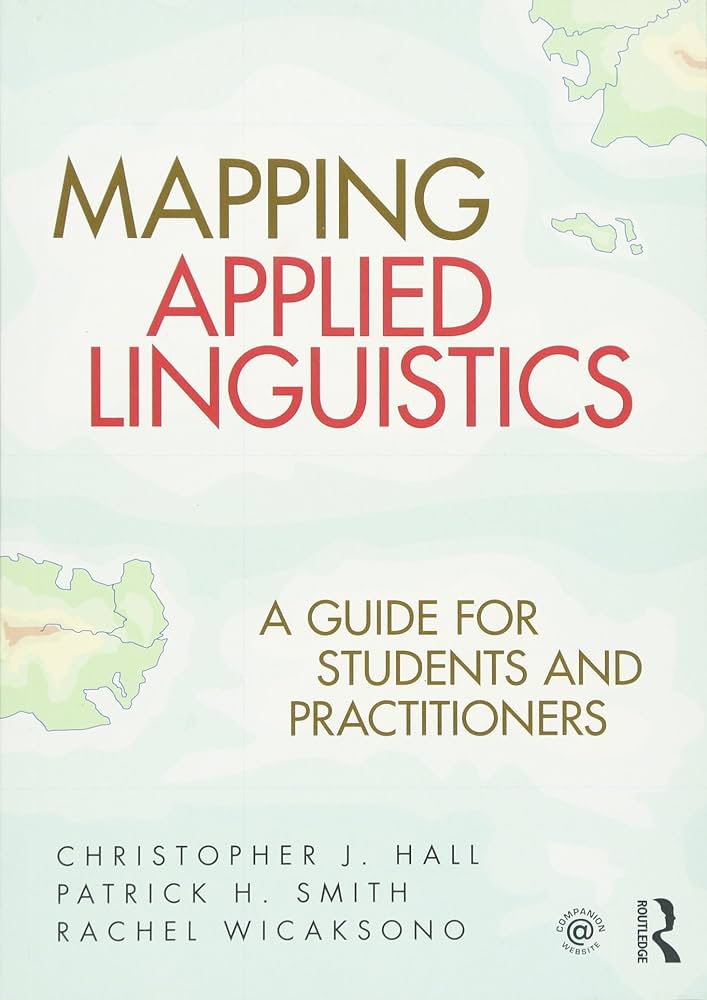
Mapping Applied Linguistics A Guide for Students and Practitioners 1st Edition by Christopher J. Hall , Patrick H. Smith, Rachel Wicaksono – Ebook PDF Instant Download/Delivery: 0415559138, 978-0415559133
Full download Mapping Applied Linguistics A Guide for Students and Practitioners 1st Edition after payment

Product details:
ISBN 13: 978-0415559133
Author: Christopher J. Hall , Patrick H. Smith, Rachel Wicaksono
Mapping Applied Linguistics: A Guide for Students and Practitioners provides an innovative and wide-ranging introduction to the full scope of applied linguistics.
Incorporating both socio-cultural and cognitive perspectives, the book maps the diverse and constantly expanding range of theories, methods and issues faced by students and practitioners alike. Practically oriented and ideally suited to students new to the subject area, the book provides in-depth coverage of:
- language teaching and education, literacy and language disorders
- language variation and world Englishes
- language policy and planning
- lexicography and forensic linguistics
- multilingualism and translation.
Including real data and international examples, the book features further reading and exercises in each chapter, fieldwork suggestions and a full glossary of key terms. An interactive Companion Website also provides a wealth of additional resources.
This book will be essential reading for students studying applied linguistics, TESOL, general linguistics, and education at the advanced undergraduate or master’s degree level. It is also the ideal gateway for practitioners to better understand the wider scope of their work.
Table of contents:
- PART A: LANGUAGE IN EVERYDAY USE
-
Chapter 2: Language Variation
- Language changes based on region, society, and context.
- Influence of dialects, accents, and sociolinguistics.
-
Chapter 3: Key Populations
- How language reflects social, cultural, and demographic differences.
- The relationship between language and ethnicity, gender, and age groups.
-
Chapter 4: Discourse Analysis
- How people use language in communication.
- Methods for analyzing texts, speech, and context.
-
Chapter 5: Language Policy and Planning
- The impact of governments and organizations on shaping language.
- Official languages, language preservation, and bilingual policies.
- PART B: LANGUAGE, LEARNING AND EDUCATION
-
Chapter 6: Literacy
- Definition and importance of literacy.
- The impact of education and technology on literacy skills.
-
Chapter 7: Language and Education
- The role of language in teaching and learning.
- Effective language teaching methodologies.
-
Chapter 8: Bilingual and Multilingual Education
- Benefits and challenges of bilingual education.
- The cognitive effects of learning multiple languages.
-
Chapter 9: Additional Language Education
- Methods for learning a second language.
- Factors influencing the acquisition of non-native languages.
- PART C: LANGUAGE AND EXPERT USES
-
Chapter 10: Translation
- Principles and techniques of translation.
- The role of translators in preserving meaning.
-
Chapter 11: Lexicography
- The process of dictionary compilation and its societal role.
- Language evolution through dictionary editions.
-
Chapter 12: Forensic Linguistics
- Application of linguistics in legal investigations.
- Text analysis to determine authorship and courtroom evidence.
-
Chapter 13: Language Pathology
- Language disorders and their treatment.
- The role of linguists in medical fields.
-
Chapter 14: Prospects and Perspectives
- Trends in linguistic research.
- The future of language in the digital age.
People also search for:
Tags:
Christopher Hall,Patrick Smith, Rachel Wicaksono,Mapping Applied,A Guide,Students and Practitioners