
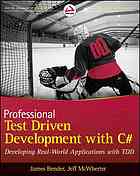
Professional test driven development with C developing real world applications with TDD 1st Edition by James Bender, Jeff McWherter ISBN 978-0470643204 047064320X

Original price was: $50.00.$35.00Current price is: $35.00.
Professional test driven development with C developing real world applications with TDD 1st Edition by James Bender, Jeff McWherter – Ebook PDF Instant Download/Delivery: 978-0470643204, 047064320X
Full download Professional test driven development with C developing real world applications with TDD 1st Edition after payment
Product details:
ISBN 10: 047064320X
ISBN 13: 978-0470643204
Author: James Bender, Jeff McWherter
Hands-on guidance to creating great test-driven development practice
Test-driven development (TDD) practice helps developers recognize a well-designed application, and encourages writing a test before writing the functionality that needs to be implemented. This hands-on guide provides invaluable insight for creating successful test-driven development processes. With source code and examples featured in both C# and .NET, the book walks you through the TDD methodology and shows how it is applied to a real-world application. You’ll witness the application built from scratch and details each step that is involved in the development, as well as any problems that were encountered and the solutions that were applied.
Clarifies the motivation behind test-driven development (TDD), what it is, and how it works
Reviews the various steps involved in developing an application and the testing that is involved prior to implementing the functionality
Discusses unit testing and refactoring
Professional Test-Driven Development with C# shows you how to create great TDD processes right away.
Table of contents:
PART I: GETTING STARTED
-
The Road to Test-Driven Development
-
The Classical Approach to Software Development
-
A Brief History of Software Engineering
-
From Waterfall to Iterative and Incremental
-
A Quick Introduction to Agile Methodologies
-
A Brief History of Agile Methodologies
-
The Principles and Practices of Test-Driven Development
-
The Concepts Behind TDD
-
TDD as a Design Methodology
-
TDD as a Development Practice
-
The Benefits of TDD
-
A Quick Example of the TDD Approach
-
Summary
-
-
An Introduction to Unit Testing
-
What Is a Unit Test?
-
Unit Test Definition
-
What Is Not a Unit Test?
-
Other Types of Tests
-
A Brief Look at NUnit
-
What Is a Unit Test Framework?
-
The Basics of NUnit
-
Decoupling with Mock Objects
-
Why Mocking Is Important
-
Dummy, Fake, Stub, and Mock
-
Best and Worst Practices
-
A Brief Look at Moq
-
What Does a Mocking Framework Do?
-
A Bit About Moq
-
Moq Basics
-
Summary
-
-
A Quick Review of Refactoring
-
Why Refactor?
-
A Project’s Lifecycle
-
Maintainability
-
Code Metrics
-
Clean Code Principles
-
OOP Principles
-
Encapsulation
-
Inheritance
-
Polymorphism
-
The SOLID Principles
-
The Single Responsibility Principle
-
The Open/Close Principle
-
The Liskov Substitution Principle
-
The Interface Segregation Principle
-
The Dependency Inversion Principle
-
Code Smells
-
What Is a Code Smell?
-
Duplicate Code and Similar Classes
-
Big Classes and Big Methods
-
Comments
-
Bad Names
-
Feature Envy
-
Too Much If/Switch
-
Try/Catch Bloat
-
Typical Refactoring
-
Extract Classes or Interfaces
-
Extract Methods
-
Rename Variables, Fields, Methods, and Classes
-
Encapsulate Fields
-
Replace Conditional with Polymorphism
-
Allow Type Inference
-
Summary
-
-
Test-Driven Development: Let the Tests Be Your Guide
-
It Starts with the Test
-
Red, Green, Refactor
-
The Three Phases of TDD
-
The Red Phase
-
The Green Phase
-
The Refactoring Phase
-
Starting Again
-
A Refactoring Example
-
The First Feature
-
Making the First Test Pass
-
The Second Feature
-
Refactoring the Unit Tests
-
The Third Feature
-
Refactoring the Business Code
-
Correcting Refactoring Defects
-
The Fourth Feature
-
Summary
-
-
Mocking External Resources
-
The Dependency Injection Pattern
-
Working with a Dependency Injection Framework
-
Abstracting the Data Access Layer
-
Moving the Database Concerns Out of the Business Code
-
Isolating Data with the Repository Pattern
-
Injecting the Repository
-
Mocking the Repository
-
Summary
-
PART II: PUTTING BASICS INTO ACTION
6. Starting the Sample Application
-
Defining the Project
-
Developing the Project Overview
-
Defining the Target Environment
-
Choosing the Application Technology
-
Defining the User Stories
-
Collecting the Stories
-
Defining the Product Backlog
-
The Agile Development Process
-
Estimating
-
Working in Iterations
-
Communication Within Your Team
-
Iteration Zero: Your First Iteration
-
Testing in Iteration Zero
-
Ending an Iteration
-
Creating the Project
-
Choosing the Frameworks
-
Defining the Project Structure
-
Organizing Project Folders
-
Creating the Visual Studio Solution
-
Summary
-
Implementing the First User Story
-
The First Test
-
Choosing the First Test
-
Naming the Test
-
Writing the Test
-
Implementing the Functionality
-
Writing the Simplest Thing That Could Possibly Work
-
Running the Passing Test
-
Writing the Next Test
-
Improving the Code by Refactoring
-
Triangulation of Tests
-
Summary
-
-
Integration Testing
-
Integrate Early; Integrate Often
-
Writing Integration Tests
-
How to Manage the Database
-
How to Write Integration Tests
-
Reviewing the ItemTypeRepository
-
Adding Ninject for Dependency Injection
-
Creating the Fluent NHibernate Configuration
-
Creating the Fluent NHibernate Mapping
-
Creating the Integration Test
-
End-to-End Integration Tests
-
Keeping Various Types of Tests Apart
-
When and How to Run Integration Tests
-
Summary
-
PART III: TDD SCENARIOS
9. TDD on the Web
-
ASP.NET Web Forms
-
Web Form Organization
-
ASPX Files
-
Code-Behind Files
-
Implementing Test-Driven Development with MVP and Web Forms
-
Working with the ASP.NET MVC
-
MVC 101
-
Microsoft ASP.NET MVC 3.0
-
Creating an ASP.NET MVC Project
-
Creating Your First Test
-
Making Your First Test Pass
-
Creating Your First View
-
Gluing Everything Together
-
Using the MVC Contrib Project
-
ASP.NET MVC Summarized
-
Working with JavaScript
-
JavaScript Testing Frameworks
-
Summary
-
Testing Windows Communication Foundation Services
-
WCF Services in Your Application
-
Services Are Code Too
-
Testing WCF Services
-
Refactoring for Testability
-
Introducing Dependency Injection to Your Service
-
Writing the Test
-
Stubbing the Dependencies
-
Verifying the Results
-
Trouble Spots to Watch
-
Summary
-
-
Testing WPF and Silverlight Applications
-
The Problem with Testing the User Interface
-
The MVVM Pattern
-
How MVVM Makes WPF/Silverlight Applications Testable
-
Bringing It All Together
-
Summary
-
PART IV: REQUIREMENTS AND TOOLS
12. Dealing with Defects and New Requirements
– Handling Change
– Change Happens
– Adding New Features
– Addressing Defects
– Starting with a Test
– Changing the Code
– Keeping the Tests Passing
– Summary
-
The Great Tool Debate
-
Test Runners
-
TestDriven.NET
-
Developer Express Test Runner
-
Gallio
-
Unit Testing Frameworks
-
MSTest
-
MbUnit
-
xUnit
-
Mocking Frameworks
-
Rhino Mocks
-
Type Mock
-
Dependency Injection Frameworks
-
Structure Map
-
Unity
-
Windsor
-
Autofac
-
Miscellaneous Useful Tools
-
nCover
-
PEX
-
How to Introduce TDD to Your Team
-
Working in Environments That Are Resistant to Change
-
Working in Environments That Are Accepting of Change
-
Summary
-
-
Conclusions
-
What You Have Learned
-
You Are the Client of Your Code
-
Find the Solutions Step by Step
-
Use the Debugger as a Surgical Instrument
-
TDD Best Practices
-
Use Significant Names
-
Write at Least One Test for One Unit of Functionality
-
Keep Your Mocks Simple
-
The Benefits of TDD
-
How to Introduce TDD in Your Team
-
Summary
-
Appendix: TDD Katas
-
Working with TDD Katas
-
Share Your Work
-
OSIM User Stories
Index
People also search for:
test driven development example
difference between test driven development and behavior driven development
professional test driver
test-driven development course
professional car test driver
Tags: James Bender, Jeff McWherter, Professional test driven, C developing, world applications